
NFL
Iran Warns of “Serious Consequences” After Donald Trump Orders Seizure of Cargo Ship Touska on the Hormuz Strait after confrontation between U.S. Navy and Iran Cargo , Raising Fears of Escalation in the Gulf of Oman

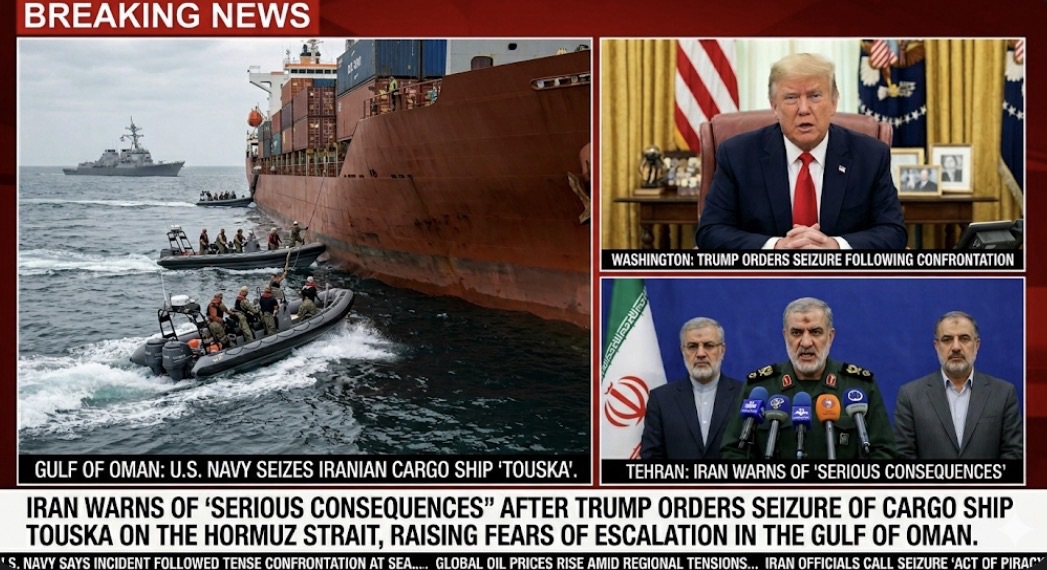
Iran Weighs Response After U.S. Seizes Iranian-Flagged Cargo Ship in Gulf of Oman
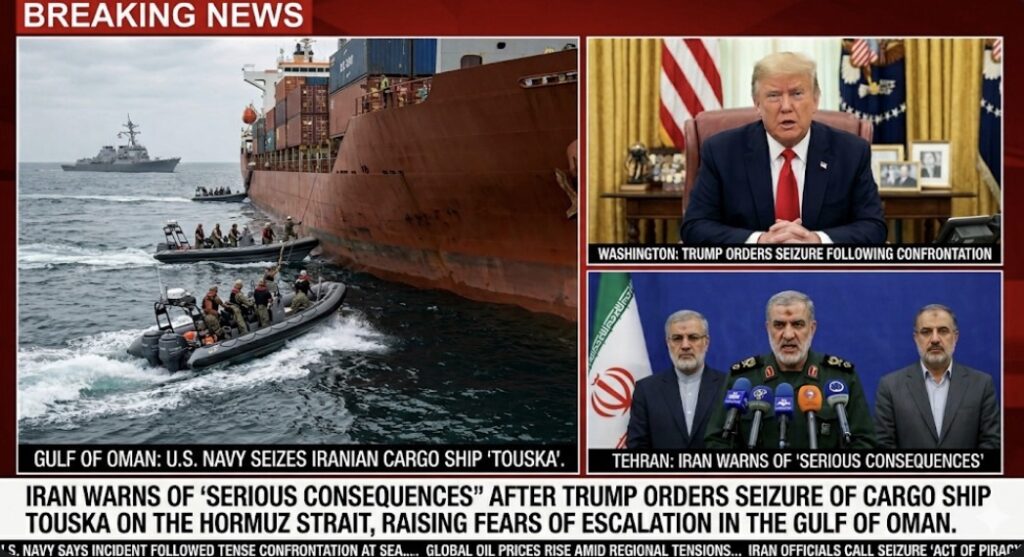
Tensions are rising in the Middle East after Donald Trump announced that U.S. forces had seized an Iranian-flagged cargo vessel accused of attempting to breach a naval blockade. According to the statement, the ship was intercepted in the Gulf of Oman by a U.S. Navy destroyer, disabled, and boarded by Marines. As of now, Tehran has not issued a full official response—but history suggests its next move could shape regional stability in the days ahead.
A Flashpoint in Strategic Waters
The incident occurred near one of the world’s most sensitive maritime corridors, close to the Strait of Hormuz—a chokepoint through which a significant portion of global oil supply passes. Any escalation in this region has immediate global implications, particularly for energy markets and international shipping.
While the U.S. has framed the seizure as an enforcement action, Iran is likely to view it as a violation of international law and sovereignty. That framing alone could set the stage for a range of responses.
Diplomatic Offensive Likely First
Analysts expect Iran’s initial reaction to focus on diplomacy. Tehran could formally condemn the seizure and escalate the issue to the UN, arguing that the U.S. acted unlawfully.
Iran may also seek support from global powers such as China and Russia, both of which have previously criticized U.S. actions in the region. This approach allows Iran to build international pressure while avoiding immediate military confrontation.
Risk of Maritime Retaliation
One of the most closely watched possibilities is a tit-for-tat response at sea. Iran has, in past confrontations, seized or detained foreign-linked vessels to gain leverage.
If tensions escalate, commercial shipping routes—especially those passing through the Hormuz Strait —could become increasingly vulnerable. Even limited disruptions in this corridor can send shockwaves through global oil markets.
Military Signaling Without Direct Conflict
Rather than immediate confrontation, Iran could opt for a show of force. This might include increased naval patrols, missile deployments along its coastline, or large-scale military exercises in the Persian Gulf.
Such actions are designed to signal capability and resolve without crossing into outright conflict—a balance Iran has maintained in previous standoffs with the United States.
Indirect and Asymmetric Options
Beyond conventional responses, Iran may also consider indirect strategies. These could involve cyber operations or leveraging allied groups in the region to apply pressure on U.S. interests.
This type of response allows Tehran to retaliate while maintaining a degree of deniability, reducing the risk of triggering a full-scale military escalation.
High Stakes, Uncertain Path
A direct military clash between Iran and the United States remains the least likely—but most dangerous—scenario. Both sides are aware that escalation in such a volatile region could spiral quickly into a broader conflict with global consequences.
For now, the situation remains fluid. Iran’s eventual response—whether diplomatic, economic, or military—will be closely watched as a key indicator of how far this الأزمة could go.
What is clear is that the seizure has introduced a new level of tension into an already fragile region, where even a single incident can reshape the balance overnight.

Fit for a Queen! Travis and Jason Kelce Sweep Mom Donna Off Her Feet in Heartwarming Celebration Snap as the NFL Superstars Put Their Famous Football Careers Aside to Celebrate the Woman Behind Their Success

Donna Kelce Celebrates Her Birthday With Taylor Swift, Travis Kelce, Jason and Kylie Kelce as the Superstar Joins Her NFL Boyfriend’s Family for a Special Day

Taylor Swift Goes All Out for Donna Kelce’s Birthday With an Expensive Luxury Gift as Travis Kelce’s Mom Gets the Royal Treatment From the Pop Superstar

Travis Kelce Confirms ‘Best News’ Yet as After Celebrating His 37th Birthday in Romantic Style With Wife Taylor Swift

Taylor Swift Appears to Keep Her Hand Loose as Travis Kelce Holds On After Witness Claims the Couple Had a Tense Argument Before Leaving—Candid Photos Fuel Fresh Questions About Their Unusual Exchange

Travis Kelce and Taylor Swift Step Out in London With Jason Kelce for a Star-Studded Sightseeing Adventure After Celebrating Travis’ 37th Birthday in New York City

Travis Kelce Turns 37 in Style as Taylor Swift Shares Cozy Birthday Moments and a Stunning Cake From Their Ohio Mansion After Chiefs’ Thrilling Victory Over the Raiders

Taylor Swift Appears to Give Raiders Fan the MIDDLE FINGER After He Trolls Travis Kelce With Brutal “Scores 6s on the Field… 3s Off the Field” Sign During Raiders’ Loss

Taylor Swift and Husband Travis Kelce Share Sweet Hand-in-Hand Moment as They Leave Allegiant Stadium After Chiefs Edge Raiders 30–27 in Thrilling Finish

Taylor Swift Goes Wild and Jubilates Inside Allegiant Stadium as Patrick Mahomes’ Second Touchdown Pass to Tyquan Thornton Sends the Kansas City Chiefs Into a 17–13 Lead Over the Raiders in the Fourth Quarter

Taylor Swift Spotted at Allegiant Stadium To Support Travis Kelce and Chiefs as Patrick Mahomes Leads the Kansas City Chiefs Back to Level With the Las Vegas Raiders at 7–7 in a Tense Battle in Las Vegas With Tyquan Thornton for a Touchdown
