
NFL
FIFA issues Embarrassing Response After Donald Trump Publicly Claims He Asked for Pakistan’s Inclusion in the World Cup and Suggested Removing a NATO Country to Make Room amid NATO’s Failure to assist Against Iran on reopening the Hormuz Strait

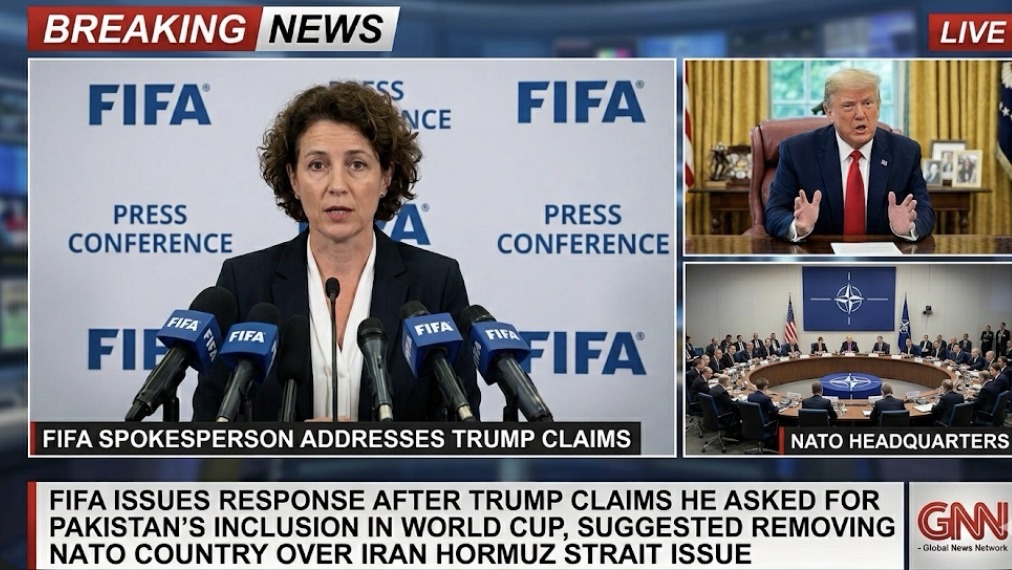
Global Football Body Responds After Trump Suggests Pakistan World Cup Inclusion
A fresh controversy has erupted in international football after Donald Trump publicly claimed he had urged FIFA to include Pakistan in an upcoming FIFA World Cup—going as far as suggesting that a NATO country could be removed to make space.
In a statement that quickly went viral, Trump framed the proposal as a gesture of appreciation, saying he wanted to “repay” Pakistan’s leadership for what they have done for the United States and the wider world. He also claimed to have personally spoken with FIFA’s president about the idea, raising eyebrows across both political and sporting circles.
The response from fifa was notably cautious. Without directly engaging the political nature of Trump’s remarks, the organization reiterated its long-standing position: World Cup qualification is determined strictly through sporting merit and established regional qualification processes. Officials emphasized that participation cannot be altered through political requests or external influence.
While FIFA avoided naming Trump directly in its statement, the timing and wording made it clear the organization was addressing the growing controversy. Insiders described the situation as “awkward,” noting that football’s governing body has historically gone to great lengths to maintain independence from political interference.
The suggestion itself has sparked widespread confusion. Critics were quick to point out that World Cup slots are allocated through years-long qualification campaigns involving national teams across different confederations. Pakistan, which has struggled to establish a strong presence in international football, has not come close to qualifying in recent cycles.
Football analysts also highlighted the impracticality of removing a qualified team—whether from a NATO country or elsewhere—once the qualification process is complete. Such a move would not only violate FIFA statutes but could trigger legal challenges and major backlash from federations worldwide.
Beyond the logistical concerns, the episode has reignited a broader debate about politics in sport. FIFA has long enforced rules designed to prevent government interference in football associations, even suspending countries in the past when political influence crossed certain lines. Trump’s remarks, though informal, have been viewed by some as testing those boundaries in an unprecedented way.
Reactions from fans have been mixed. Some dismissed the comments as political rhetoric unlikely to translate into action, while others criticized the idea as undermining the integrity of international competition. Social media platforms were flooded with reactions ranging from humor to outrage, with many questioning how such a proposal could even be considered.
For now, FIFA appears intent on keeping the focus on its established rules and processes, signaling that no changes to World Cup qualification are under consideration.
Whether the controversy fades quickly or continues to fuel debate, one thing is clear: the intersection of global politics and the world’s most popular sport remains as sensitive—and unpredictable—as ever.

Fit for a Queen! Travis and Jason Kelce Sweep Mom Donna Off Her Feet in Heartwarming Celebration Snap as the NFL Superstars Put Their Famous Football Careers Aside to Celebrate the Woman Behind Their Success

Donna Kelce Celebrates Her Birthday With Taylor Swift, Travis Kelce, Jason and Kylie Kelce as the Superstar Joins Her NFL Boyfriend’s Family for a Special Day

Taylor Swift Goes All Out for Donna Kelce’s Birthday With an Expensive Luxury Gift as Travis Kelce’s Mom Gets the Royal Treatment From the Pop Superstar

Travis Kelce Confirms ‘Best News’ Yet as After Celebrating His 37th Birthday in Romantic Style With Wife Taylor Swift

Taylor Swift Appears to Keep Her Hand Loose as Travis Kelce Holds On After Witness Claims the Couple Had a Tense Argument Before Leaving—Candid Photos Fuel Fresh Questions About Their Unusual Exchange

Travis Kelce and Taylor Swift Step Out in London With Jason Kelce for a Star-Studded Sightseeing Adventure After Celebrating Travis’ 37th Birthday in New York City

Travis Kelce Turns 37 in Style as Taylor Swift Shares Cozy Birthday Moments and a Stunning Cake From Their Ohio Mansion After Chiefs’ Thrilling Victory Over the Raiders

Taylor Swift Appears to Give Raiders Fan the MIDDLE FINGER After He Trolls Travis Kelce With Brutal “Scores 6s on the Field… 3s Off the Field” Sign During Raiders’ Loss

Taylor Swift and Husband Travis Kelce Share Sweet Hand-in-Hand Moment as They Leave Allegiant Stadium After Chiefs Edge Raiders 30–27 in Thrilling Finish

Taylor Swift Goes Wild and Jubilates Inside Allegiant Stadium as Patrick Mahomes’ Second Touchdown Pass to Tyquan Thornton Sends the Kansas City Chiefs Into a 17–13 Lead Over the Raiders in the Fourth Quarter

Taylor Swift Spotted at Allegiant Stadium To Support Travis Kelce and Chiefs as Patrick Mahomes Leads the Kansas City Chiefs Back to Level With the Las Vegas Raiders at 7–7 in a Tense Battle in Las Vegas With Tyquan Thornton for a Touchdown
