
NFL
Donald Trump Announces Plan to Deploy ICE Agents at Voting Polls Nationwide, Vowing ID Checks During Midterms and 2028 Election “With or Without Congress Passing SAVE Act

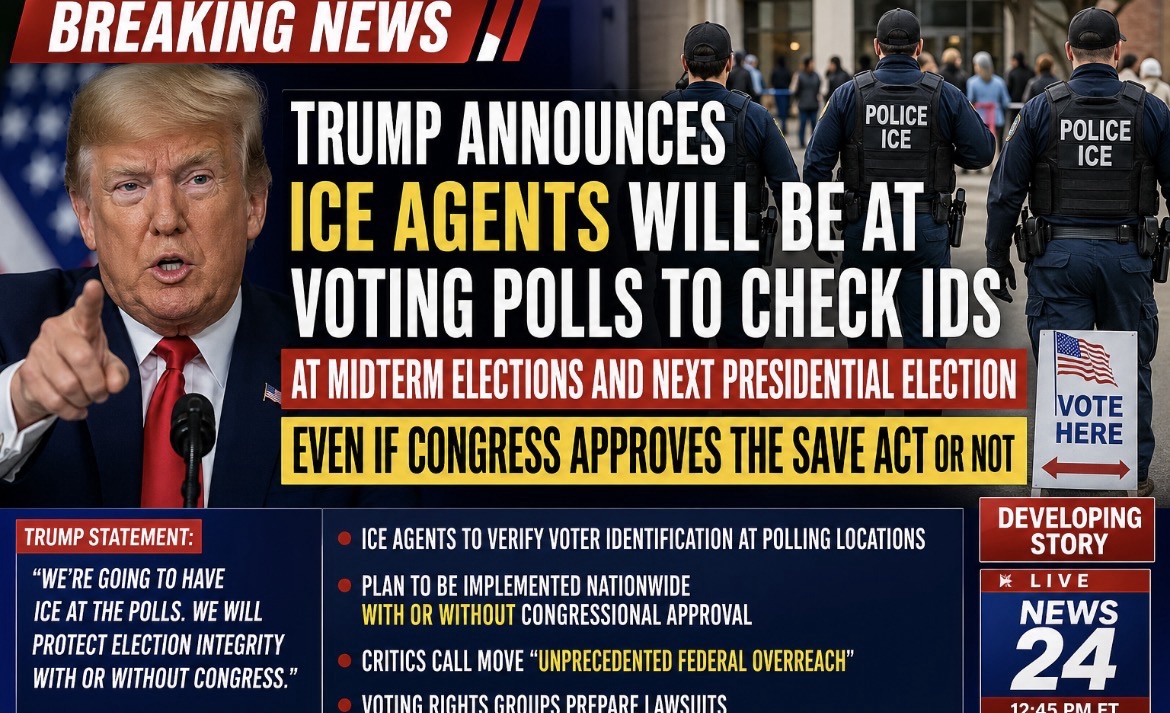
Trump Proposal to Deploy ICE at Polling Stations Sparks National Uproar and Legal Debate
A political firestorm erupted this week after Trump announced a sweeping and controversial plan to deploy federal immigration agents to voting locations across the United States during upcoming midterm elections and the next presidential race.
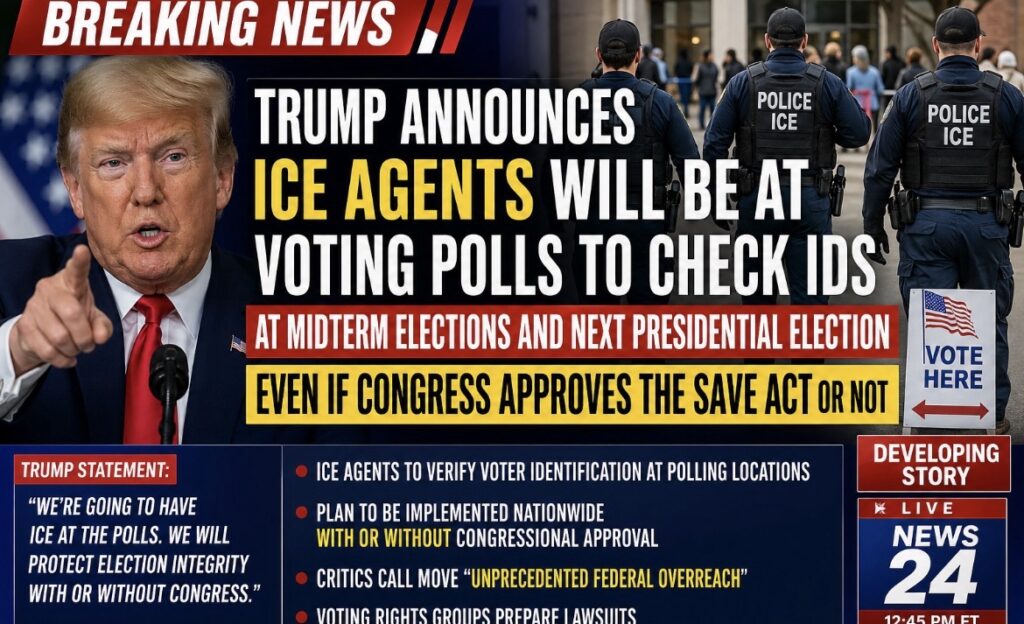
Speaking at a campaign-style event, Trump declared that agents from (ICE) would be tasked with verifying voter identification at polling stations nationwide. He emphasized that the initiative would move forward “with or without Congress,” referencing uncertainty around the proposed SAVE ACT, which he argued would strengthen voter ID enforcement.
A Bold—and Controversial—Proposal
Trump framed the plan as a necessary step to ensure “election integrity,” claiming that stricter identity checks are essential to restoring public confidence in U.S. elections.
“We’re going to have ICE at the polls,” Trump said. “We’re going to make sure only legal, verified voters are casting ballots. It’s about protecting democracy.”
However, the proposal immediately ignited backlash from lawmakers, legal experts, and civil rights organizations, many of whom described it as unprecedented and potentially unlawful.
Constitutional Questions and Legal Hurdles
Election administration in the United States is largely controlled by state and local governments, not federal agencies. Legal analysts warn that deploying a federal immigration enforcement body into polling places could violate longstanding protections designed to prevent voter intimidation.
Experts point to federal statutes and court precedents that restrict the presence of law enforcement at polling sites unless specifically authorized under limited circumstances. Critics argue that ICE involvement—given its role in immigration enforcement—could have a chilling effect on voter participation, particularly among immigrant communities and minority groups.
“This raises serious constitutional concerns,” said one election law scholar. “Federal overreach into state-run elections, combined with the potential for intimidation, would almost certainly be challenged in court.”
Political Reactions Intensify
Leaders in Congress from both parties signaled concern, though reactions varied in tone. Some Republican allies cautiously supported stronger voter ID measures but stopped short of endorsing ICE deployment. Democrats, meanwhile, condemned the proposal outright, calling it an attack on voting right

Taylor Swift and Travis Kelce to marry at NYC’s iconic Madison Square Garden – on America250 weekend

Russia Foreign Minister Sergei Lavrov says the United States is stuck in the war with Iran and has no idea how to get out of it and Donald Trump is to be blamed

CONFIRMED BY Donald Trump Iranian leader Mojtaba Khamenei has been killed following a major airstrike. According to initial reports, the strike was carried out by the United States as a self-defense operation, allegedly destroying three airbases and five fighter jets during the attack.

Treasury Secretary Scott Bessent announced that the U.S. Government has successfully seized $1 billion worth of crypto from Iran under the directive of Donald Trump

Donald Trump Orders ICE To Deploy Elite SRT Tactical Units To Newark With “No Mercy” Mandate Following Escalating Attacks On Federal Agents

Donald Trump Vows Immediate Legal Action Against Any State That Refuses to Allow ICE Agents to Carry Out Federal Immigration Enforcement after New York actions

New York Officially Bans Masked ICE Agents and Severely Restricts Local Cooperation With Federal Immigration Enforcement in Major Policy Overhaul

Donald Trump Threatens Travel Sanctions on European Athletes Ahead of FIFA World Cup in Retaliation for Olympic “Mistreatment” of American Athletes by NATO allies during Greenland controversy

Donald Trump Calls for Major Limits on Internet Access for Youth, Claiming the Web Is Damaging America’s Younger Generation and Young People should not have access to internet

Donald Trump Threatens “Complete Annihilation” of Iran’s Civil Infrastructure if Nuclear Deal Isn’t Reached Within 48 Hours

Donald Trump Faces Massive International Backlash After Allegedly Threatening Oman With Military Destruction During Explosive Closed-Door Meeting
