
NFL
Congress Prepares for High-Stakes Debate on Stricter Gun Control Legislation Following White House Correspondents’ Dinner Shooting which saw Donald Trump and Others Evacuated and of Nationwide Gun Violence Incidents

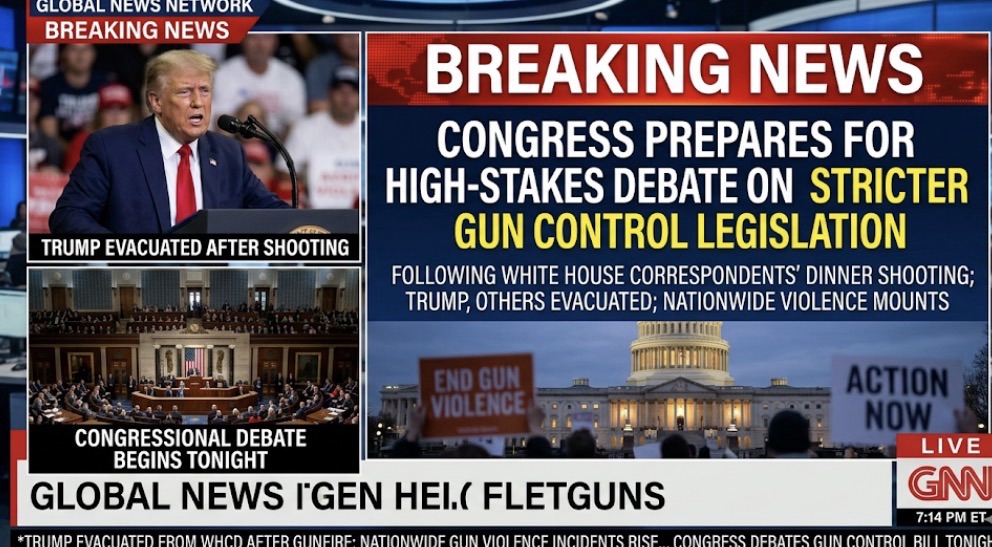
Washington, D.C. — Congress is preparing for a high-stakes and deeply divisive debate over stricter gun laws following the recent shooting incident at the White House Correspondents’ Dinner, an event typically known for its lighthearted political satire but now thrust into the center of a national security and public safety conversation.
The incident, which prompted a rapid evacuation of high-profile attendees and an immediate response from federal law enforcement, has intensified scrutiny over existing firearm regulations in the United States. While investigations into the attacker and motive remain ongoing, the breach at such a tightly secured gathering has raised serious concerns among lawmakers about vulnerabilities in both public safety systems and gun control policy.
In the days since the shooting, several members of Congress have signaled plans to introduce or revive legislation aimed at tightening access to firearms. Proposals under discussion reportedly include expanding universal background checks, restricting certain categories of high-capacity weapons, and strengthening red flag laws that allow authorities to temporarily remove firearms from individuals deemed a risk to themselves or others.
“This incident underscores the urgency of addressing gaps in our gun laws,” one senior lawmaker said, calling the shooting a “wake-up call” for federal action. Advocates for stricter regulations argue that the combination of high-profile attacks and a broader pattern of gun-related incidents across the country demands immediate legislative response.
However, the path forward is far from certain. Republican lawmakers and gun rights advocates have cautioned against what they describe as rushed policymaking in the aftermath of a crisis. Some argue that enforcement of existing laws, rather than the creation of new ones, should be the priority. Others have raised concerns about constitutional protections under the Second Amendment, signaling that any proposed reforms will face significant political resistance.
The debate is expected to unfold in both chambers of Congress over the coming weeks, with committee hearings, expert testimony, and potential amendments shaping the direction of any final legislation. Political analysts anticipate a contentious process, as lawmakers weigh public pressure for action against deeply entrenched ideological divides.
Beyond Capitol Hill, the incident has reignited a broader national conversation about gun violence, public safety, and the balance between individual rights and collective security. Advocacy groups on both sides of the issue are mobilizing, with calls for demonstrations, public awareness campaigns, and increased lobbying efforts aimed at influencing the outcome of the legislative process.
As the investigation into the shooting continues, the spotlight now turns to Congress, where the decisions made in the coming weeks could have lasting implications for gun policy in the United States. Whether the moment results in meaningful reform or further political stalemate remains an open question, but the urgency surrounding the issue has rarely been more pronounced.

Taylor Swift and Travis Kelce Join Justin and Hailey Bieber, Kylie Jenner and Timothée Chalamet for Star-Studded Wedding Group Photos as A-List Guests Celebrate Knicks Karl-Anthony Towns and Jordyn Woods’ Big Day

Taylor Swift Poses With Bride and Groom Alongside Family and Friends in group photo at Oli Jacobs and Laura Sisk’s Star-Studded Wedding

Travis Kelce Spotted Dancing With Sabrina Carpenter at Oli Jacobs and Laura Sisk’s Star-Studded Wedding as Taylor Swift Looks On

Taylor Swift and Travis Kelce Arrive in Style for Karl-Anthony Towns and Jordyn Woods’ Wedding, Joining Justin Bieber, Hailey Bieber, Kylie Jenner and Timothée Chalamet

Taylor Swift and Sabrina Carpenter Spotted Together at Oli Jacobs and Laura Sisk’s Wedding as the Pop Stars Share a Sweet Moment Amid the Celebration

Miles Apart, Rings in Sync: Taylor Swift and Travis Kelce Show Off Their Matching Wedding Bands in a Sweet Newlywed Display

Taylor Swift Flashes Wedding Ring and Gold Band as She Steps Out With Travis Kelce for Oli Jacobs and Laura Sisk’s Star-Studded Nuptials

Taylor Swift and Travis Kelce Spotted Leaving 1587 Prime Steakhouse Together After Pop Superstar Attended Chiefs Star’s First Preseason Game Against the Rams

Taylor Swift Spotted Arriving in Kansas on Her Private Jet Ahead of Chiefs vs. Rams Game at Arrowhead Stadium as She Makes Her Way Back to the City to Support Husband Travis Kelce

Taylor Swift and Travis Kelce Are “Very Grateful” and “So Excited” About Married Life as They Begin Their Next Chapter and Plan for a Baby, Source Says

Chiefs star Travis Kelce and Taylor Swift Enjoy Lunch With ‘Ted Lasso’ Star Jason Sudeikis as Pop Superstar Shares Her Famous Sourdough Bread
