
NFL
Supreme Court Orders Ignored as Donald Trump Moves Forward With Executive Action and Attempts to Federalize National Guard Without State Approval Despite Supreme Court order and Rejection

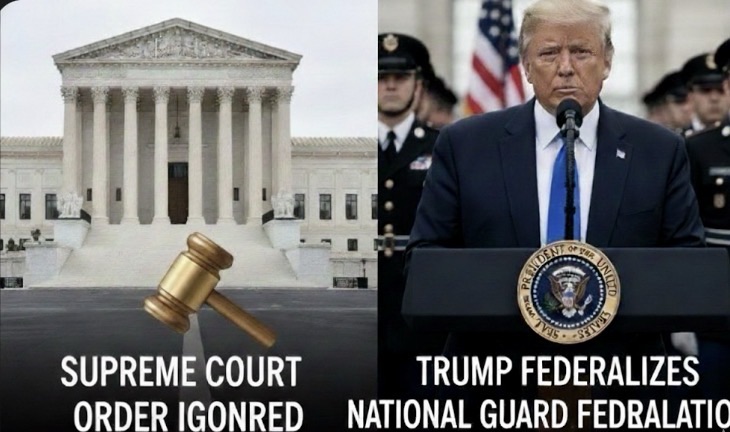
Washington, D.C. — Tensions escalated sharply in the nation’s capital today after President Donald Trump proceeded to sign a controversial executive order despite an active directive from the Supreme Court instructing the administration to delay the action. The move immediately triggered concerns about a potential constitutional showdown between the Executive Branch, the Judiciary, and state governments.
The executive order reportedly aims to federalize certain National Guard units for domestic deployment. However, multiple governors have rejected the move, arguing that the federal government cannot assume command of state-controlled Guard units without state consent except under limited circumstances defined by law.
Legal analysts note that the Supreme Court had issued a temporary block earlier in the week, stating that the legality of federalizing the National Guard without state approval needed further review. By moving ahead, the President has placed the Executive Branch on a collision course with the Court’s authority.
“We have clear constitutional responsibilities to our citizens, and they include controlling our own National Guard forces except in lawful emergencies,” said one governor in a written statement. Several other governors from both political parties echoed similar positions, labeling the federalization attempt as “unwarranted,” “legally questionable,” and “an erosion of state sovereignty.”
The White House, meanwhile, defended the decision, stating that the administration views the situation as an urgent matter requiring immediate action. Advisers close to the President argued that federalizing the Guard falls within executive powers during national security concerns, although they did not elaborate on what specific threat required the order.
Constitutional scholars remain divided. Some assert that presidents do have power to activate Guard units in narrowly defined cases, while others argue that bypassing state consent and defying a Supreme Court directive raises serious legal questions about checks and balances.
The Supreme Court has not yet announced how it will respond to the President’s decision, but legal experts expect an expedited review given the unusual challenge to the judiciary’s authority. Members of Congress have also begun calling for hearings to determine whether executive overreach has occurred.
With state leaders refusing compliance, the immediate impact of the executive order remains unclear. For now, the situation places the country in a rare constitutional confrontation involving the separation of powers and the long-debated balance between federal authority and state control.

European Commission Issues Thunderous Diplomatic Warning to Donald Trump, Declaring Any U.S. Attempt to Seize Greenland Would Trigger a Full-Scale EU Response and Shatter Transatlantic Relations

The Woman Who Survived Breast Cancer, Raised a Global Superstar, Became a Chiefs Kingdom Queen, and Still Makes Time for Easter Egg Hunts — Happy 68th Birthday to the Legendary Mama Swift

President Donald Trump Orders Immediate U.S. Military Intervention in Iran, Citing Rapidly Escalating Events and National Security Concerns Which has Seen many Protesters Killed

Taylor Swift and Jason Kelce Beam with Pride as They Join Donna Kelce for a Fun-Filled Night at The Traitors Season 4 Premiere, Supporting Her as Travis Kelce Misses Out; Donna Kelce Praises Taylor Swift for being the one who got her involved in the movie

Pressure Mounts on Congressional Leadership as Over 140 Lawmakers Unite Behind a High-Stakes Bid to Impeach Donald Trump, Pushing Aggressively and Set to Launch Impeachment Proceedings

Supreme Court Mobilizes Federal Marshals Across the Nation to Enforce Lawful Court Orders After Donald Trump Repeatedly Rejects Judicial Directives, Signaling Unprecedented Step to Uphold Rule of Law

Supreme Court Set to Significantly Limit ICE’s Authority as Justices Consider Narrowing Detention Powers, Expanding Due Process Rights, and Strengthening Constitutional Protections for Immigrants after Multiple Petitions and Recent Killings Despite Donald Trump’s Objection

Former Federal Prosecutor Jack Smith to Testify Before Congress, Providing Inside Account of Investigations Targeting Trump and Controversial Decisions Made During Probes

Supreme Court Signals Possible Referral to Congress for Impeachment After Donald Trump Defies Multiple Court Orders by Deploying National Guard to Chicago, Continuing to Detain Venezuela’s President, Delaying Court-Ordered East Wing Reconstruction, and working on National Guard Federalization Without State Consent.

Donald Trump Informed by His Attorneys That He Is Barred from Leaving the United States Amid an International War Crimes Warrant, Which Could Lead to His Arrest, He’s Set to Miss the PGA Event in Scotland and the World Economic Forum Annual Meeting in Switzerland

U.S. Congress Officially Launches Impeachment Proceedings Against President Donald Trump, Drafting Detailed Articles Alleging Embezzlement, Fraud, War Crimes, Obstruction of Justice, Abuse of Power, and Mismanagement of Taxpayer Funds by Him and Members of His Cabinet
