
NFL
President Donald Trump Signs Secure America Act in the Oval Office, Securing Multi-Year Funding Through 2029 for DHS, ICE, and CBP to Strengthen Immigration Enforcement and Border Security

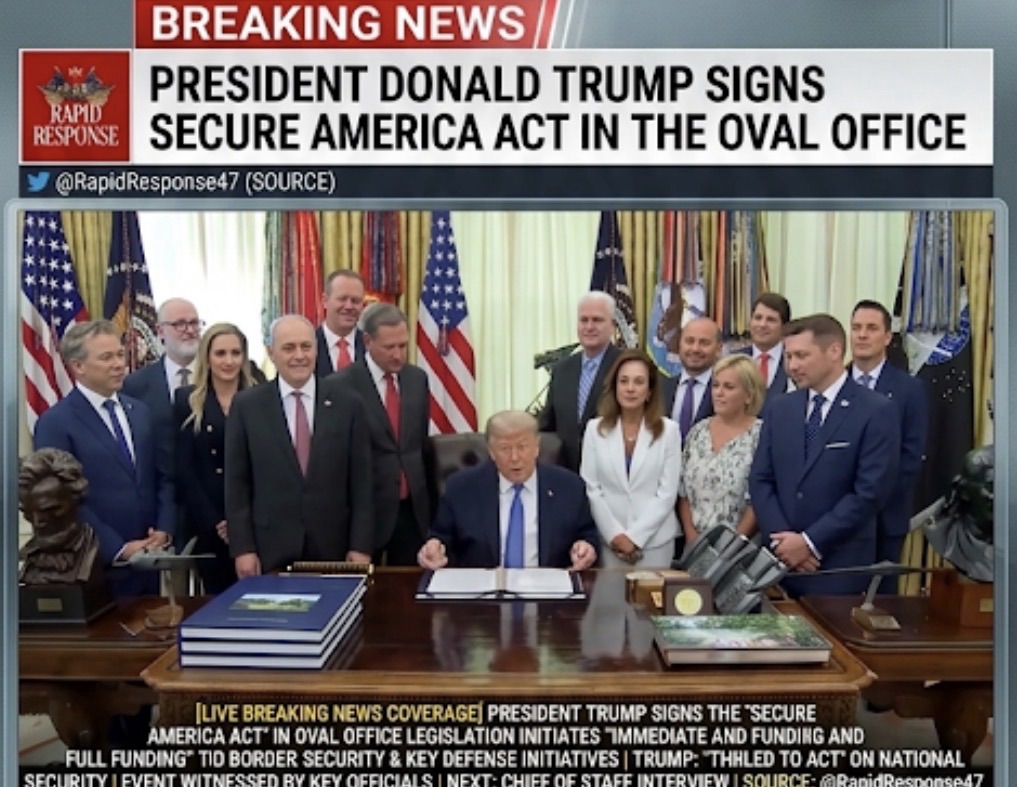
President Trump Signs Secure America Act, Providing Multi-Year Funding for Border Security and Immigration Enforcement
Washington, D.C. – June 10, 2026 — President Donald Trump signed the Secure America Act into law today in the Oval Office, delivering a major legislative victory for his administration’s immigration and border security priorities. The roughly $70 billion bill, passed via budget reconciliation, provides dedicated funding for the Department of Homeland Security (DHS), U.S. Customs and Border Protection (CBP), and U.S. Immigration and Customs Enforcement (ICE) through fiscal year 2029.20
The legislation allocates significant resources to immigration enforcement, including personnel, detentions, deportations, border technology, and operational support. According to details from congressional sources, it includes approximately $38–39 billion for ICE operations and around $26 billion for CBP, with additional funding for broader DHS activities.21
Background: Ending a Record Shutdown
The bill comes after months of partisan disputes over border funding. Democrats’ opposition to enhanced funding for ICE and CBP contributed to a record 76-day partial shutdown of the Department of Homeland Security earlier this year, from February 14 to April 30, 2026 — the longest such departmental shutdown in U.S. history.2
While a temporary bipartisan measure eventually restored funding for most DHS functions, core border enforcement agencies lacked long-term stability. Republicans turned to the budget reconciliation process — which bypasses the Senate filibuster — to pass the Secure America Act. The Senate approved it on June 5, 2026, and the House followed shortly thereafter.6
Trump Administration’s Perspective
In remarks during the signing ceremony, President Trump emphasized the bill’s importance: “This morning, I’m thrilled to sign the Secure America Act to immediately and fully fund the Department of Homeland Security through the end of my term.”11
Administration officials and Republican leaders framed the Act as essential to sustaining record-low illegal border crossings achieved under Trump’s policies. Border Czar Tom Homan highlighted that the funding would accelerate arrests, targeting, and operational capacity. Supporters argue it prevents future Democratic obstruction and locks in resources for enforcement against illegal immigration, human trafficking, drug smuggling, and cartels.17
Key Provisions and Impact
- Multi-year stability: Funding remains available through FY2029, shielding agencies from annual appropriations battles.
- Enforcement focus: Resources target personnel hiring and retention, detention facilities, deportation operations, border technology, screening, and investigations.
- Broader support: Includes aid for state and local law enforcement participation in homeland security efforts.
Republican lawmakers, governors, attorneys general, and law enforcement groups praised the bill as fulfilling campaign promises and prioritizing American safety.18
Democrats largely opposed the measure, with some criticizing it as excessive funding without additional oversight or reforms. They had pushed for conditions on the funding during earlier negotiations.
Context of Border Security
The signing occurs amid claims of historic success at the southern border. The Trump administration has reported sharp declines in illegal crossings compared to prior years, with multiple months of low apprehension numbers and “zero releases” policies in place.18
Whether this funding sustains or accelerates those trends will be closely watched in the coming months and years.
The Secure America Act represents a significant use of reconciliation for targeted immigration enforcement funding and marks a key early-term achievement for the Trump administration on one of its signature issues.

Taylor Swift and Travis Kelce Spotted Enjoying a Romantic Date Night in NYC as the Loved-Up Couple Shares Another Sweet Moment Together Ahead of Travis’ NFL Campaign

NFL Star Travis Kelce Says MARRYING Taylor Swift Was “More Than I Could Have Ever Dreamed” During Candid ESPN Sit-Down With Patrick Mahomes ahead of Chiefs game vs Broncos

Taylor Swift and Travis Kelce attend the Tommy Hilfiger’s NYFW Show, Cheer on Their White Fluffy Dog Wendy as She Makes Her Runway Debut

Taylor Swift Captured in a Playful Moment With Travis Kelce and Jason Kelce During Garage Beer Commercial Shoot

Taylor Swift Captured in a Playful Moment With Husband Travis Kelce and Brother-in-Law Jason Kelce During Garage Beer Commercial Shoot

Taylor Swift Captured in a Playful Moment With Husband Travis Kelce and Brother-in-Law Jason Kelce During Garage Beer Commercial Shoot

Onlookers Report Tense Moment as Taylor Swift and Travis Kelce Leave NYC in Separate Cars Without Saying Goodbye, Though Travis Still Walks His Wife to Her Car and Holds the Door Open

Bad Blood Still? Taylor Swift, Travis Kelce, Blake Lively and Ryan Reynolds All Cross Paths at Ambassador Clubhouse—but the Star-Studded Groups Completely Ignore Each Other

Taylor Swift and Travis Kelce Enjoy Romantic Indian Dinner at Ambassador Clubhouse in NYC as Newlyweds Share a Sweet Night Out Together

Protective Travis Kelce Steps Between Taylor Swift and an Overzealous Paparazzi in Tense NYC Encounter, Defending His Newlywed Wife as the Couple Enjoys a Romantic Night Out at Ambassador Clubhouse

New Mexico Governor Fires Back at Donald Trump for his idea to Rename New Mexico to New America: “Even If He Thinks He’s a King or Dictator, He Must Be a Clown to Think He Can Rename Our State”
