
NFL
Supreme Court’s Intervention in Red State Transgender Athlete Bans Sets Up Major Showdown Between Republican Legislatures Prioritizing “Fairness in Sports” and Federal Agencies Emphasizing Civil Rights Compliance Under Title IX

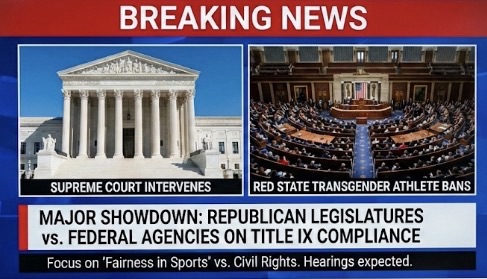
Washington, D.C. — The United States Supreme Court has stepped directly into one of the most polarizing cultural and political debates in the country, ordering a temporary pause on several Republican-led state policies that restrict transgender women and transgender girls from participating in women’s sports divisions. The order signals that the Court may take up a future case addressing the constitutional boundaries of state regulation, federal civil rights protections, and gender identity in school athletics.
The Court’s intervention affects newly enacted laws in multiple conservative states, where legislators and governors have argued that their restrictions are designed to “protect fairness in women’s sports.” Critics, including civil rights organizations and LGBTQ+ legal advocates, counter that these policies violate federal anti-discrimination statutes—most notably Title IX—and infringe on the rights of transgender students.
Federal vs. State Clash Intensifies
The ruling has quickly escalated into a broader battle over the balance of federal and state power. Republicans in affected states accused the Supreme Court of overstepping and undermining local authority to regulate school athletics. Democratic leaders, meanwhile, praised the temporary freeze as a necessary check on what they describe as discriminatory measures that conflict with federal civil rights protections.
Within Congress, the decision has already fueled partisan messaging. Conservative lawmakers argue the issue revolves around parental rights, biological competition standards, and state sovereignty. Democrats emphasize inclusivity, legal equality, and federal oversight of publicly funded education systems.
Implications for 2026 Elections
The Supreme Court’s involvement lands at a politically sensitive moment. With the 2026 midterm elections on the horizon, both parties are expected to leverage the debate in campaign speeches, fundraising, and media outreach. Analysts note that this dispute appeals to key voter blocs on both sides, meaning neither party is likely to abandon the issue any time soon.
Political strategists say the temporary pause could energize Republican governors who have made cultural issues central to their platforms, while also motivating younger voters and LGBTQ+ advocacy groups who view the Court’s move as a meaningful response to civil rights concerns.
What Comes Next
The Court has directed lower courts to further examine whether these state-level bans conflict with Title IX, the federal civil rights law that prohibits sex-based discrimination in educational programs and activities receiving federal funding. Depending on how the cases progress, the Supreme Court could eventually be asked to decide whether transgender athlete participation falls under protections related to sex or gender identity.
Legal experts say a definitive ruling would have nationwide consequences. A decision upholding state restrictions could give legislatures more freedom to regulate school sports based on biological criteria. A ruling against the bans could strengthen federal protections for transgender students, forcing states with similar laws to repeal or revise them.
A Debate That’s Far From Over
For now, athletic associations, school districts, and families remain in a state of uncertainty. Until the courts clarify the legal landscape, policies governing student participation will differ by state, district, and league, creating uneven and sometimes confusing conditions across the country.
What is clear is that the Supreme Court’s unexpected intervention has transformed a series of state-level sports laws into a potential landmark civil rights case—one that blends constitutional law, education policy, and cultural debate in ways that are likely to shape American politics for years to come.

Donald Trump Declares Plan to Sue Michigan Ford Plant Employee for Defamation Claims for shouting “Pedophile Protector” During Factory Tour, After the Worker Receives Suspension From Company Officials

President Trump Reaffirms Full Support for ICE Personnel Amid Growing Protests and Minnesota Government Lawsuit Challenging Federal Immigration Enforcement Policies and His Administration

Supreme Court Hits Donald Trump Tariffs as Illegal and Unconstitutional Overreach, Compelling Immediate Refunds While Democrats Demand Further Investigations and Republicans Cry Foul

Supreme Court’s Intervention in Red State Transgender Athlete Bans Sets Up Major Showdown Between Republican Legislatures Prioritizing “Fairness in Sports” and Federal Agencies Emphasizing Civil Rights Compliance Under Title IX

Taylor Swift and Travis Kelce Spotted Arriving Together for a Low-Key Date Night in Beverly Hills After Golden Globes Glam

Supreme Court Issues Emergency Injunction Temporarily Restricting Key ICE Enforcement Actions in Minnesota as Legal Challenges Move Forward After State Files Lawsuit Alleging Constitutional Violations, ICE killing and Unlawful Use of Force Under the Donald Trump Administration.

“Before He Drags Us All Down”: Taylor Swift Makes an Unprecedented Plea to America’s Highest Powers (Congress and Supreme Court) to Stop Donald Trump.

President Donald Trump Drafts Unprecedented Executive Order to Prosecute Online Criticism as an Act of “Treason”

Taylor Swift Issues Stern Call to Action Against Donald Trump, Claiming That Without Swift Intervention by Congress and the Supreme Court, the United States Could Be Pulled Into Unprecedented Turmoil and Destruction

United Nations Declares Any U.S. Move on Greenland ‘Unacceptable’ — Coordinated Sanctions and Diplomatic Measures Ready if Donald Trump Acts

Travis Kelce and Taylor Swift Attend Patrick Mahomes’ Daughter Golden Raye’s Colorful First Birthday Celebration Featuring a Ball Pit, Slide, and Plenty of Cheerful Moments
