
NEWS
Federal Judge Issues Sweeping Temporary Restraining Order Halting ICE Operations Nationwide, Ignoring Strong Rejection From Donald Trump Administration, Raising Legal and Political Tensions

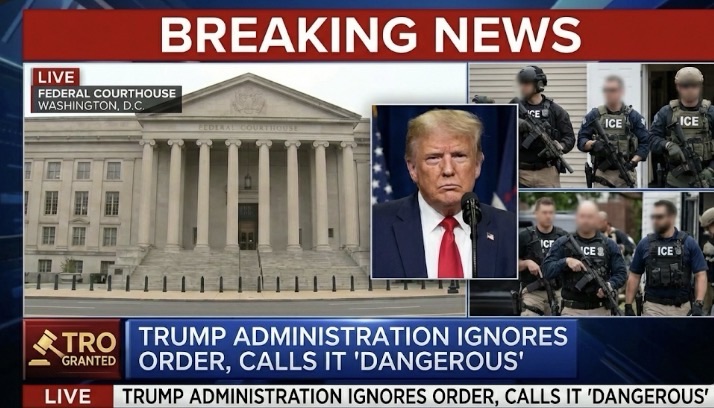
Federal Judge Issues Temporary Restraining Order Limiting ICE Tactics at Portland Facility, Trump Administration Pushes Bac
PORTLAND, Ore. — A federal judge on Tuesday issued a temporary restraining order (TRO) that curbs how federal agents, including officers from U.S. Immigration and Customs Enforcement (ICE), may use crowd‑control tactics at protests near an ICE facility in Portland, Oregon, setting up a legal confrontation with the Department of Homeland Security (DHS) and officials in the Trump administration.
U.S. District Judge Michael H. Simon ruled that federal agents must refrain from using tear gas, pepper balls, flashbang grenades, and other chemical or projectile munitions against protesters unless there is a clear and imminent threat of physical harm. The order, effective immediately, is limited to 14 days while the court considers whether to expand the restrictions or issue a preliminary injunction at a hearing scheduled for March 2, 2026.
Judge’s Ruling Responds to Allegations of Excessive Force
The TRO stems from a lawsuit filed by local protesters and freelance journalists who argued that federal officers’ tactics violated constitutional rights, including freedom of speech and assembly. The plaintiffs were represented by the American Civil Liberties Union (ACLU) of Oregon, which contended that agents employed excessive force against largely peaceful demonstrations near the ICE building — sometimes involving elderly participants and journalists wearing press credentials.
In a 22‑page opinion, Judge Simon wrote that repeated use of these tactics against nonviolent protesters “will likely keep recurring,” and that limits were necessary to protect constitutional rights pending further court evaluation.
Administration Reaction and Legal Pushback
While the order does not halt ICE operations nationwide or suspend immigration enforcement broadly, as some critics have suggested, it restricts the agency’s tactics in this specific context. The Department of Homeland Security has defended the actions of its officers, saying such measures are necessary to maintain order and protect federal property. Officials have also signaled their intention to appeal or seek clarification of the order, arguing it could undermine operational authority and safety measures.
The White House has not issued a comprehensive response to the ruling, but in related news on federal immigration enforcement, the administration has been involved in other legal disputes over operations such as Operation Metro Surge in Minnesota, where judges so far have not granted statewide halts, instead allowing enforcement to continue while litigation proceeds.
Local and National Impact
Portland’s mayor and several Oregon lawmakers have publicly backed the court’s decision, calling for clearer rules around federal use of force and greater respect for peaceful protest. Civil rights advocates say the ruling could influence similar cases nationwide, where communities and courts are grappling with the balance between federal authority and individual rights.
However, experts caution that a TRO is a temporary, narrow court order — not a final judgment — and that its scope is limited to specific practices at the Portland facility. It does not represent a blanket judicial halt to all ICE operations across the United States, and its future depends on further court filings and potential appeals.

Taylor Swift Continues Her NFL Takeover, Supporting Boyfriend Travis Kelce and Brother Jason at the NFL Honors in a Stunning Appearance at the Annual Awards Show

Supreme Court Blocks Donald Trump’s “Save Act,” Rules It Violates U.S. Constitution, Conflicts With Voting Rights Act, and Imposes Unreasonable Burdens on Voters

Federal Judge Issues Sweeping Temporary Restraining Order Halting ICE Operations Nationwide, Ignoring Strong Rejection From Donald Trump Administration, Raising Legal and Political Tensions

A dapper Jason Kelce and Andrew Whitworth presented the Protector of the Year award at NFL honors tonight with Travis Kelce and Taylor Swift among the attendees

Travis Kelce Dishes on Super Bowl Plans, Romantic Wedding Plans with Taylor Swift, and Directly Addresses The Popster Pregnancy Speculation in Chat with Jason Kelce’s Wife Kylie Kelce on ‘Not Gonna Lie’ Podcast

Congress Blocks Donald Trump’s SAVE Act Move, Stalling Proposed Federal Voter Eligibility Overhaul After Fierce Debate Over Voting Rights and Constitutional Limits

Wedding Bells Are Getting Louder”: Travis Kelce Just Shared a Major Detail About His Wedding Plans With Taylor Swift — and Fans Are Spiraling

Amnesty International Submits Petition Seeking Possible Imprisonment and Asset Freezes for Elon Musk Over Alleged Foreign Election Interference, Also Calls for Donald Trump’s Impeachment and Arrest, Citing Allegations of War Crimes, ICE Brutality, Free Speech Violations, and Epstein-Related Concern

Donald Trump Launches Fresh Legal Challenge to California’s Congressional Map After Supreme Court Allows Democratic-Favored Districts to Be Used in Midterm Elections

Team USA Olympic Athletes Report Severe Travel Difficulties as EU Visa Restrictions and Sanctions on the U.S. Deepen Transatlantic Tensions Over Donald Trump’s Greenland Ambitions

Donald Trump Orders Complete Demolition of the Kennedy Center, Approves $12 Billion Federal Plan to Tear Down and Rebuild the Iconic National Arts Complex From the Ground Up
