
NFL
NATO Secretary-General Mark Rutte announced NATO Rejects Donald Trump’s Demand to Deploy Alliance Warships Against Iran, Declining U.S. Request to Militarily Reopen the Strait of Hormuz Amid Rising Global Tensions

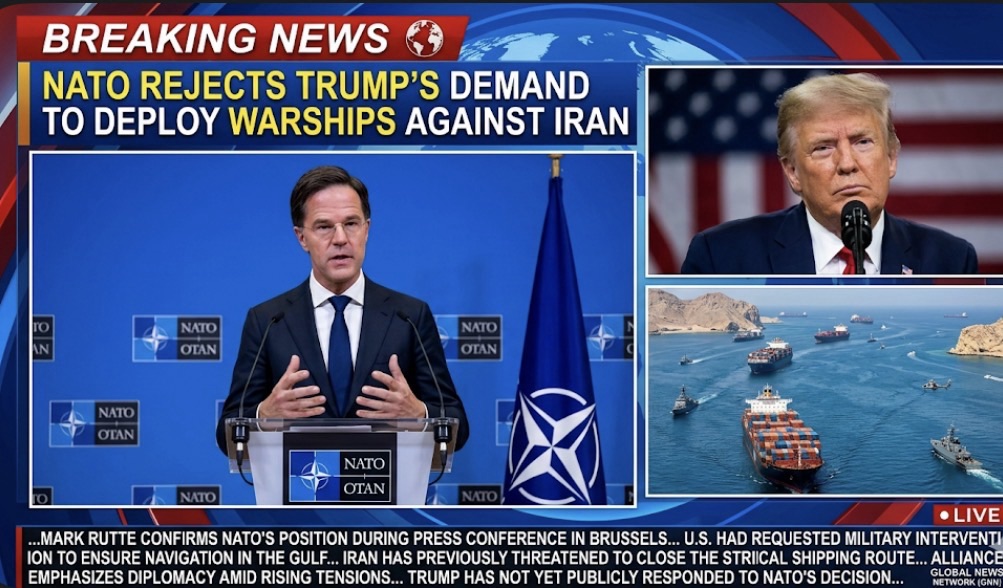
NATO Rejects Trump’s Request for Warships in Iran Standoff, Alliance Refuses U.S. Push to Reopen Strait of Hormuz
The transatlantic alliance led by NATO has reportedly declined a request from Donald Trump to deploy alliance warships to confront Iran and reopen the strategically vital Strait of Hormuz, deepening tensions between Washington and several of its closest allies.
According to officials familiar with the discussions, the NATO Secretary-General informed member states that the alliance would not participate in a military operation aimed at forcing open the Strait of Hormuz, a narrow waterway through which a significant portion of the world’s oil supply passes. The decision comes as the United States continues to pressure allies to support a stronger military response following escalating tensions with Iran in the region.
President Trump has been outspoken in his frustration with NATO allies, accusing them of relying too heavily on the United States for security over the past several decades. In remarks to reporters, the U.S. president criticized the alliance for what he described as “freeloading off the United States,” insisting that it was time for member countries to contribute more to global security operations.
“It’s time for them to pay the piper,” Trump said, arguing that European allies should step up and help secure international shipping routes in the Gulf.
The Strait of Hormuz remains one of the most strategically important maritime chokepoints in the world, linking the Persian Gulf to the Gulf of Oman and the Arabian Sea. Any disruption to shipping in the region can have immediate consequences for global energy markets and international trade.
Despite the U.S. push, several NATO member countries have expressed concerns about being drawn into a direct military confrontation with Iran. Diplomats from multiple European nations reportedly warned that sending alliance warships into the region could further escalate tensions and risk a broader conflict in the Middle East.
Instead, NATO officials have emphasized the importance of diplomacy and de-escalation, calling for renewed international efforts to stabilize the situation and ensure safe passage for commercial vessels without expanding the conflict.
The refusal to join the U.S. naval effort highlights growing divisions within the Western alliance over how to respond to the crisis involving Iran. While Washington continues to advocate for a tougher stance, many European leaders have signaled they prefer diplomatic engagement rather than direct military involvement.
The disagreement could place additional strain on relations between the United States and its NATO partners at a time when global geopolitical tensions are already running high. Analysts warn that continued disagreements over military strategy in the Middle East could further test the unity of the decades-old alliance.
For now, NATO’s position signals that any potential military action in the Strait of Hormuz will likely remain a largely U.S.-led effort rather than a full alliance operation, as international leaders continue searching for ways to prevent the crisis from spiraling into a wider regional conflict.

Taylor Swift Is Back in Kansas City! Spotted Alongside Husband Travis Kelce at Event Ahead of Chiefs’ Clash With Broncos, With Fans Expecting Her to Be in the Stands

Lady Gaga and Michael Polansky Welcome Their First Child Together as the Pop Superstar Confirms the Happy Family News in new baby Photo release

Taylor Swift and Travis Kelce Spotted Enjoying a Romantic Date Night in NYC as the Loved-Up Couple Shares Another Sweet Moment Together Ahead of Travis’ NFL Campaign

NFL Star Travis Kelce Says MARRYING Taylor Swift Was “More Than I Could Have Ever Dreamed” During Candid ESPN Sit-Down With Patrick Mahomes ahead of Chiefs game vs Broncos

Taylor Swift and Travis Kelce attend the Tommy Hilfiger’s NYFW Show, Cheer on Their White Fluffy Dog Wendy as She Makes Her Runway Debut

Taylor Swift Captured in a Playful Moment With Travis Kelce and Jason Kelce During Garage Beer Commercial Shoot

Taylor Swift Captured in a Playful Moment With Husband Travis Kelce and Brother-in-Law Jason Kelce During Garage Beer Commercial Shoot

Taylor Swift Captured in a Playful Moment With Husband Travis Kelce and Brother-in-Law Jason Kelce During Garage Beer Commercial Shoot

Onlookers Report Tense Moment as Taylor Swift and Travis Kelce Leave NYC in Separate Cars Without Saying Goodbye, Though Travis Still Walks His Wife to Her Car and Holds the Door Open

Bad Blood Still? Taylor Swift, Travis Kelce, Blake Lively and Ryan Reynolds All Cross Paths at Ambassador Clubhouse—but the Star-Studded Groups Completely Ignore Each Other

Taylor Swift and Travis Kelce Enjoy Romantic Indian Dinner at Ambassador Clubhouse in NYC as Newlyweds Share a Sweet Night Out Together
