
NFL
Iran-Linked Hackers Hack Personal Email of FBI Director Kash Patel, Release Massive Cache of Purported Epstein Files, Sensitive Photos, and Confidential Private Conversations with Donald Trump

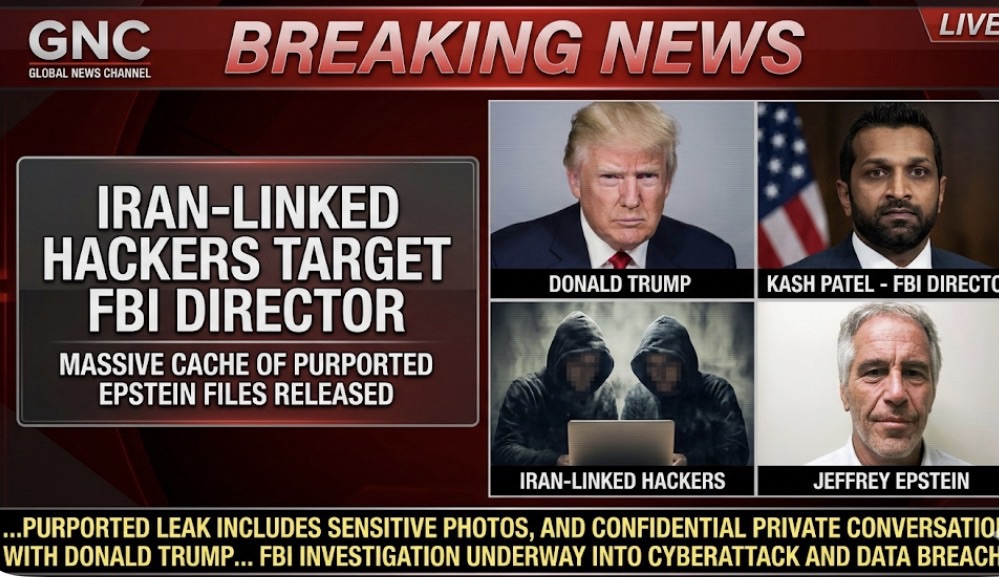
Washington, D.C. — A major cyber incident is shaking U.S. political and intelligence circles after a group described as Iran-linked hackers allegedly breached the personal email account of FBI Director Kash Patel and published a trove of unverified materials online, including what they claim are documents tied to Epstein , private photographs, and confidential conversations with Trump.

The hackers, who surfaced on encrypted messaging platforms earlier this week, released portions of the data dump alongside claims that they had gained prolonged access to Patel’s personal inbox. The group alleges the materials include sensitive communications, attachments, and files referencing Epstein-related investigations—though the authenticity of these documents has not been independently verified.
U.S. officials have not confirmed the scope of the breach but acknowledged that an investigation is underway. A senior intelligence source, speaking on condition of anonymity, described the situation as “serious but still developing,” warning that early claims circulating online could include manipulated or fabricated content mixed with genuine data.
“This appears to be a classic information operation layered on top of a cyber intrusion,” the official said. “The goal is not just access, but disruption, confusion, and reputational damage.”
The FBI declined to comment directly on the alleged contents of the leak but stated it is “working with relevant agencies to assess and contain a potential cyber incident involving personal communications.” There has been no public confirmation that classified government systems were compromised.
The emergence of alleged Epstein-related files has intensified public attention. The case of Epstein has remained a focal point for speculation and conspiracy theories for years, meaning any purported new material—verified or not—is likely to trigger widespread scrutiny and misinformation.
Equally sensitive are the claimed private exchanges involving Trump. While no official confirmation has been given regarding the legitimacy of the conversations, their mere presence in the leak has already fueled political debate across social media and partisan circles.
Cybersecurity experts caution that such breaches are often used as geopolitical tools. “Even if only a fraction of the material is real, the narrative impact can be enormous,” said one analyst familiar with state-linked cyber operations. “Blending authentic data with altered or misleading content is a known tactic designed to erode trust in institutions.”
The alleged involvement of Iran-linked actors, if confirmed, could further escalate tensions between Washington and Tehran. U.S. officials have previously accused Iranian cyber groups of targeting government officials, political campaigns, and infrastructure as part of broader asymmetric conflict strategies.
Lawmakers from both parties have called for a full briefing on the situation, with some warning that the breach—real or exaggerated—could have national security implications. Others urged caution, emphasizing the need to verify the materials before drawing conclusions.
As of now, much of the leaked content remains unverified, and authorities are urging the public and media outlets to avoid amplifying potentially manipulated information.
The investigation is ongoing, with officials expected to provide further updates as they assess the scale of the breach, identify those responsible, and determine whether any of the materials released pose a genuine security risk.

Taylor Swift Captured in a Playful Moment With Travis Kelce and Jason Kelce During Garage Beer Commercial Shoot

Taylor Swift Captured in a Playful Moment With Husband Travis Kelce and Brother-in-Law Jason Kelce During Garage Beer Commercial Shoot

Taylor Swift Captured in a Playful Moment With Husband Travis Kelce and Brother-in-Law Jason Kelce During Garage Beer Commercial Shoot

Onlookers Report Tense Moment as Taylor Swift and Travis Kelce Leave NYC in Separate Cars Without Saying Goodbye, Though Travis Still Walks His Wife to Her Car and Holds the Door Open

Bad Blood Still? Taylor Swift, Travis Kelce, Blake Lively and Ryan Reynolds All Cross Paths at Ambassador Clubhouse—but the Star-Studded Groups Completely Ignore Each Other

Taylor Swift and Travis Kelce Enjoy Romantic Indian Dinner at Ambassador Clubhouse in NYC as Newlyweds Share a Sweet Night Out Together

Protective Travis Kelce Steps Between Taylor Swift and an Overzealous Paparazzi in Tense NYC Encounter, Defending His Newlywed Wife as the Couple Enjoys a Romantic Night Out at Ambassador Clubhouse

New Mexico Governor Fires Back at Donald Trump for his idea to Rename New Mexico to New America: “Even If He Thinks He’s a King or Dictator, He Must Be a Clown to Think He Can Rename Our State”

Caught in a Sweet Moment: Taylor Swift Feeds Husband Travis Kelce in a sweet moment as the Couple Enjoys Indian Cuisine at Ambassador Clubhouse in NYC

Taylor Swift and Travis Kelce Spotted at Ambassador Clubhouse in NYC Alongside Jason Kelce and Donna Kelce During Special Family Outing

James Gunn Warns Donald Trump Against Using DC Comics Green Lantern to Promote Hate After White House Shares Hero’s Famous Oath Declaring That “No Evil Shall Escape My Sight” in new Ai generated video of Trump
