
NEWS
99-year-old Iranian Grand Ayatollah Naser Makarem Shirazi Declares Jihad against United States and Israel and their Citizens, Offers Massive Reward for Taking Out Israeli PM and U.S. President After Deadly Strike On Iran Kills Supreme Leader Ayatollah Ali Khamenei

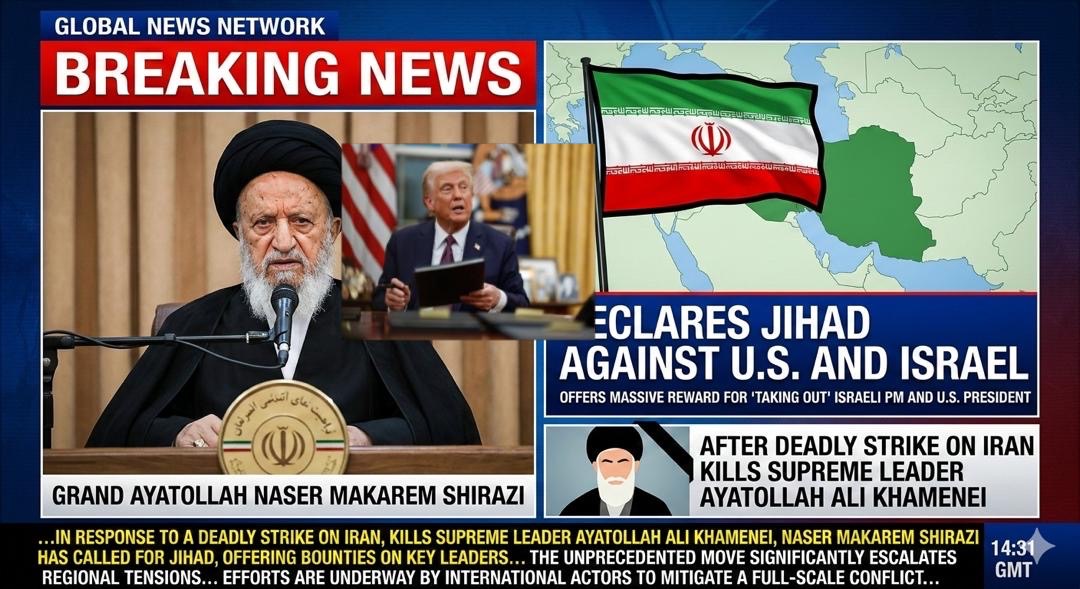
Escalation in the Middle East: Iranian Grand Ayatollah Declares Jihad, Offers $100M Bounty on Netanyahu and Trump
By Elena Vasquez, International Correspondent
Tehran, Iran – March 1, 2026
In a stunning escalation amid already soaring tensions in the Middle East, 99-year-old Iranian Grand Ayatollah Naser Makarem Shirazi has issued a fatwa declaring jihad against the United States and Israel. The decree comes in the wake of a devastating joint US-Israeli airstrike on Iranian soil that claimed the life of Supreme Leader Ayatollah Ali Khamenei, plunging the Islamic Republic into chaos and mourning.
Shirazi, a revered Shiite cleric known for his conservative interpretations of Islamic law, delivered the pronouncement during a fiery sermon broadcast live from the holy city of Qom. Surrounded by thousands of followers clad in black mourning attire, he condemned the strike as “an act of barbarism orchestrated by the Zionist entity and its American puppeteers.” The fatwa not only calls for a holy war but also places a staggering $100 million bounty on the heads of Israeli Prime Minister Benjamin Netanyahu and US President Donald Trump, whom Shirazi accused of masterminding the operation.
“The blood of our Supreme Leader demands retribution,” Shirazi proclaimed, his voice steady despite his advanced age. “Whoever brings an end to these tyrants—Netanyahu, the butcher of Gaza, and Trump, the architect of endless wars—shall be rewarded with $100 million from the coffers of the faithful. This is not mere vengeance; it is divine justice.”
The airstrike, which occurred late last week, targeted a fortified bunker in Tehran where Khamenei was reportedly meeting with top military advisors. US and Israeli officials have justified the action as a preemptive measure against Iran’s alleged nuclear advancements and support for proxy militias across the region. Khamenei’s death marks the first time a sitting Iranian supreme leader has been assassinated, sending shockwaves through the global community and igniting protests from Beirut to Baghdad.
International reactions have been swift and divided. The White House denounced the fatwa as “a desperate act of terrorism from a failing regime,” with President Trump tweeting, “Iran’s mullahs are on their last legs. This bounty is fake news—sad!” Israeli officials, meanwhile, have heightened security around Netanyahu, with the prime minister stating in a press conference, “We will not be intimidated by threats from extremists. Israel stands ready to defend itself against any aggression.”
On the streets of Tehran, the mood is a volatile mix of grief and fury. Thousands have gathered in Imam Khomeini Square, chanting slogans against the US and Israel while waving portraits of the slain Khamenei. Iranian state media has amplified Shirazi’s call, framing it as a unifying rallying cry for the Muslim world. Analysts warn that this could galvanize hardline factions within Iran, potentially leading to increased attacks on US interests in the region or cyber operations against Israeli infrastructure.
Shirazi, who has long been a influential figure in Iran’s religious establishment, rarely makes public appearances due to his age and health. His emergence now underscores the power vacuum left by Khamenei’s death. As one of the few remaining grand ayatollahs with widespread respect, Shirazi’s fatwa could influence the selection of a new supreme leader, tilting the balance toward more radical elements.
The $100 million bounty, purportedly funded through anonymous donations from sympathetic donors across the Islamic world, raises questions about enforcement and legality. Experts in international law argue that such declarations violate UN charters on incitement to violence, potentially inviting further sanctions on Iran. However, in the shadowy world of geopolitical bounties—reminiscent of those placed on figures like Osama bin Laden in the past—enforcement remains elusive.
As the world watches, the risk of a broader conflict looms large. Diplomatic channels, already strained, may falter under this new pressure. European leaders have called for restraint, with the EU foreign policy chief urging de-escalation talks in Geneva. Yet, with jihad declared and bounties issued, the path to peace seems narrower than ever.
This developing story continues to unfold, with potential ramifications for global security, oil markets, and alliances in the Middle East. Stay tuned for updates.

FBI Names Savannah Guthrie’s Ex‑Husband, Mark Orchard, as Lead Suspect in Nancy Guthrie Missing Person Case After DNA Matches; He Is in Custody

FBI Director Kash Patel Confirms New Leads in Nancy Guthrie Disappearance Investigation

Supreme Court Orders Immediate Halt to Ongoing U.S.–Israel Military Operations Against Iran, Says Congress Must Approve Further Action After Deadly Strike That Killed Ayatollah Ali Khamenei Which was led by Donald Trump and Benjamin Netanyahu

99-year-old Iranian Grand Ayatollah Naser Makarem Shirazi Declares Jihad against United States and Israel and their Citizens, Offers Massive Reward for Taking Out Israeli PM and U.S. President After Deadly Strike On Iran Kills Supreme Leader Ayatollah Ali Khamenei

Iranian Hackers Leak Images of Donald Trump With Jeffery Epstein and Some minors in Retaliation for U.S.-Israel Strike That Killed Supreme Leader

How Benjamin Netanyahu Helped Donald Trump Divert Global Attention from the Epstein Case Just Hours After Bill Clinton Testified, Launching a Devastating Strike on Iran and Killing Its Supreme Leader

Donald Trump Boasts of Murder: U.S. Congress and World Leaders and Critics Slam ‘Assassination’ of Iran’s Supreme Leader Khamenei as War Crime

U.S. Supreme Court Declares Any Further Military Action by Donald Trump Without Congressional Authorization Could Trigger Immediate Impeachment Proceedings after Trump and Netanyahu led U.S. Isreal attack on Iran with Saw the Murder of Ayatollah Ali Khamenei

Supreme Court Rules Donald Trump‑Benjamin Netanyahu Strike on Iran Unconstitutional, Orders Limits on Future Military Action” Court says president exceeded war powers; Congress must authorize military force.

‘Illegal and Barbaric’ — Taylor Swift Slams U.S.–Israel Strike Lead by Donald Trump and Benjamin Netanyahu as Outrage Mounts Over Reported Death of Iran Supreme leader Ayatollah Ali Khamenei

State-Sponsored Terrorism? Democrats Blast Donald Trump for Gloating Over Ayatollah Ali Khamenei’s Death in Tehran Bombing after U.S. Israel Joint attack on Iran
