
NFL
Russia, China and France Veto Arab-Backed UN Proposal Seeking Authorization for Use of Force to Reopen the Strait of Hormuz Despite Donald Trump’s Intrest

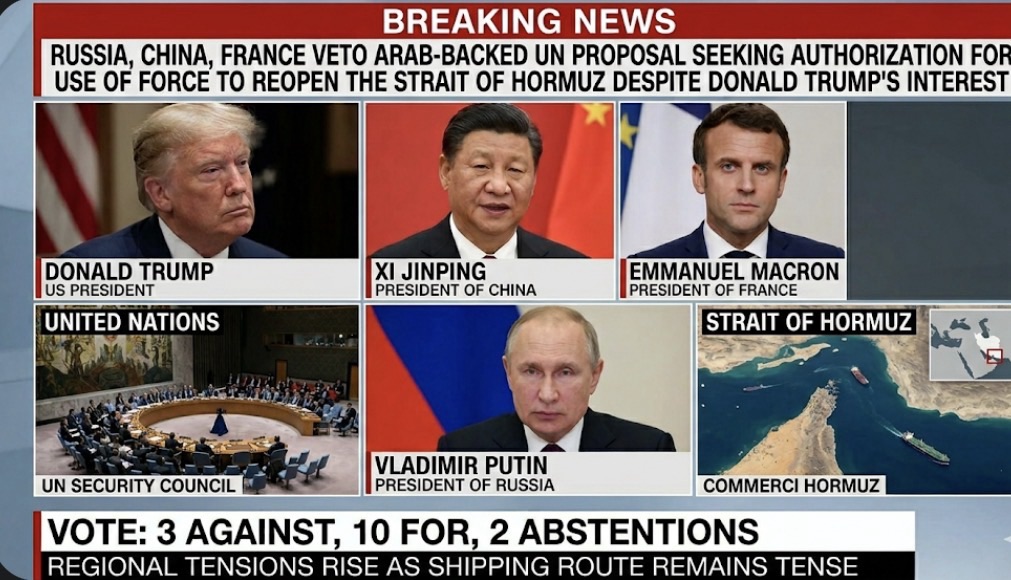
The UN has become the center of heightened geopolitical tensions after Russia, China, and France reportedly vetoed an Arab-backed draft resolution that sought authorization for the use of force to reopen the strategically critical Strait of Hormuz .
The proposed resolution, supported by several Gulf states including the UAE and Bahrain, was aimed at restoring safe maritime passage through the narrow waterway, which is one of the world’s most important energy chokepoints. The strait is a vital route for global oil and gas shipments, and any disruption to its operation has far-reaching implications for international trade and energy security.
However, the draft failed to pass after key global powers exercised their veto authority, effectively blocking any UN-sanctioned military intervention. The decision underscores deep divisions among major international actors over how to address escalating tensions in the region, with some nations favoring diplomatic engagement while others have supported more assertive measures to ensure freedom of navigation.
Following the veto, attention has shifted toward diplomatic alternatives, with reports suggesting that negotiations and bilateral arrangements may be taking precedence over collective military action. The development highlights a broader trend in which states are increasingly relying on direct agreements to secure maritime access rather than coordinated international enforcement mechanisms.
The situation surrounding the Strait of Hormuz continues to evolve, as global stakeholders weigh the risks of escalation against the need to maintain uninterrupted energy flows. Analysts note that the outcome of this dispute could influence not only regional stability but also the future role of international institutions in managing strategic global trade routes.
As diplomatic efforts continue, the UN remains a key forum for discussion, even as consensus among major powers proves difficult to achieve. The vetoed resolution marks another example of how competing geopolitical interests can stall collective action in moments of heightened international tension.

Travis Kelce Turns 37 in Style as Taylor Swift Shares Cozy Birthday Moments and a Stunning Cake From Their Ohio Mansion After Chiefs’ Thrilling Victory Over the Raiders

Taylor Swift Appears to Give Raiders Fan the MIDDLE FINGER After He Trolls Travis Kelce With Brutal “Scores 6s on the Field… 3s Off the Field” Sign During Raiders’ Loss

Taylor Swift and Husband Travis Kelce Share Sweet Hand-in-Hand Moment as They Leave Allegiant Stadium After Chiefs Edge Raiders 30–27 in Thrilling Finish

Taylor Swift Goes Wild and Jubilates Inside Allegiant Stadium as Patrick Mahomes’ Second Touchdown Pass to Tyquan Thornton Sends the Kansas City Chiefs Into a 17–13 Lead Over the Raiders in the Fourth Quarter

Taylor Swift Spotted at Allegiant Stadium To Support Travis Kelce and Chiefs as Patrick Mahomes Leads the Kansas City Chiefs Back to Level With the Las Vegas Raiders at 7–7 in a Tense Battle in Las Vegas With Tyquan Thornton for a Touchdown

Taylor Swift and Travis Kelce Share Sweet Fist Bump as Chiefs Star Arrives at Stadium With Team Ahead of Raiders Showdown

Taylor Swift Poses Alongside Husband Travis Kelce Inside Raiders’ Athletic Training and Recovery Facility Ahead of Chiefs-Raiders Showdown in Las Vegas

Taylor Swift Links Up With Travis Kelce and Dakota Johnson After the 2026 VMAs as the Trio Pose Together Inside Taylor’s Private Jet Following Her Big Night

Travis Kelce Confirms VMAs Appearance to Support Wife Taylor Swift After Scoring Touchdown in Chiefs’ Miami Victory Over the Dolphins

The Swift-Kelce Family Is in Miami! Donna Kelce, Taylor Swift’s Mom Andrea and Brother Austin Arrive Ahead of Travis Kelce’s Chiefs Showdown Against the Dolphins

“Mr. Cleveland” Travis Kelce Touches Down in Miami With Patrick Mahomes and Chiefs Teammates Ahead of Sunday’s Dolphins Showdown
