
NEWS
Donald Trump Administration Launches Emergency Appeal After Federal Judge Orders ICE Agents to Wear Face Masks and Imposes New Limits on Use of Force During Operations as DOJ File Emergency Motion

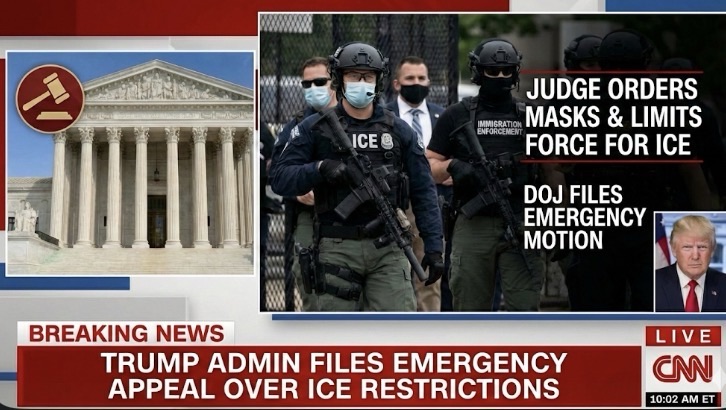
Trump Administration Appeals Judge’s ICE Order as DOJ Files Emergency Motion
The Trump administration has moved swiftly to challenge a federal judge’s order imposing new restrictions on U.S. Immigration and Customs Enforcement (ICE), filing an emergency motion through the Department of Justice (DOJ) to block the ruling while an appeal proceeds.
The contested order, issued earlier this week by a federal judge, requires ICE agents to wear face masks during certain enforcement operations and places limits on the use of force, citing concerns over civil rights, public safety, and accountability during immigration actions. The ruling followed legal complaints and advocacy pressure alleging excessive force and lack of transparency in recent ICE operations.
In its emergency filing, the DOJ argued that the judge overstepped judicial authority and interfered with executive branch powers, warning that the order could “severely hinder” ICE’s ability to carry out immigration enforcement effectively. The Trump administration contends that operational decisions, including protective gear and use-of-force protocols, fall under the discretion of federal law enforcement agencies—not the courts.
“This order threatens officer safety and undermines national security,” DOJ attorneys wrote, urging the appeals court to immediately stay the ruling while the case is reviewed. The administration also claimed that existing ICE guidelines already address appropriate use of force and agent conduct, making the court’s intervention unnecessary.
Supporters of the judge’s decision argue the opposite. Civil rights groups and immigration advocates praised the ruling as a necessary check on ICE practices, saying it promotes accountability and protects both agents and civilians. They maintain that requiring face masks and limiting force does not impede law enforcement but instead aligns ICE operations with constitutional standards.
Legal experts note that the emergency appeal sets the stage for a broader confrontation between the judiciary and the executive branch over immigration enforcement authority. The outcome could establish an important precedent on whether courts can impose operational constraints on federal law enforcement agencies.
The appeals court is expected to rule soon on whether to temporarily block the judge’s order while the case moves forward. Until then, the legal battle underscores the ongoing tension surrounding immigration policy, enforcement tactics, and executive power under the Trump administration.

Supreme Court rules Donald Trump’s White House East Wing demolition illegal, orders immediate rebuild

If We Lose the Midterms and 2028, We’re Going to Prison”: Steve Bannon Warns That Donald Trump, Himself, and Other MAGA Insiders Face Jail if Power Slips Away

Donald Trump Administration Launches Emergency Appeal After Federal Judge Orders ICE Agents to Wear Face Masks and Imposes New Limits on Use of Force During Operations as DOJ File Emergency Motion

Bad Bunny Files Stunning $500 Million Lawsuit Against Donald Trump, Claiming The President’s Super Bowl LX Halftime Remarks Were Made With “Actual Malice” and it’s Causing Severe Reputation Damage

Taylor Swift Takes Aim at Super Bowl Patriots-Seahawks Clash, Says Lack of Chiefs and Travis Kelce Makes Game ‘Unexciting and Boring’ after the popster attended with The NFL Star

Taylor Swift and Travis Kelce Spotted in VIP Suite as Patriots Take On Seahawks at Super Bowl

Supreme Court Overturns Donald Trump’s Immigration Detention Policy, Ruling It Unlawful and Raising Serious Concerns Over ICE Brutality

Former President Barack Obama Reportedly Files $500 million Lawsuit Against Donald Trump, Alleging Racial Intimidation and Severe Reputation Damage After he Posted AI-Generated Video depicting Barack & Michelle Obama as monkeys.

USA Olympic Committee Accuses EU Authorities and Olympic Organizers of Failing to Provide Basic Athlete Support, Claims American Athletes Are Being Treated Unfairly Due to Rising EU–US Political Tensions amid Donald Trump’s Greenland ambitions

Taylor Swift Continues Her NFL Takeover, Supporting Boyfriend Travis Kelce and Brother Jason at the NFL Honors in a Stunning Appearance at the Annual Awards Show

Supreme Court Blocks Donald Trump’s “Save Act,” Rules It Violates U.S. Constitution, Conflicts With Voting Rights Act, and Imposes Unreasonable Burdens on Voters
