
NEWS
Donald Trump Administration Unveils Budget Proposal to Reduce SSI and Veterans Benefits in Bid to Reallocate Funds to DHS as Partial Homeland Security Shutdown Enters Critical Phase While Congress Declines

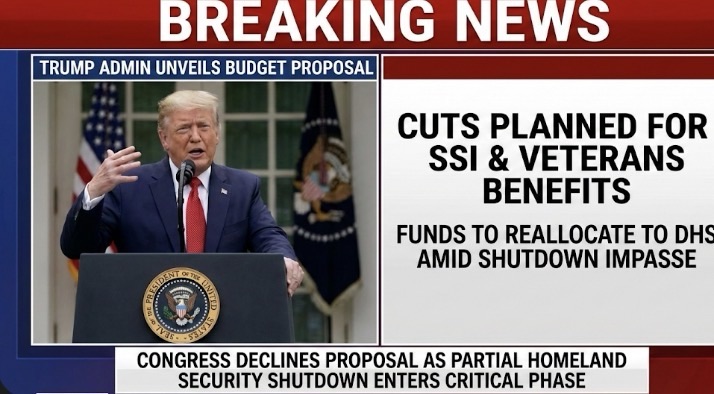
Washington, D.C. — A tense budget standoff has intensified after the administration of Donald Trump proposed reductions to Supplemental Security Income (SSI) and certain veterans’ benefit programs in an effort to redirect funds toward the Department of Homeland Security (DHS), which is currently facing a partial shutdown.
The proposal, submitted as part of a revised budget request, comes after Congress declined to approve additional DHS funding without broader negotiations over domestic spending priorities. With homeland security operations partially constrained due to the impasse, the White House argued that “temporary reallocations and structural reforms” are necessary to maintain border security, disaster response coordination, and counterterrorism readiness.
What the Proposal Includes
According to administration officials, the plan calls for targeted reductions within the Supplemental Security Income program administered by the Social security administration , along with proposed adjustments to certain benefit formulas overseen by the U.S. Department of Veterans Affairs
The White House maintains that the reductions would focus on “program efficiencies and eligibility recalibrations,” rather than across-the-board benefit cuts. However, critics argue that any reduction could directly affect vulnerable populations, including low-income seniors, individuals with disabilities, and military veterans.
Congressional Resistance
Leaders in both chambers of Congress quickly pushed back, stating that SSI and veterans’ benefits are mandatory spending programs established by statute and should not be used as bargaining tools in broader budget negotiations.
Several lawmakers described the proposal as politically risky, particularly given the longstanding bipartisan support for veterans’ benefits. Others warned that tying domestic benefit reductions to homeland security funding could deepen the partisan divide and prolong the shutdown.
Impact of the DHS Partial Shutdown
The partial shutdown has already begun affecting administrative operations within DHS, though essential functions such as border protection and emergency response remain active. Funding lapses have placed pressure on agency planning and contractor payments, increasing urgency on Capitol Hill to reach a resolution.
Economic analysts caution that prolonged uncertainty could create ripple effects across federal agencies, while advocacy groups representing seniors and veterans have begun mobilizing against the proposal.
What Happens Next
Because Congress controls federal spending, the administration cannot implement benefit reductions without legislative approval. Negotiations are expected to continue as lawmakers attempt to craft a compromise that restores DHS funding while protecting entitlement programs.
For now, the budget impasse underscores a broader debate over national security priorities, fiscal responsibility, and the political consequences of restructuring long-standing federal benefit programs.

Lawmakers Fire Back as Congress Pushes Back Strongly After Donald Trump Declares Voter ID Will Be Required in Midterms ‘Whether Approved By Congress or Not,’ Setting Up a Clash Over Legislative Authority

The Alchemy of Love: Inside Taylor Swift and Travis Kelce’s First Valentine’s Day as an Engaged Couple at Patrick Mahomes and Travis Kelce Exclusive Kansas City Sanctuary, 1587 Prime

Donald Trump Administration Unveils Budget Proposal to Reduce SSI and Veterans Benefits in Bid to Reallocate Funds to DHS as Partial Homeland Security Shutdown Enters Critical Phase While Congress Declines

‘Confirmed’: Taylor Swift Gives Travis Kelce the Ultimate Valentine’s Shoutout, Naming Him Her ‘In-House House Guy’ for Coordinating the Surprise ‘Opalite’ House Remix with DJ Chris Lake

Can They Get to 218? Bipartisan Coalition of Democrats and Moderate Republicans Races Against Time to Impeach Donald Trump Over Shocking Allegations Spanning War Crimes, Epstein Connection, and Embezzlement

Taylor Swift and Travis Kelce Shut Down the Streets of Manhattan as They Arrive Hand-in-Hand for an Ultra-Exclusive Valentine’s Day Dinner
Supreme Court Set to Redefine the Limits of Presidential Immunity, Raising Serious Legal Stakes for President Donald Trump’s Second Term

Taylor Swift Reunites With Travis Kelce Partying together at Late-Night Club Following Super Bowl Spotlight

Supreme Court rules Donald Trump’s White House East Wing demolition illegal, orders immediate rebuild

If We Lose the Midterms and 2028, We’re Going to Prison”: Steve Bannon Warns That Donald Trump, Himself, and Other MAGA Insiders Face Jail if Power Slips Away

Donald Trump Administration Launches Emergency Appeal After Federal Judge Orders ICE Agents to Wear Face Masks and Imposes New Limits on Use of Force During Operations as DOJ File Emergency Motion
