
NEWS
Donald Trump Insists His Tariffs Will Remain in Effect Despite Supreme Court Ruling Declaring the Tariffs not Effective and Trade Measures Illegal

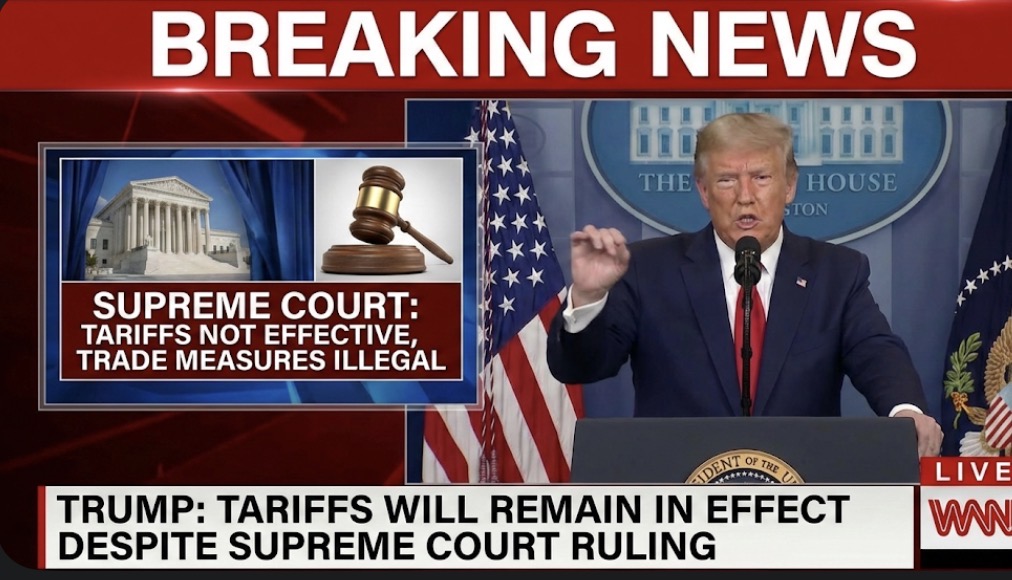
Trump Insists Tariffs Will Stand Despite Supreme Court Ruling Declaring Them Illegal
A major constitutional confrontation is unfolding after former President Donald Trump declared that his administration’s tariffs would remain in place despite a ruling from the Supreme Court of the United States finding the trade measures unlawful.
In a sharply worded response following the Court’s decision, Trump insisted the tariffs were necessary to protect American industries and national security interests. “These tariffs will stand,” he said, signaling he would not retreat from the policy even after the nation’s highest court rejected its legal foundation.
The Supreme Court’s ruling marked a significant rebuke of the tariff framework, concluding that the executive branch had exceeded its statutory authority in imposing certain trade penalties without proper congressional authorization. Legal analysts described the decision as a reaffirmation of limits on presidential power in economic and trade matters.
Trump, however, framed the Court’s move as a political and economic mistake, arguing that lifting the tariffs would weaken the United States in global trade negotiations. Supporters echoed his stance, saying the tariffs were designed to shield domestic manufacturing and counter what they view as unfair foreign trade practices.
Critics, meanwhile, warned that ignoring or defying a Supreme Court ruling would spark a serious constitutional crisis. Constitutional scholars noted that under the U.S. system of checks and balances, Supreme Court decisions are binding, and compliance is a cornerstone of the rule of law.
The standoff raises questions about enforcement and next steps. Legal experts suggest the administration could seek alternative legal pathways to reimpose similar trade measures, pursue legislative backing from Congress, or request a rehearing. However, openly disregarding a Supreme Court ruling would likely trigger swift legal challenges and political backlash.
The dispute also reignites a broader debate about executive authority in trade policy — an area where presidents traditionally wield significant power but remain subject to statutory limits set by Congress.
As the situation develops, all eyes remain on how the administration and federal agencies will respond to the ruling — and whether this confrontation will escalate into a deeper clash between the executive branch and the judiciary.

Amazon CEO Jeff Bezos Confirms Company Plans to Recover $35 Billion Following Supreme Court Decision That Struck Down Donald Trump’s Controversial Tariffs

Retail Giant Walmart Demands $28 Billion Refund After Supreme Court Declares Donald Trump’s Tariffs Illegal,

Supreme Court of the United States Issues Stark Warning to Donald Trump and Signal Consequences After President Signs 10% “Global Tariff” Order Despite 6–3 Ruling Limiting Emergency Powers Authority

Donald Trump Insists His Tariffs Will Remain in Effect Despite Supreme Court Ruling Declaring the Tariffs not Effective and Trade Measures Illegal

Taylor Swift Publicly Calls Donald Trump ‘Unfit for Office,’ Accuses Him of ‘Destroying the Country’ in Blunt Political Statement

U.S. Senators Formally Invoke 25th Amendment, Call for President Donald Trump’s Removal from Office

Disabled American Veterans (DAV) File Federal Lawsuit Against Donald Trump After Proposal to Slash SSI and Veterans Benefits to Reallocate Funds to United States Department of Homeland Security Amid Shutdown

Stephen Colbert Launches $750 Million Federal Lawsuit Against FCC and Donald Trump in Punitive and Compensatory Damages , Accusing Trump of Orchestrating Brazen Censorship and a Direct Assault on Press Freedom and Free Speech by Forcing CBS to Pull Interview with Texas Senate Hopeful James Talarico

Taylor Swift Announces $15 Million Humanitarian Commitment to Muslim Associations Worldwide to Support Ramadan Feeding Programs and Community Incentives

Taylor Swift’s Bold “No Kings” Message to Donald Trump on Presidents Day Sparks Nationwide Debate and Social Media Frenzy.

Donald Trump Signs Controversial Executive Order Authorizing Penalties Against Americans and Social Media Users Who Publicly Criticize U.S. Immigration and Customs Enforcement ICE
