
NFL
Donald Trump Issues Strong Warning to Governors and Legislatures — Threatens To Cut Funding to States Interfering With ICE Detentions, Arrests, and Information Sharing

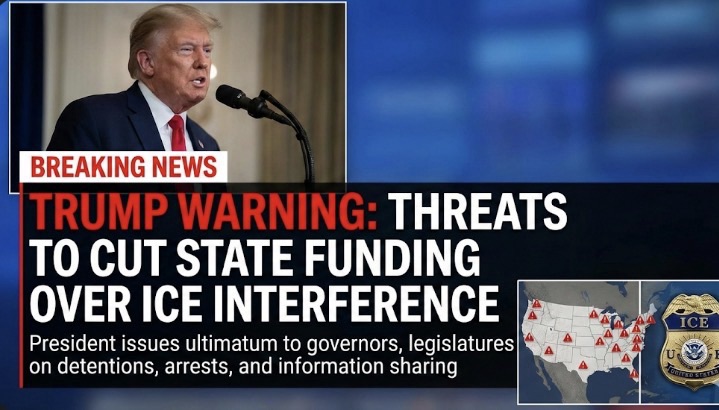
President Donald Trump escalated tensions between the federal government and several U.S. states on Monday, threatening to withhold federal funding from jurisdictions he accused of obstructing Immigration and Customs Enforcement (ICE) agents and disrupting federal immigration enforcement operations.
Speaking from the White House, Trump criticized state-level policies—particularly those associated with so-called “sanctuary” jurisdictions—which limit cooperation between local law enforcement and federal immigration authorities. “When states interfere with federal agents, they undermine the rule of law and endanger public safety,” the president said. “States that choose to obstruct ICE will face consequences, including potential reductions in federal funding.”
Administration officials later clarified that the White House is exploring mechanisms that would allow federal grants to be tied directly to state compliance with ICE detainer requests, access to state detention facilities, and information sharing between local law enforcement and federal immigration agencies. While officials did not specify which funding streams might be targeted, previous administrations have relied on discretionary grants from the Department of Justice and Department of Homeland Security as leverage in disputes over immigration policy.
State officials reacted swiftly. Leaders from several states criticized the president’s stance as an overreach of federal authority, arguing that the Constitution does not allow the federal government to compel state or local law enforcement to carry out federal immigration duties. “Local jurisdictions have the right to set public safety priorities that reflect the needs of their communities,” one governor said. “Threatening to strip funding from states is punitive and inconsistent with federalism.”
Legal analysts noted that similar attempts to condition federal grants on immigration cooperation during Trump’s previous term faced significant court challenges. The Supreme Court has historically limited the federal government’s ability to impose new requirements on pre-existing funding streams without congressional approval. However, experts also pointed out that the executive branch retains considerable discretion over competitive grant programs, which could give the administration room to maneuver if it seeks to apply financial pressure to non-compliant states.
The threat adds a new dimension to the longstanding clash between Washington and states that limit their participation in federal immigration enforcement. Supporters of sanctuary policies argue that such measures build trust between immigrant communities and local police, making it easier to address crime and protect vulnerable populations. Critics, including the Trump administration, contend that sanctuary jurisdictions shelter individuals who are in the country unlawfully and, in some cases, have criminal records.
As debate intensifies, congressional leaders have yet to comment on whether legislation will follow. For now, the administration’s warning signals that immigration enforcement may again become a central fault line between federal and state governments—setting the stage for political and legal battles in the months ahead.

Donald Trump Issues Strong Warning to Governors and Legislatures — Threatens To Cut Funding to States Interfering With ICE Detentions, Arrests, and Information Sharing

Congressional Oversight Panel Subpoenas Melania Trump, Call Her to testify, under oath, before Congress regarding what she knows about Epstein and Donald Trump

Donald Trump Declares Plan to Sue Michigan Ford Plant Employee for Defamation Claims for shouting “Pedophile Protector” During Factory Tour, After the Worker Receives Suspension From Company Officials

President Trump Reaffirms Full Support for ICE Personnel Amid Growing Protests and Minnesota Government Lawsuit Challenging Federal Immigration Enforcement Policies and His Administration

Supreme Court Hits Donald Trump Tariffs as Illegal and Unconstitutional Overreach, Compelling Immediate Refunds While Democrats Demand Further Investigations and Republicans Cry Foul

Supreme Court’s Intervention in Red State Transgender Athlete Bans Sets Up Major Showdown Between Republican Legislatures Prioritizing “Fairness in Sports” and Federal Agencies Emphasizing Civil Rights Compliance Under Title IX

Taylor Swift and Travis Kelce Spotted Arriving Together for a Low-Key Date Night in Beverly Hills After Golden Globes Glam

Supreme Court Issues Emergency Injunction Temporarily Restricting Key ICE Enforcement Actions in Minnesota as Legal Challenges Move Forward After State Files Lawsuit Alleging Constitutional Violations, ICE killing and Unlawful Use of Force Under the Donald Trump Administration.

“Before He Drags Us All Down”: Taylor Swift Makes an Unprecedented Plea to America’s Highest Powers (Congress and Supreme Court) to Stop Donald Trump.

President Donald Trump Drafts Unprecedented Executive Order to Prosecute Online Criticism as an Act of “Treason”

Taylor Swift Issues Stern Call to Action Against Donald Trump, Claiming That Without Swift Intervention by Congress and the Supreme Court, the United States Could Be Pulled Into Unprecedented Turmoil and Destruction
