NFL
Donald Trump Set to Sign Executive Order at 5pm Restricting Mail-In and Absentee Ballots to Verified Cases of Illness, Disability, Military Service, or Travel While Mandating DHS and SSA Voter List Verification

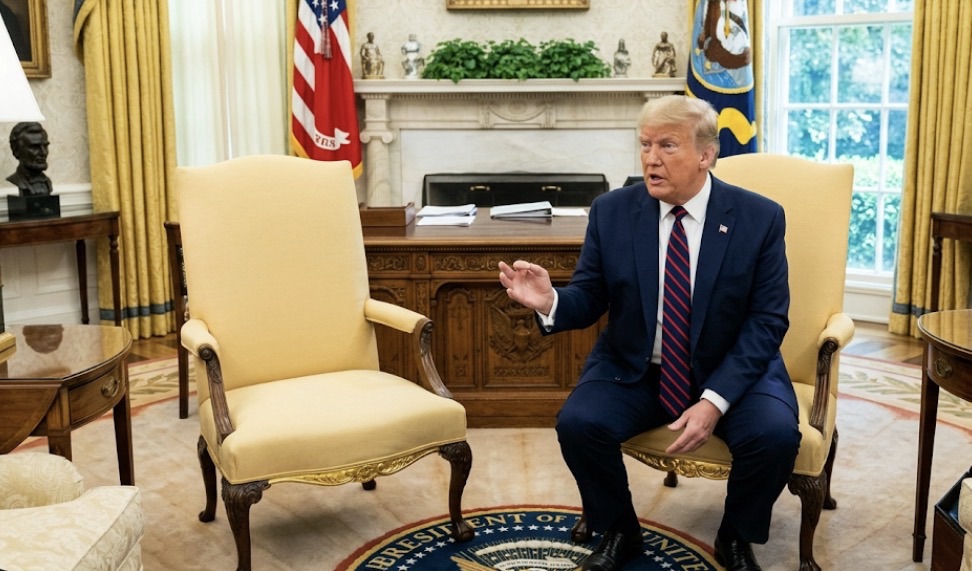
Trump Set to Sign Executive Order at 5pm ET Cracking Down on Mail-In Voting, Limiting Absentee Ballots and Directing Federal Agencies to Verify Voter Lists
Washington, D.C. — President Donald Trump is scheduled to sign a new executive order this evening at 5 p.m. ET that aims to significantly restrict the use of mail-in and absentee ballots while enlisting the Department of Homeland Security (DHS) and Social Security Administration (SSA) to help states verify voter rolls, according to a report from the Daily Caller and announced on X by conservative commentator Nick Sortor.
The move represents the latest step in the Trump administration’s ongoing push for what supporters call stronger election integrity measures ahead of the 2026 midterm elections. It builds on earlier executive actions and the president’s long-standing criticism of expanded mail voting, which he has repeatedly described as prone to fraud and vulnerable to abuse.
Key Provisions of the Expected Order
According to the reporting, the executive order will:
- Limit absentee and mail-in ballots primarily to specific, verifiable circumstances: voters who are ill or disabled, members of the military, or those traveling and unable to vote in person on Election Day. This would effectively curb the broader “no-excuse” or universal mail-in voting systems adopted or expanded in many states during the COVID-19 pandemic and retained afterward.
- Direct federal agencies to assist with voter list verification: The DHS and SSA would be tasked with helping states cross-check and clean voter registration lists, with the goal of removing ineligible entries and improving accuracy.
- Emphasize ballot tracking and security: The order is framed as part of a broader effort to address perceived weaknesses in the election system that Trump has highlighted since the 2020 contest.
In a short video clip shared alongside the announcement, President Trump described the restrictions as one of his top three priorities for election reform, calling the current system “rigged and crooked” and referencing issues with discarded or improperly handled ballots.
Context and Background
Trump has made election security a central theme of his second term. In August 2025, he publicly vowed to “lead a movement to get rid of MAIL-IN BALLOTS” and “inaccurate” voting machines, announcing plans for an executive order to promote honesty in the 2026 midterms. Earlier actions in March 2025 included directives on proof-of-citizenship requirements and efforts to prevent the counting of mail ballots received after Election Day — provisions that have faced significant legal challenges and court blocks in multiple states.
Supporters, including many Republican lawmakers and conservative voters, argue that widespread mail-in voting increases risks of fraud, ballot harvesting, and chain-of-custody problems. They point to public polling showing strong bipartisan support for tighter deadlines (such as requiring ballots to be received by Election Day) and basic safeguards like voter ID. Proponents view the new order as a necessary corrective to restore confidence in elections without relying solely on Congress.
Critics, including voting rights groups, Democratic officials, and some legal experts, contend that such restrictions amount to voter suppression. They argue the measures could disproportionately affect elderly voters, people with disabilities, rural residents, and those with work or family obligations that make in-person voting difficult. Legal challenges are widely expected, with opponents citing the Constitution’s allocation of primary authority over federal elections to the states and Congress rather than the executive branch. Previous Trump election-related executive orders have been partially or largely enjoined by federal courts on similar grounds.
Notably, Trump himself has used mail-in ballots in recent Florida elections, though aides have clarified that his focus is on limiting universal or no-excuse mail voting rather than individual absentee requests for legitimate reasons.
Potential Impact and Reactions
If implemented and upheld, the order could reshape voting practices in states that currently offer broad mail-in options. It aligns with parallel legislative efforts, such as the SAVE America Act, which seeks similar reforms including proof of citizenship for registration and stricter ID requirements. That bill has advanced in the House but faces hurdles in the Senate.
Conservative voices on X and elsewhere hailed the announcement as a “great” step forward for secure elections. Meanwhile, progressive groups and Democratic leaders are preparing legal and public pushback, framing it as an attack on access to the ballot.
The signing is set for this evening, and further details are expected to emerge directly from the White House once the order is formalized and released.
This development comes amid ongoing Supreme Court consideration of related issues, including whether states can count mail ballots postmarked by Election Day but received afterward — a case with potential implications for the 2026 midterms.
As with prior election policy moves, the ultimate scope and enforceability of the executive order will likely be tested in the courts in the coming weeks and months.

Federal Judge Issues Permanent Injunction on Donald Trump, Permanently Blocking His Plan to Defund PBS — Here’s What Happened

Donald Trump Set to Sign Executive Order at 5pm Restricting Mail-In and Absentee Ballots to Verified Cases of Illness, Disability, Military Service, or Travel While Mandating DHS and SSA Voter List Verification

Donald Trump Declares ‘No Kings’ Protests “100% BS,” Alleges $3 Billion Funding Network Led by George Soros, Neville Singham, and Taylor Swift Through Hundreds of NGOs and Calling for Their Immediate Arrest

Here is a list of A-list celebrities—including Taylor Swift, Robert De Niro, Beyoncé, Mark Ruffalo, Pedro Pascal, and Olivia Rodrigo—who came out to protest against Donald Trump at the ‘No Kings Day’ march.

Donald Trump criticizes Americans protesting “No Kings Day” nationwide as jobless

ICE Agents Blocked by Protesters During Attempted Mass Arrests at “No Kings Day” Rally in New York after Donald Trump’s Order

Taylor Swift and Travis Kelce Spotted in Kansas as They Join Thousands at ‘No Kings Day’ Parade Protesting Donald Trump

Multiple ICE Agents Injured After Clashes With “No Kings” Protesters Blocking the from making multiple Arrests Following Donald Trump’s Order for Nationwide Deployment to Demonstration Sites

Donald Trump Orders Immediate Nationwide Cancellation of ‘No Kings Day’ Protest Parades, Citing Escalating Security Concerns Over Potential Iran Threats on American Soil

ICE Agents Blocked by Protesters During Attempted Mass Arrests at “No Kings Day” Rally in Atlanta after Donald Trump’s Order

Taylor Swift Pledge a $1 Million Contribution to Support Organizers of ‘No Kings’ Demonstrations Against Donald Trump
