
NEWS
If We Lose the Midterms and 2028, We’re Going to Prison”: Steve Bannon Warns That Donald Trump, Himself, and Other MAGA Insiders Face Jail if Power Slips Away

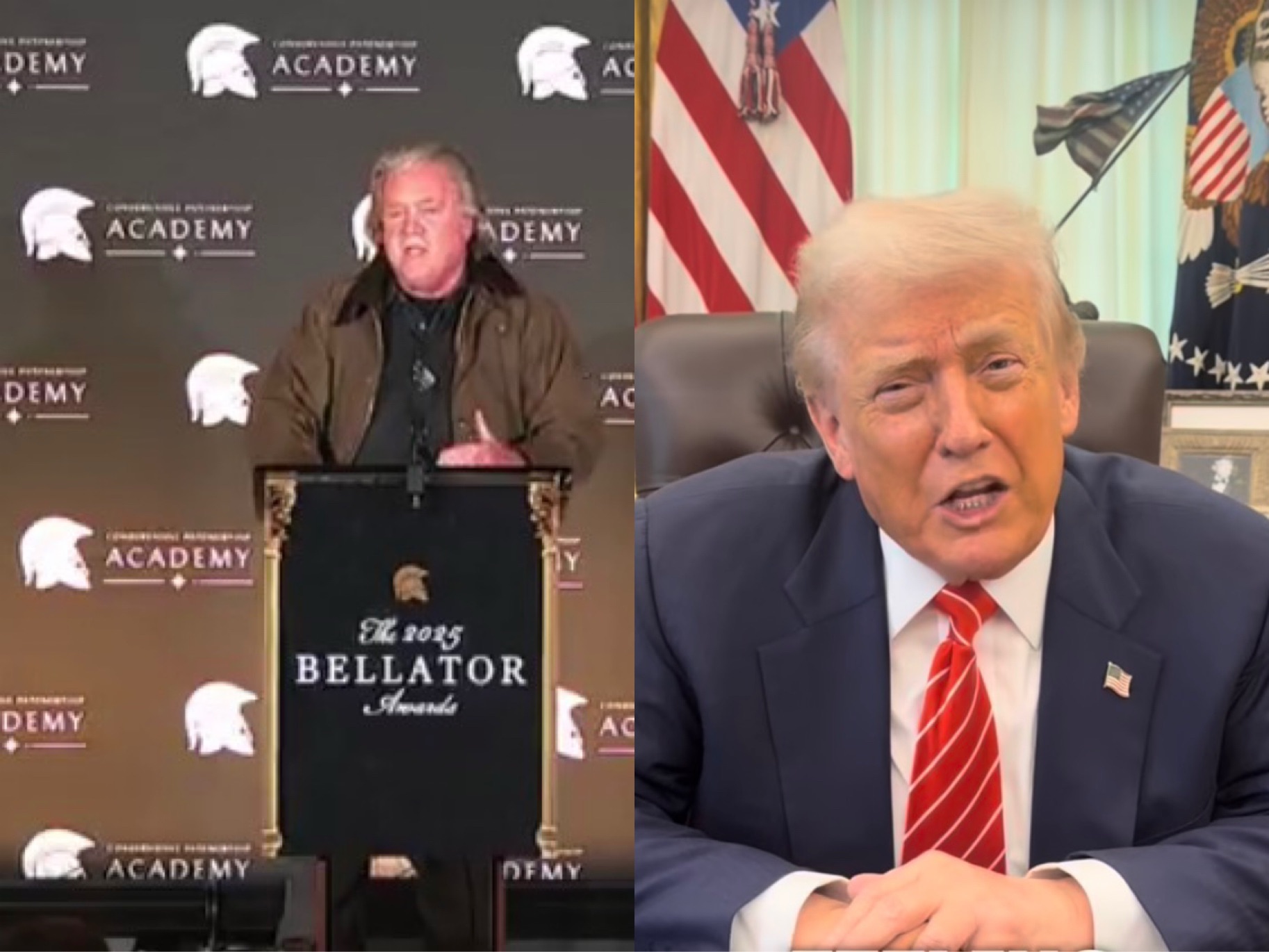
Steve Bannon Issues Stark Warning: Electoral Defeat Could Mean Prison for Trump and Allies
Steve Bannon, the former White House strategist and longtime ally of Donald Trump, sparked intense controversy after delivering a blunt warning about the political and legal stakes facing the Trump movement, telling a room of supporters that losing future elections could result in prison time for Trump, himself, and others in attendance.
Speaking at a private gathering of conservative activists, Bannon was quoted as saying, “If we lose the midterms and we lose 2028, Donald Trump and some in this room are going to prison, myself included.” The remark, quickly circulated online, has ignited fierce debate across the political spectrum about the intersection of elections, accountability, and the rule of law.
Bannon’s comments appeared to frame upcoming elections not just as contests for political power, but as existential battles with serious legal consequences. While he did not specify which cases or investigations he was referring to, his statement comes amid ongoing legal scrutiny surrounding Trump and several figures associated with his political movement.
Supporters of Bannon argue that his remarks were meant as a rallying cry, intended to motivate voters by highlighting what they see as politically motivated prosecutions and a hostile legal environment. Critics, however, say the statement is deeply troubling, suggesting an attempt to pressure voters by implying that electoral outcomes could shield individuals from legal accountability.
Democratic lawmakers and legal analysts seized on the quote as evidence of what they describe as an erosion of democratic norms. “Elections are not supposed to be about avoiding prison,” one Democratic strategist said. “They’re about policy, leadership, and public trust.”
Republican reactions were more mixed. Some distanced themselves from Bannon’s language, calling it unhelpful and inflammatory, while others echoed his broader concern about what they view as the politicization of the justice system.
Legal experts note that elections do not directly determine guilt or innocence, emphasizing that criminal cases are decided by courts, not voters. Still, they acknowledge that control of the executive branch can influence prosecutorial priorities, judicial appointments, and enforcement approaches.
For Bannon, a polarizing figure who has long embraced confrontation as a political strategy, the statement reinforces his image as someone willing to push rhetoric to its limits to energize supporters. Whether the comment galvanizes the Trump base or alienates undecided voters remains an open question.
As the midterm elections approach and attention begins to shift toward the 2028 presidential race, Bannon’s words underscore just how high the stakes have become in America’s deeply divided political landscape—where power, accountability, and fear of legal consequences are increasingly part of the same conversation.

Supreme Court rules Donald Trump’s White House East Wing demolition illegal, orders immediate rebuild

If We Lose the Midterms and 2028, We’re Going to Prison”: Steve Bannon Warns That Donald Trump, Himself, and Other MAGA Insiders Face Jail if Power Slips Away

Donald Trump Administration Launches Emergency Appeal After Federal Judge Orders ICE Agents to Wear Face Masks and Imposes New Limits on Use of Force During Operations as DOJ File Emergency Motion

Bad Bunny Files Stunning $500 Million Lawsuit Against Donald Trump, Claiming The President’s Super Bowl LX Halftime Remarks Were Made With “Actual Malice” and it’s Causing Severe Reputation Damage

Taylor Swift Takes Aim at Super Bowl Patriots-Seahawks Clash, Says Lack of Chiefs and Travis Kelce Makes Game ‘Unexciting and Boring’ after the popster attended with The NFL Star

Taylor Swift and Travis Kelce Spotted in VIP Suite as Patriots Take On Seahawks at Super Bowl

Supreme Court Overturns Donald Trump’s Immigration Detention Policy, Ruling It Unlawful and Raising Serious Concerns Over ICE Brutality

Former President Barack Obama Reportedly Files $500 million Lawsuit Against Donald Trump, Alleging Racial Intimidation and Severe Reputation Damage After he Posted AI-Generated Video depicting Barack & Michelle Obama as monkeys.

USA Olympic Committee Accuses EU Authorities and Olympic Organizers of Failing to Provide Basic Athlete Support, Claims American Athletes Are Being Treated Unfairly Due to Rising EU–US Political Tensions amid Donald Trump’s Greenland ambitions

Taylor Swift Continues Her NFL Takeover, Supporting Boyfriend Travis Kelce and Brother Jason at the NFL Honors in a Stunning Appearance at the Annual Awards Show

Supreme Court Blocks Donald Trump’s “Save Act,” Rules It Violates U.S. Constitution, Conflicts With Voting Rights Act, and Imposes Unreasonable Burdens on Voters
