
NFL
International Criminal Court Set to Open Investigation Into Alleged Crimes of Aggression, War Crimes, and Violations of Sovereignty Following Donald Trump’s Military Attack on Venezuela and the Capture of it’s Sitting President, Nicolás Maduro

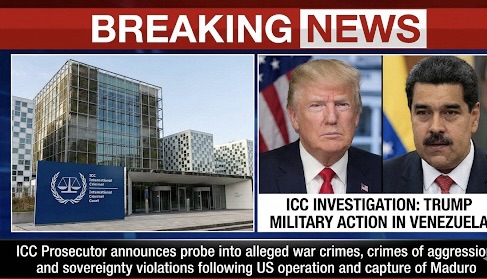
International Criminal Court Set to Investigate Alleged Crimes Following U.S. Attack on Venezuela
The International Criminal Court (ICC) is preparing to examine allegations of crimes of aggression, war crimes, and violations of national sovereignty following a controversial U.S. military action in Venezuela that reportedly led to the capture of President Nicolás Maduro. The move signals a potential escalation of legal scrutiny as international institutions respond to what some governments and legal experts describe as a serious breach of international law.
According to diplomatic sources, the ICC’s Office of the Prosecutor is conducting a preliminary assessment to determine whether the alleged actions fall within the court’s jurisdiction. The review is expected to focus on claims that the use of force violated the United Nations Charter, undermined Venezuela’s sovereignty, and resulted in the unlawful detention of a sitting head of state. If the threshold for a full investigation is met, the case could become one of the most significant international legal challenges involving a former U.S. president.
Critics argue that the reported operation constitutes a crime of aggression, defined under international law as the use of armed force by a state against the sovereignty or political independence of another state without lawful justification. Human rights organizations have also raised concerns about possible civilian harm and due process violations, urging the ICC to act swiftly and independently.
Supporters of the U.S. action, however, dispute these claims, asserting that the operation was justified on national security grounds and aimed at restoring stability. They maintain that the ICC lacks jurisdiction over U.S. nationals and warn that an investigation could further strain already tense relations between Washington and international legal bodies.
The unfolding situation has sparked strong reactions across the globe. Several countries have called for restraint and due process, while others have demanded accountability through international courts. The United Nations has urged all parties to respect international law and avoid steps that could further destabilize the region.
As the ICC weighs its next steps, the case underscores growing debates about the limits of military power, the role of international justice, and whether global legal institutions can hold powerful actors accountable. Any decision by the court to proceed would mark a historic moment with far-reaching diplomatic and political consequences.

International Criminal Court Set to Open Investigation Into Alleged Crimes of Aggression, War Crimes, and Violations of Sovereignty Following Donald Trump’s Military Attack on Venezuela and the Capture of it’s Sitting President, Nicolás Maduro

U.S. Supreme Court Declares Donald Trump’s Capture and Detention of Venezuela Sitting President Nicolás Maduro a Violation of Head-of-State Immunity and International Law, Mandates His Immediate Extradition

Travis Kelce and Taylor Swift Turn Heads in the Caribbean, Spotted Indulging in Ultimate Luxury as They Cruise Virgin Gorda on a Flying Ray Boat

Donald Trump Admits at House GOP Members’ Retreat That He Fears Impeachment and Possible Prison if Republicans Lose Control of Congress in the 2026 Midterm Elections

IMF Condemns President Donald Trump’s Military Attack on Venezuela and the Abduction of President Nicolás Maduro, Warning That U.S. Actions Are Destabilizing the Global Economy , Threatens to Trigger a Review of America’s Voting Influence and Leadership Role and Limit it if Maduro is not released

Donald Trump Issues a Chilling Dare to China and Russia During House GOP Retreat as Global Tensions Surge After Venezuela Attack and Capture of President Maduro following thier Threats to Take Military Action and Economic Sanctions on United States

China Detains U.S. Special Envoy Jamieson Greer and Ambassador David Perdue, Confines Assets as Tensions Surge Over Venezuela and Beijing Demands President Maduro’s Immediate Release

United States Signals It Will Exercise Its Veto Power at the United Nations After Being Suspended Under Article 5 for Condemning President Donald Trump’s Unilateral Military Action in Venezuela and the Capture of President Nicolás Maduro

China Firmly Rejects U.S. Offer to Transfer Venezuelan Oil, Insisting President Nicolás Maduro Be Released Immediately and Unconditionally after Donald Trump’s Military Action in Venezuela and Abducting its president

China Conducts Standard Troop Deployments, Scheduled PLA Drills and Missile Tests as It Continues to Warn the United States and Donald Trump of Serious Military Consequences Over the Detention of Venezuela’s President

Taylor Swift Urges Immediate Impeachment of Donald Trump after Attacking Venezuela and ‘Kidnapping’ President Maduro, Demands Removal of Pete Hegseth for War Crimes and Kash Patel Over Epstein File Destruction, Warns Public of Alleged Plans Targeting Mexico, Greenland, and Cuba
