
NEWS
President Donald Trump Reportedly Order ICE to Continue Detaining 2-Year-Old Girl Taken Into Custody in Minneapolis, Even After Supreme Court Orders Her Release

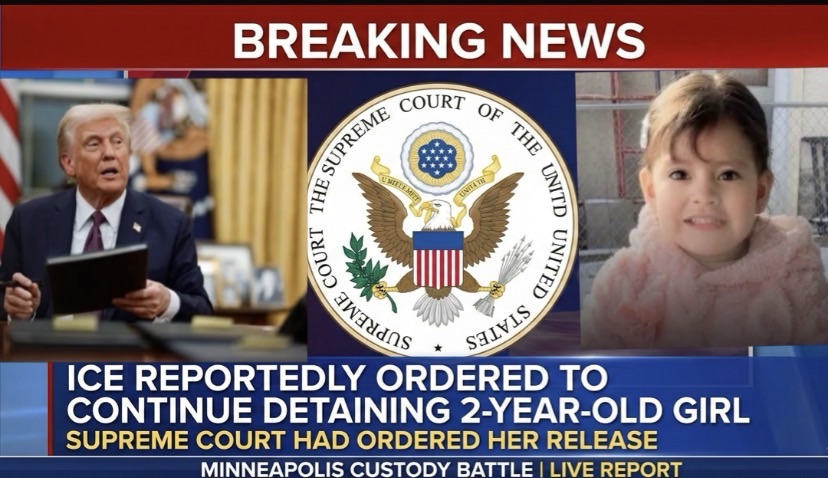
Controversy Erupts as Reports Claim Trump Allegedly Directed ICE to Detain 2-Year-Old in Minneapolis Despite Supreme Court Order Minneapolis, MN – January 24, 2026 Reports have emerged suggesting that President Donald Trump allegedly directed U.S. Immigration and Customs Enforcement (ICE) to continue detaining a 2-year-old girl arrested in Minneapolis, even as the Supreme Court had ordered her immediate release.
The news has ignited a national debate over executive authority, immigration enforcement, and the rights of children in federal custody. The young girl, whose identity has been withheld for privacy reasons, was taken into custody alongside her father during an immigration enforcement operation in Minneapolis. According to legal representatives involved in the case, ICE transferred the child and her father to a facility outside Minnesota shortly after the arrest, despite a federal judge issuing an emergency order calling for the toddler’s release.
Legal experts have expressed alarm at the situation, highlighting the tension between federal immigration enforcement powers and judicial authority. “The involvement of a Supreme Court order in this case makes it particularly sensitive,” said one immigration law scholar. “Even minor children are entitled to protection under the law, and detaining them against a court’s directive raises serious legal and ethical questions.” Human rights groups and child advocacy organizations swiftly condemned the alleged directive. Protests erupted in Minneapolis, with demonstrators calling for immediate compliance with the court’s order and questioning the broader policies that allow for children to be caught in immigration enforcement actions.
A spokesperson for ICE declined to confirm the alleged directive from Trump but emphasized that the agency was “committed to following federal law and standard procedures regarding minors in custody.” Political reactions have been sharply divided. Critics argue that this action, if confirmed, reflects a disregard for judicial oversight and the well-being of a child. Supporters of Trump’s policies, meanwhile, have defended the administration’s stance on enforcing immigration laws strictly, citing national security and border control as priorities. The case has sparked renewed discussions about the legal limits of executive influence over federal agencies, the treatment of children in immigration detention, and the role of the judiciary in protecting individual rights. Lawyers involved in the case are reportedly preparing additional motions to ensure compliance with the Supreme Court order and to secure the child’s release from custody. As the story develops, it has captured nationwide attention, highlighting the delicate balance between immigration enforcement, executive power, and the protection of vulnerable populations.

‘Confirmed’: Taylor Swift Gives Travis Kelce the Ultimate Valentine’s Shoutout, Naming Him Her ‘In-House House Guy’ for Coordinating the Surprise ‘Opalite’ House Remix with DJ Chris Lake

Can They Get to 218? Bipartisan Coalition of Democrats and Moderate Republicans Races Against Time to Impeach Donald Trump Over Shocking Allegations Spanning War Crimes, Epstein Connection, and Embezzlement

Taylor Swift and Travis Kelce Shut Down the Streets of Manhattan as They Arrive Hand-in-Hand for an Ultra-Exclusive Valentine’s Day Dinner
Supreme Court Set to Redefine the Limits of Presidential Immunity, Raising Serious Legal Stakes for President Donald Trump’s Second Term

Taylor Swift Reunites With Travis Kelce Partying together at Late-Night Club Following Super Bowl Spotlight

Supreme Court rules Donald Trump’s White House East Wing demolition illegal, orders immediate rebuild

If We Lose the Midterms and 2028, We’re Going to Prison”: Steve Bannon Warns That Donald Trump, Himself, and Other MAGA Insiders Face Jail if Power Slips Away

Donald Trump Administration Launches Emergency Appeal After Federal Judge Orders ICE Agents to Wear Face Masks and Imposes New Limits on Use of Force During Operations as DOJ File Emergency Motion

Bad Bunny Files Stunning $500 Million Lawsuit Against Donald Trump, Claiming The President’s Super Bowl LX Halftime Remarks Were Made With “Actual Malice” and it’s Causing Severe Reputation Damage

Taylor Swift Takes Aim at Super Bowl Patriots-Seahawks Clash, Says Lack of Chiefs and Travis Kelce Makes Game ‘Unexciting and Boring’ after the popster attended with The NFL Star

Taylor Swift and Travis Kelce Spotted in VIP Suite as Patriots Take On Seahawks at Super Bowl
