
NFL
Russia President Vladimir Putin and China’s President Xi Jinping Set Conditions Before Accepting Donald Trump’s U.S. Led Gaza Peace Board Invitation

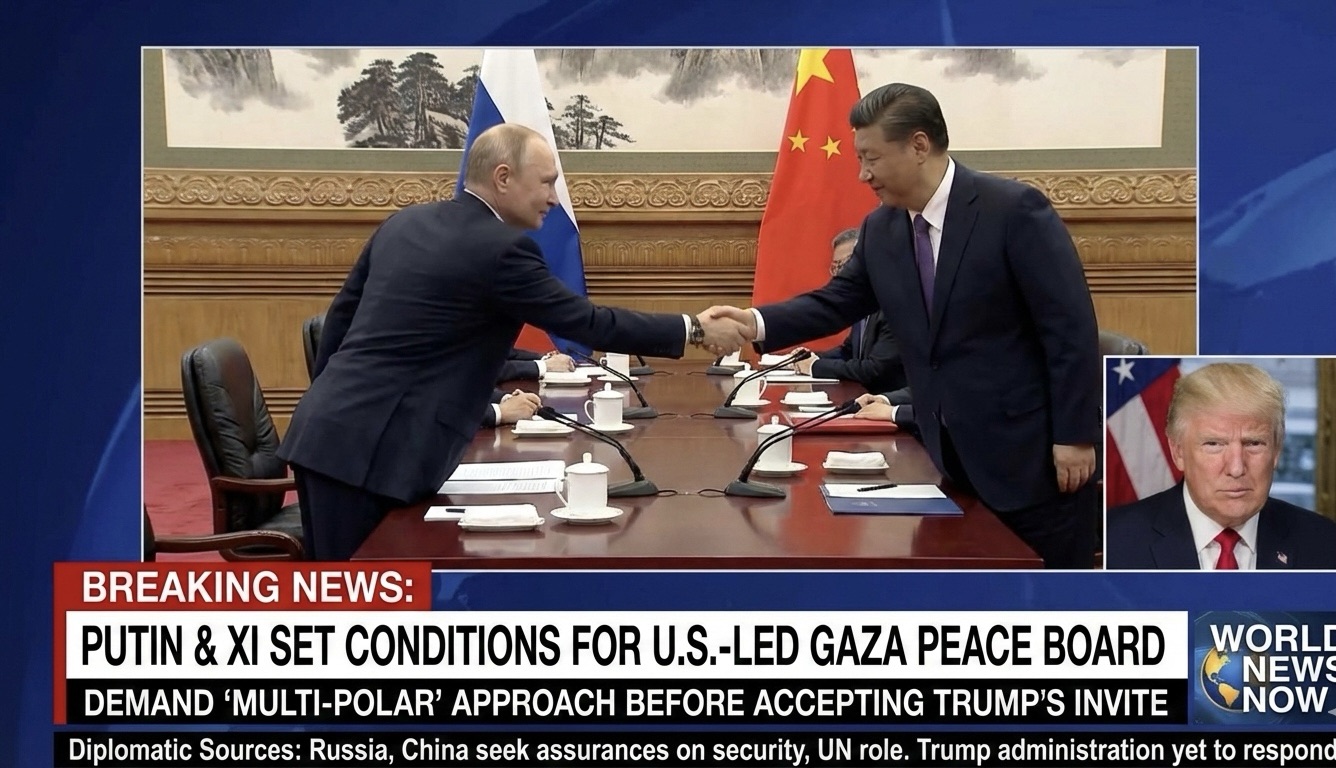
Washington, D.C. — Diplomatic tension resurfaced this week after Russian President Vladimir Putin and Chinese President Xi Jinping responded to U.S. President Donald Trump’s invitation to join a newly proposed “Gaza Board of Peace.” According to officials familiar with the discussions, both leaders signaled that they are not opposed to participating, but made it clear they would only do so under unspecified conditions.
The invitation, which the White House described as an effort to assemble “a powerful international coalition for stabilizing Gaza and preventing further regional escalation,” was quickly relayed to Moscow and Beijing. The Biden administration had previously supported multilateral efforts on the matter, but Trump has sought to create his own foreign policy channels emphasizing major-power involvement.
In a brief statement to reporters, a Kremlin spokesperson confirmed that Russia received the proposal and responded by outlining conditions for participation, though the details were not disclosed publicly. “We are open to constructive peace efforts,” the spokesperson said. “However, our participation must align with certain conditions communicated to the U.S. side.”
China issued a similar stance, with Beijing’s Foreign Ministry stating that China “supports peaceful resolution and international cooperation,” but added that acceptance of the Gaza Board invitation is conditional. The statement emphasized that China’s position was communicated “clearly and directly” to Washington.
The White House acknowledged receipt of both responses but did not comment on the nature of the conditions. Administration officials instead described the exchanges as “active diplomatic conversations” and said discussions are expected to continue through backchannels.
Foreign policy analysts say the move underscores the broader power dynamics at play. “Trump wants the optics and influence of having China and Russia on board,” said one international relations expert. “But both Beijing and Moscow want to avoid appearing as junior partners in any U.S.-led framework. Setting conditions allows them to signal autonomy without rejecting the idea outright.”
The future of the Gaza Board of Peace initiative now rests on whether Washington and the two major powers can bridge their diplomatic differences. In the meantime, European and Middle Eastern governments are watching closely, hoping the talks do not stall at a critical moment for regional stability.
For now, the U.S. continues to seek international support, while Moscow and Beijing hold their positions — signaling neither rejection nor acceptance, but a willingness to engage only on their terms.

Russia President Vladimir Putin and China’s President Xi Jinping Set Conditions Before Accepting Donald Trump’s U.S. Led Gaza Peace Board Invitation

Taylor Swift to Become the Youngest Artist Ever Inducted Into the Songwriters Hall of Fame as Organization Officially Confirms June 11 Ceremony

Taylor Swift will officially be inducted into the Songwriters Hall of Fame on June 11 !

Air Force One Forced to Turn Around Mid-Atlantic on its way to World Economic Forum in Switzerland After Takeoff After Intelligence Reports Surface That an International Arrest Warrant Has Been Issued for President Donald Trump, Prompting Emergency Consultations with White House Legal and Diplomatic Teams

Supreme Court Rejects Donald Trump’s Attempt to Mandate Voter ID Nationwide, Reinforcing That the Constitution Grants Election Regulation Powers Solely to Congress and the States, Not the President

Supreme Court Blocks Donald Trump’s Controversial Attempt to Require Voter ID for Every Single Vote, Rejecting His “No Exceptions” Rule as Unconstitutional

National Children’s Alliance Sues ICE for $150 Million Over Alleged Child Endangerment After Father’s Arrest Leaves 6-Year-Old Alone in Home; Organization Also Seeks $50 Million from Donald Trump for Backing the Unlawful ICE Operations

Leaked UK Cabinet Notes Suggest Possibility of ‘Recolonizing the United States’ After Donald Trump’s Threats to Impose Tariffs on British Goods and His Bizarre Plans to Annex Greenland, With Ministers Citing “Someone Needs to Teach Them Geography and Trade Etiquette”

Denmark, a NATO Member State, Issues Formal International Warrant for the Arrest of Donald Trump, Triggering Diplomatic Uncertainty Between Washington and European Allies amid Greenland crisis

Taylor Swift Launches Public Impeachment Petition Against Donald Trump to Congress, Rapidly Amassing Over 30,000 Signatures With Momentum Aiming at 200,000 Benchmark. Here’s how and Where to Sign

Taylor Swift states the reason why Donald Trump has imposed sanctions on nearly every major country who doesn’t do his bidding including U.S. NATO and European Allies Except Russia
