
NEWS
Senate Passes SB 5855, Formally Barring Law Enforcement Officers From Wearing Face Coverings While on Duty despite Donald Trump’s Objection

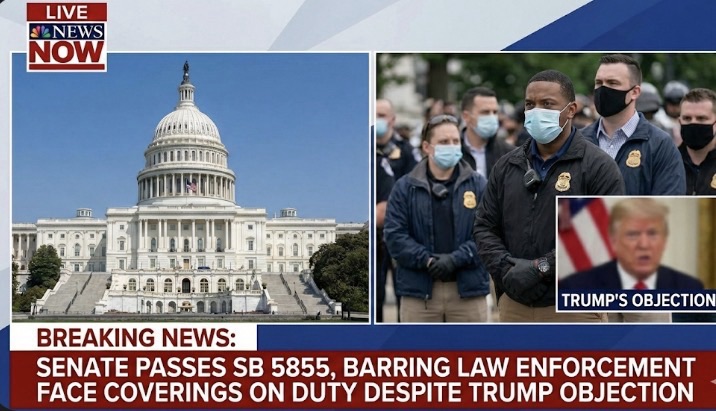
Senate Passes SB 5855, Barring Law Enforcement From Wearing Face Coverings The Senate has passed SB 5855, a bill that prohibits law enforcement officers from wearing face coverings while on duty, marking a significant step in the ongoing national debate over police transparency, accountability, and public trust.
The legislation, approved after intense debate on the Senate floor, is aimed at ensuring that officers are clearly identifiable during public interactions, protests, and routine enforcement activities. Supporters of the bill argue that banning face coverings will reduce anonymity, discourage misconduct, and strengthen accountability by making it easier for the public to identify officers involved in specific incidents.
“This bill is about transparency and trust,” supporters said during deliberations. “Law enforcement officers exercise significant authority in public spaces, and the public has a right to know who is enforcing the law.” Under SB 5855, officers would generally be required to keep their faces visible while performing official duties. The bill includes limited exceptions, such as for medical reasons, hazardous environments, or specialized operations where protective gear is necessary for safety. Opponents of the measure raised concerns about officer safety, arguing that face coverings can protect officers from retaliation, harassment, or doxxing, particularly during high-risk operations or large-scale protests. Some lawmakers warned that removing this layer of protection could expose officers and their families to increased threats. Law enforcement unions and advocacy groups have expressed mixed reactions. While some acknowledge the importance of public confidence in policing, others fear the bill could have unintended consequences, especially in an era of heightened tensions between police and the communities they serve. The passage of SB 5855 comes amid broader efforts nationwide to reform policing practices, with lawmakers increasingly focused on issues such as use-of-force standards, body camera policies, and officer identification requirements. The bill now moves to the next stage of the legislative process, where it will face further review before potentially becoming law. If enacted, SB 5855 would represent a notable shift in how law enforcement presents itself in public and could influence similar legislation in other jurisdictions. As the debate continues, the bill highlights the delicate balance lawmakers are attempting to strike between public accountability and officer safety—a balance that remains at the center of modern policing reform discussions.

Amazon CEO Jeff Bezos Confirms Company Plans to Recover $35 Billion Following Supreme Court Decision That Struck Down Donald Trump’s Controversial Tariffs

Retail Giant Walmart Demands $28 Billion Refund After Supreme Court Declares Donald Trump’s Tariffs Illegal,

Supreme Court of the United States Issues Stark Warning to Donald Trump and Signal Consequences After President Signs 10% “Global Tariff” Order Despite 6–3 Ruling Limiting Emergency Powers Authority

Donald Trump Insists His Tariffs Will Remain in Effect Despite Supreme Court Ruling Declaring the Tariffs not Effective and Trade Measures Illegal

Taylor Swift Publicly Calls Donald Trump ‘Unfit for Office,’ Accuses Him of ‘Destroying the Country’ in Blunt Political Statement

U.S. Senators Formally Invoke 25th Amendment, Call for President Donald Trump’s Removal from Office

Disabled American Veterans (DAV) File Federal Lawsuit Against Donald Trump After Proposal to Slash SSI and Veterans Benefits to Reallocate Funds to United States Department of Homeland Security Amid Shutdown

Stephen Colbert Launches $750 Million Federal Lawsuit Against FCC and Donald Trump in Punitive and Compensatory Damages , Accusing Trump of Orchestrating Brazen Censorship and a Direct Assault on Press Freedom and Free Speech by Forcing CBS to Pull Interview with Texas Senate Hopeful James Talarico

Taylor Swift Announces $15 Million Humanitarian Commitment to Muslim Associations Worldwide to Support Ramadan Feeding Programs and Community Incentives

Taylor Swift’s Bold “No Kings” Message to Donald Trump on Presidents Day Sparks Nationwide Debate and Social Media Frenzy.

Donald Trump Signs Controversial Executive Order Authorizing Penalties Against Americans and Social Media Users Who Publicly Criticize U.S. Immigration and Customs Enforcement ICE
