
NEWS
State-Sponsored Terrorism? Democrats Blast Donald Trump for Gloating Over Ayatollah Ali Khamenei’s Death in Tehran Bombing after U.S. Israel Joint attack on Iran

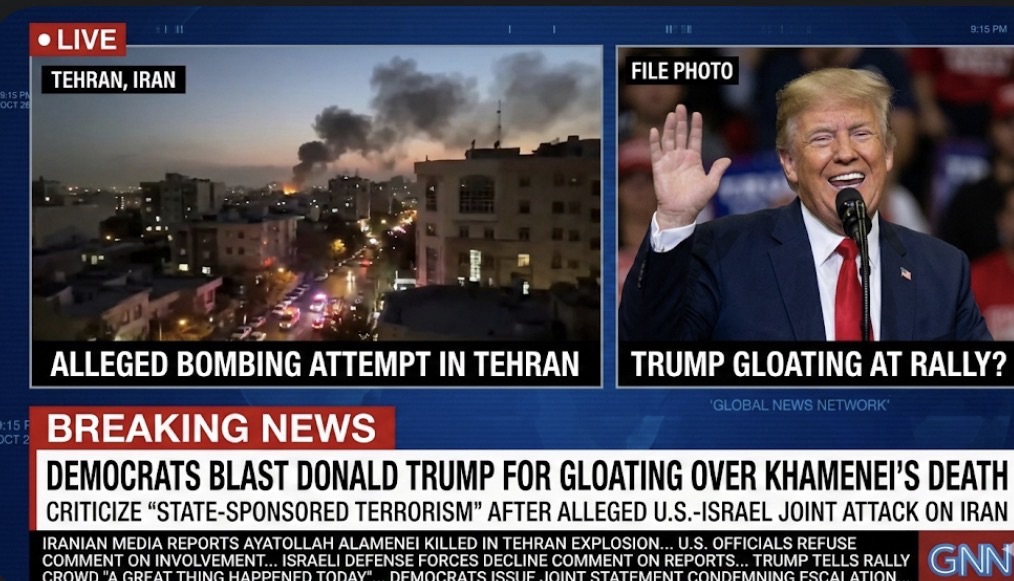
State-Sponsored Terrorism? Democrats Blast Trump for Gloating Over Khamenei’s Death After U.S.–Israel Attack on Iran
In one of the most consequential military confrontations in decades, the United States and Israel launched a large-scale aerial offensive against Iran on February 28, 2026, striking military, governmental and leadership targets across the country. U.S. President **Donald Trump announced that Iran’s Supreme Leader, Ayatollah Ali Khamenei, had been killed in the strikes — a claim that has plunged global politics into turmoil.
Trump Frames Attack as Justice — and an Opportunity
In social media posts and public remarks, President Trump said that “Khamenei, one of the most evil people in history, is dead” and described the attack as a chance for Iranians to “take back their country.” The strikes were described as joint U.S.-Israeli operations targeting Iran’s elite leadership and military infrastructure. Trump has pushed the narrative that the bombing will continue until U.S. objectives are achieved and has urged elements of Iran’s military establishment to defect or seek “immunity.”
Trump’s supporters argue that the operation was necessary to eliminate a malign influence long accused of supporting violent proxies in the region and threatening Western interests. However, even within the U.S. there is no clear consensus on the legality or wisdom of such a sweeping military strike.
Democrats Condemn What They Call “State-Sponsored Terrorism”
Across the political aisle, most Democratic senators and members of the House have condemned the strikes and the aftermath — not just as an unauthorized act of war, but as irresponsible and dangerous.
Senate Minority Leader Chuck Schumer criticized the administration for acting without congressional authorization, insisting Trump must explain the legal basis for a military assault that could reshape the Middle East. Schumer and other Democrats have urged classified briefings for lawmakers and suggested potential war-powers resolutions to curb unapproved military action.
Senators such as Tim Kaine and Ed Markey have described the operation as “illegal and unconstitutional,” arguing that Trump exceeded his powers by committing U.S. forces without explicit legislative approval. Others, including Rep. Jim Himes, have labeled the attack a “war of choice with no strategic endgame.”
Critics also argue that the tone of Trump’s messaging — appearing to celebrate Khamenei’s death and publicly frame it as justice — risks endorsing political violence as a tool of statecraft, something many Democrats and international law scholars view as blurring the line between military action and state-sponsored terrorism under international norms.
Regional Fallout and Global Reactions
Iranian officials and state news sources condemned the attack as “unprovoked” and violating international law. Iran responded with retaliatory missile and drone strikes targeting U.S. bases and Israel throughout the region. Iranian leaders called the assault illegitimate and vowed long-term retaliation.
International bodies such as the United Nations Security Council have called for restraint, warning that the conflict could spiral into a wider regional war with devastating consequences for civilians. Other world leaders have urged diplomacy and de-escalation, stressing that the use of force without clear multilateral backing could destabilize global peace efforts.
A Turning Point in U.S. Foreign Policy?
Whether defensively justified or illegally aggressive, the U.S.–Israel strikes on Iran and the reported death of Ayatollah Khamenei mark a historic inflection point in geopolitics.
For Democrats already wary of unchecked presidential power, Trump’s public remarks gloating over the young nation’s leader’s death may deepen distrust and sharpen partisan divides over the United States’ role on the world stage — raising pressing questions about executive authority, international law, and the true cost of what some see as state-sponsored violence.

‘Illegal and Barbaric’ — Taylor Swift Slams U.S.–Israel Strike Lead by Donald Trump and Benjamin Netanyahu as Outrage Mounts Over Reported Death of Iran Supreme leader Ayatollah Ali Khamenei

State-Sponsored Terrorism? Democrats Blast Donald Trump for Gloating Over Ayatollah Ali Khamenei’s Death in Tehran Bombing after U.S. Israel Joint attack on Iran

Donald Trump Issues Stark Warning to Russia, Signals Severe Nuclear Consequences if Vladimir Putin Interferes Following Moscow’s Condemnation of U.S.–Israel Strike on Iran which saw the death of Supreme leader Ayatollah Ali Khamenei

Conflicting Reports Emerge After Massive US-Israel Airstrikes lead by Donald Trump and Benjamin Netanyahu on Iran as Claims Surface That Ayatollah Ali Khamenei May Have Been Killed With Multiple Israeli Sources Confirming the Supreme Leader is Dead

Ayatollah Ali Khamenei Confirmed Dead After Devastating U.S.–Israel Strike Levels Supreme Leader Complex

Bipartisan War Powers Resolution Aims to Reassert Congressional Authority Over Military Action, Challenging Donald Trump’s Plans for Strikes in the Middle East after U.S.- Israel Attacks Iran

US Lawmakers Seek to Reclaim Authority Over War Decisions, Introducing New Resolution to Require Donald Trump to Obtain Congressional Approval Before Military Action After Strikes Against Iran and recent strike in Venezuela

China Set to Deploy 5,000 Troops to Iran Alongside 200 Advanced Missiles, Drones, Multiple Air Defense Systems, and Anti‑Ship Weapons, Escalating Tensions After U.S. and Israel Strike Led by Donald Trump and Benjamin Netanyahu

United Nations Strongly Condemns U.S.–Israel Strikes on Iran, threatens sanctions on Donald Trump and Benjamin Netanyahu, Calls for Immediate Ceasefire and Urgent Diplomatic Talks to Prevent Regional War

Russia Announces Immediate Deployment of 50 Fighter Jets and 20,000 Troops to Support Iran After U.S.–Israel Strike led by Donald Trump and Benjamin Netanyahu

Russia Strongly Condemns Recent U.S and Israel Strikes on Iran lead by Donald Trump and Benjamin Netanyahu on Iran as an “Unprovoked Act of Armed Aggression,” Declares It Stands Firmly and Solidly With Iran Amid Rising Tensions
