
NEWS
Stephen Colbert Launches $750 Million Federal Lawsuit Against FCC and Donald Trump in Punitive and Compensatory Damages , Accusing Trump of Orchestrating Brazen Censorship and a Direct Assault on Press Freedom and Free Speech by Forcing CBS to Pull Interview with Texas Senate Hopeful James Talarico

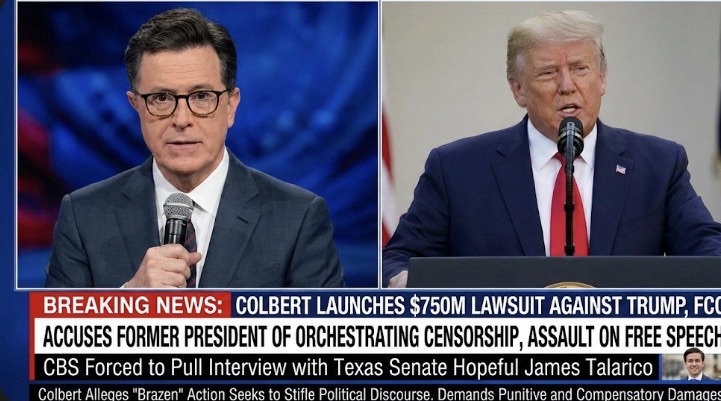
Stephen Colbert’s Censorship Clash: How a Pulled Interview with Texas Senate Hopeful James Talarico Sparked Accusations of Trump-Era Media Pressure
In a dramatic turn that has reignited debates over free speech, broadcast regulation, and political influence in the media, late-night host Stephen Colbert revealed on February 16, 2026, that CBS barred him from airing a taped interview with Texas state Rep. James Talarico on The Late Show. The segment, which Talarico later described as “the interview Donald Trump didn’t want you to see,” was instead released exclusively on YouTube, where it quickly amassed millions of views thanks to on-air promotion and viral sharing.
The decision stemmed from CBS lawyers’ concerns that broadcasting the interview could trigger the Federal Communications Commission’s (FCC) equal-time rule — a longstanding provision under the Communications Act of 1934 requiring broadcasters to offer comparable airtime to opposing political candidates if one appears on their station. Under renewed enforcement guidance issued by the Trump-appointed FCC Chair Brendan Carr in January 2026, daytime and late-night talk shows — including The Late Show, The View, and others — are no longer automatically exempt as “bona fide news” programs. This shift follows probes into appearances like Talarico’s earlier spot on ABC’s The View, where the network did not seek exemptions or provide equal opportunities to rivals.
Colbert, visibly frustrated during Monday’s broadcast, told viewers: “We were told in no uncertain terms by our network’s lawyers, who called us directly, that we could not have him on the broadcast.” He went further, accusing the network of self-censorship driven by fear of FCC reprisals under the current administration. “Donald Trump’s administration wants to silence anyone who says anything bad about Trump on TV,” Colbert declared, framing the incident as part of a broader pattern of pressure on broadcasters. He also claimed lawyers initially tried to prevent him from even discussing the pull on air.
Talarico, a progressive Democrat running in Texas’s March 3, 2026, Senate primary against Rep. Jasmine Crockett and others to challenge incumbent Republican John Cornyn, used the controversy to his advantage. Posting a clip on X (formerly Twitter), he stated: “His FCC refused to air my interview with Stephen Colbert. Trump is worried we’re about to flip Texas.” The interview itself featured Talarico discussing Democratic hopes to turn the Lone Star State blue, criticizing GOP policies, and tying Cornyn to national Republican figures.
CBS pushed back against Colbert’s characterization. In a statement released February 17, the network clarified that it had not outright “prohibited” the interview but provided legal guidance that airing it could obligate equal time for other primary candidates (including Crockett and potentially others). The network said it offered options to comply — such as providing airtime to rivals — but the production team ultimately chose the YouTube route with broadcast promotion instead.
The equal-time rule itself is not new, but its application to entertainment-format programs has long been debated. Historically, exemptions for news, interviews, and on-the-spot coverage protected shows like late-night programs. The Trump administration’s FCC, however, has signaled a stricter interpretation, arguing that partisan-leaning talk shows do not qualify for automatic exemptions. Democratic FCC commissioners have called the non-airing “censorship,” while supporters of the guidance argue it simply restores fairness to candidate coverage.
The fallout has been swift and polarized. Media watchdogs and free-speech advocates decry what they see as a chilling effect on political discourse, especially as networks navigate potential license threats or fines in a regulatory environment perceived as hostile to critical coverage. On the other side, some commentators point out that the rule applies neutrally and that CBS’s caution was a pragmatic business decision rather than direct government censorship.
As of February 17, 2026, no lawsuit has been filed by Colbert, CBS, or Paramount Global against the FCC or the Trump administration over the incident. Hypothetical legal action could center on First Amendment claims, alleging unconstitutional prior restraint or retaliatory enforcement, with potential damages sought in the hundreds of millions for lost ad revenue, reputational harm, and suppressed speech. For now, though, the real winner appears to be Talarico: the Streisand effect has turned an unaired TV spot into one of the most-watched political interviews of the early 2026 cycle.
The episode underscores a tense moment for broadcast media in the United States. With the 2026 midterms approaching — and high-stakes races like Texas’s Senate contest drawing national attention — the intersection of old regulatory rules, new enforcement priorities, and partisan politics continues to test the boundaries of press freedom and fair electoral coverage. Whether this marks a one-off compliance headache or the start of broader restrictions on political talk remains to be seen.

Disabled American Veterans (DAV) File Federal Lawsuit Against Donald Trump After Proposal to Slash SSI and Veterans Benefits to Reallocate Funds to United States Department of Homeland Security Amid Shutdown

Stephen Colbert Launches $750 Million Federal Lawsuit Against FCC and Donald Trump in Punitive and Compensatory Damages , Accusing Trump of Orchestrating Brazen Censorship and a Direct Assault on Press Freedom and Free Speech by Forcing CBS to Pull Interview with Texas Senate Hopeful James Talarico

Taylor Swift Announces $15 Million Humanitarian Commitment to Muslim Associations Worldwide to Support Ramadan Feeding Programs and Community Incentives

Taylor Swift’s Bold “No Kings” Message to Donald Trump on Presidents Day Sparks Nationwide Debate and Social Media Frenzy.

Donald Trump Signs Controversial Executive Order Authorizing Penalties Against Americans and Social Media Users Who Publicly Criticize U.S. Immigration and Customs Enforcement ICE

Supreme Court Blocks Donald Trump’s Proposal to Slash SSI and Veterans Benefits to Redirect Billions to DHS as Homeland Security Shutdown Deepens

Lawmakers Fire Back as Congress Pushes Back Strongly After Donald Trump Declares Voter ID Will Be Required in Midterms ‘Whether Approved By Congress or Not,’ Setting Up a Clash Over Legislative Authority

The Alchemy of Love: Inside Taylor Swift and Travis Kelce’s First Valentine’s Day as an Engaged Couple at Patrick Mahomes and Travis Kelce Exclusive Kansas City Sanctuary, 1587 Prime

Donald Trump Administration Unveils Budget Proposal to Reduce SSI and Veterans Benefits in Bid to Reallocate Funds to DHS as Partial Homeland Security Shutdown Enters Critical Phase While Congress Declines

‘Confirmed’: Taylor Swift Gives Travis Kelce the Ultimate Valentine’s Shoutout, Naming Him Her ‘In-House House Guy’ for Coordinating the Surprise ‘Opalite’ House Remix with DJ Chris Lake

Can They Get to 218? Bipartisan Coalition of Democrats and Moderate Republicans Races Against Time to Impeach Donald Trump Over Shocking Allegations Spanning War Crimes, Epstein Connection, and Embezzlement
