
NEWS
Supreme Court Overturns Donald Trump’s Immigration Detention Policy, Ruling It Unlawful and Raising Serious Concerns Over ICE Brutality

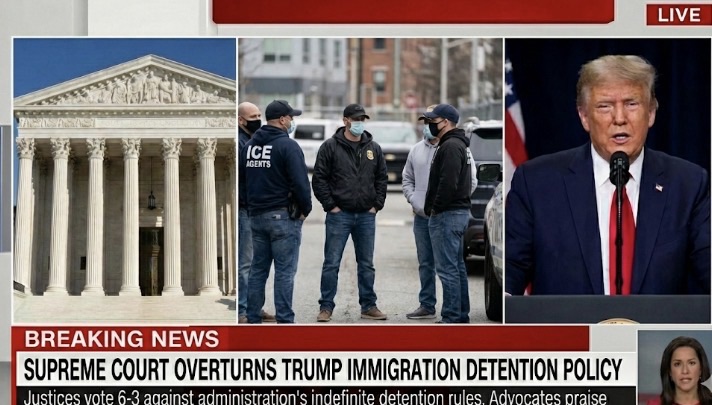
Supreme Court Overturns Trump-Era Immigration Detention Policy, Spotlighting ICE Brutality Concerns
The United States Supreme Court has overturned a controversial immigration detention policy implemented during the administration of former President Donald Trump, delivering a major legal setback to one of the most aggressive pillars of his immigration agenda. The ruling found that the policy violated constitutional protections and raised serious concerns about the conduct of Immigration and Customs Enforcement (ICE) agents.
In its decision, the Court determined that the detention framework allowed for prolonged and, in some cases, indefinite confinement of undocumented immigrants without adequate judicial review. Justices ruled that such practices conflicted with due process guarantees under the U.S. Constitution, emphasizing that immigration enforcement must still operate within clear legal and humanitarian boundaries.
The ruling also drew renewed attention to long-standing allegations of brutality and abuse within ICE detention facilities. Civil rights organizations and immigration advocates have for years accused ICE of excessive force, inhumane detention conditions, and the mistreatment of migrants, including asylum seekers and families. While the Court stopped short of directly adjudicating individual abuse cases, it cited credible reports and legal findings that highlighted systemic failures in oversight and accountability.
Legal experts say the decision marks a significant shift in how immigration detention policies may be evaluated moving forward. By rejecting the Trump-era approach, the Court reinforced the principle that executive power over immigration is not unlimited and remains subject to constitutional constraints.
Advocacy groups welcomed the ruling as a victory for human rights and the rule of law. “This decision affirms that no administration can sidestep basic legal protections in the name of enforcement,” one immigration rights attorney said. Calls have intensified for broader reforms to ICE operations, including stronger monitoring mechanisms and clearer standards governing the treatment of detainees.
Supporters of the former policy, however, criticized the ruling, arguing it could weaken border enforcement and strain the immigration system. They contend that detention remains a necessary tool for ensuring compliance with immigration proceedings.
The Supreme Court’s decision is expected to have far-reaching implications, potentially prompting the federal government to revise detention guidelines and reevaluate ICE practices nationwide. As lower courts and federal agencies adjust to the ruling, the debate over immigration enforcement, human rights, and executive authority is likely to remain at the center of U.S. political and legal discourse.

Supreme Court Overturns Donald Trump’s Immigration Detention Policy, Ruling It Unlawful and Raising Serious Concerns Over ICE Brutality

Former President Barack Obama Reportedly Files $500 million Lawsuit Against Donald Trump, Alleging Racial Intimidation and Severe Reputation Damage After he Posted AI-Generated Video depicting Barack & Michelle Obama as monkeys.

USA Olympic Committee Accuses EU Authorities and Olympic Organizers of Failing to Provide Basic Athlete Support, Claims American Athletes Are Being Treated Unfairly Due to Rising EU–US Political Tensions amid Donald Trump’s Greenland ambitions

Taylor Swift Continues Her NFL Takeover, Supporting Boyfriend Travis Kelce and Brother Jason at the NFL Honors in a Stunning Appearance at the Annual Awards Show

Supreme Court Blocks Donald Trump’s “Save Act,” Rules It Violates U.S. Constitution, Conflicts With Voting Rights Act, and Imposes Unreasonable Burdens on Voters

Federal Judge Issues Sweeping Temporary Restraining Order Halting ICE Operations Nationwide, Ignoring Strong Rejection From Donald Trump Administration, Raising Legal and Political Tensions

A dapper Jason Kelce and Andrew Whitworth presented the Protector of the Year award at NFL honors tonight with Travis Kelce and Taylor Swift among the attendees

Travis Kelce Dishes on Super Bowl Plans, Romantic Wedding Plans with Taylor Swift, and Directly Addresses The Popster Pregnancy Speculation in Chat with Jason Kelce’s Wife Kylie Kelce on ‘Not Gonna Lie’ Podcast

Congress Blocks Donald Trump’s SAVE Act Move, Stalling Proposed Federal Voter Eligibility Overhaul After Fierce Debate Over Voting Rights and Constitutional Limits

Wedding Bells Are Getting Louder”: Travis Kelce Just Shared a Major Detail About His Wedding Plans With Taylor Swift — and Fans Are Spiraling

Amnesty International Submits Petition Seeking Possible Imprisonment and Asset Freezes for Elon Musk Over Alleged Foreign Election Interference, Also Calls for Donald Trump’s Impeachment and Arrest, Citing Allegations of War Crimes, ICE Brutality, Free Speech Violations, and Epstein-Related Concern
