
NFL
Supreme Court Restricts ICE Tactics in Minnesota Following Multiple Killings, Ordering Agents to Halt Aggressive Arrests and Crowd Control Amid Rising Public Outcry despite Donald Trump’s Insurrection Act Threat

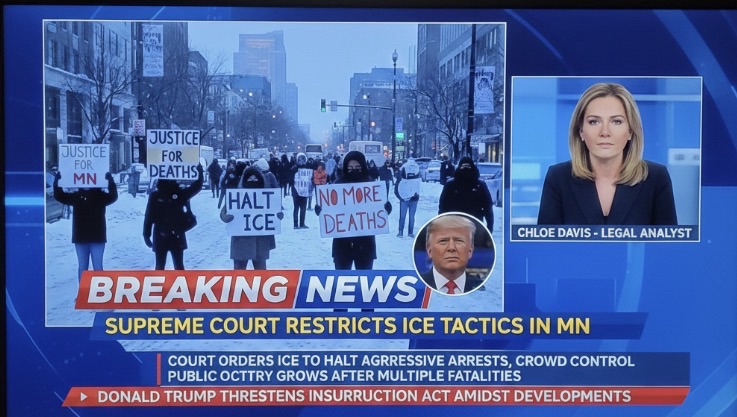
Federal Judge Limits ICE Tactics in Minnesota After Deadly Clashes and Rising Protests
A federal judge in Minnesota has issued sweeping restrictions on tactics used by U.S. Immigration and Customs Enforcement (ICE) agents amid weeks of protest activity over aggressive federal immigration enforcement in the Twin Cities. The order, issued late Friday by U.S. District Judge Katherine Menendez in Minneapolis, places limits on how ICE and other federal agents can interact with peaceful demonstrators and observers during the unrest.
Judge Menendez’s preliminary injunction bars federal agents from arresting, detaining, pepper‑spraying or otherwise retaliating against individuals who are engaged in peaceful and non‑obstructive protest activity, unless there is clear evidence they are committing a crime or interfering with law enforcement operations. The ruling also prohibits the use of tear gas, chemical irritants and other crowd‑control tools against demonstrators and bystanders who are not posing a threat.
Restrictions on Vehicle Stops and Retaliation
In addition to limiting force, the order states that federal officers may not stop or detain drivers and passengers simply because they are near protests or following federal vehicles unless there is a reasonable suspicion of obstruction or criminal activity. The judge emphasized that the First Amendment protects both public demonstrations and peaceful observation of law enforcement actions.
The court gave the Department of Homeland Security (DHS) 72 hours to bring its operations in Minneapolis into compliance with the new restrictions. The injunction applies specifically to agents involved in Operation Metro Surge, a large federal immigration enforcement campaign that has drawn thousands of ICE and other federal officers to the Minneapolis–Saint Paul area.
Sparked by Protester Death and Allegations of Excessive Force
The legal action follows high‑profile incidents that have fueled public outrage, including the death of 37‑year‑old Renee Nicole Good, who was fatally shot by an ICE agent on January 7 while she was near an enforcement operation. That killing ignited protests across the city and intensified scrutiny of ICE’s tactics.
Local activists and civil liberties groups, including the American Civil Liberties Union of Minnesota, argued in court that federal agents repeatedly violated constitutional rights by using excessive force, making unwarranted arrests, and intimidating peaceful protesters and observers. The plaintiffs presented video evidence suggesting some actions by agents lacked justification and chilled individuals’ rights to free speech and assembly.
Federal Government Response
Officials from DHS have defended federal law enforcement efforts, arguing their actions were necessary to maintain public order and protect the safety of officers and the public. DHS spokespersons have characterized some protests as dangerous and asserted that lawful enforcement cannot be undermined by demonstrators who interfere with operations.
While the injunction limits specific tactics, it does not end federal immigration enforcement in the area. Government attorneys are expected to challenge parts of the ruling, and the case may be revisited as litigation continues.
Broader Political Fallout
The dispute has also spilled into broader political tensions between federal authorities and local leaders. Minnesota’s governor and the mayors of Minneapolis and Saint Paul have criticized the federal surge, accusing the Department of Homeland Security of overreach and undermining local public safety efforts. Separate legal actions brought by state and city officials seek to curtail federal immigration operations more broadly.
As protests continue, the legal and political battles are likely to shape how federal agencies conduct enforcement in communities where public opposition remains strong.

Supreme Court Restricts ICE Tactics in Minnesota Following Multiple Killings, Ordering Agents to Halt Aggressive Arrests and Crowd Control Amid Rising Public Outcry despite Donald Trump’s Insurrection Act Threat

President Trump Signs Controversial Executive Order to Withdraw All Federal Assets From Minnesota, Declares ‘Let Minnesota Burn’ as Armed Anti-ICE Group Reportedly Assaults Federal Agents Outside Minneapolis Federal Building

Taylor Swift blames Donald Trump for disrupting America and for the ongoing unrest in Minnesota, where violent anti-ICE protests have broken out.

Donald Trump Accuses Minnesota Leaders of ‘Harboring Anti-Federal Militants,’ Signs Executive Order Removing Agencies and Resources From the State After Anti-ICE Assault on Federal Officers”

Nobel Prize Committee Issues Formal Notice Demanding Return of Peace Prize and $10 Million From Maria Machado After The Venezuelan Opposition Leader Gifts Award to Donald Trump, Citing Breach of Contract

Donald Trump Announces Potential Tariffs and Sanctions on France, Denmark, Germany, and the U.K. If They Continue Opposing U.S. Annexation Plans for Greenland

Donald Trump Orders Federal Agencies to Identify and Prosecute New Yorkers Involved in Snowball Incidents Targeting ICE Agents, Calling It an ‘Assault on Federal Authority’
Nobel Committee Issues Defiant Statement That Prize “Can Neither Be Revoked, Shared, Nor Transferred to Others” and Demands Immediate Return After Venezuelan Opposition Leader Gifts Her Peace Prize Medal to Donald Trump

Impeachment Proceedings Against Donald Trump Regain Momentum as Top Republicans Leaders Joins and Argue the Constitution Leaves Them No Choice Amid Mounting Allegations against the President

Taylor Swift Claims U.S. Democratic Institutions Have “Indulged Trump’s Anti-Democratic Behavior,” Stating the Congress and Supreme have Totally Betrayed American Citizens by not Impeaching the Facist

Donald Trump’s Greenland Ambitions Fracture the GOP: Republicans Openly Concede That Impeachment Is on the Horizon, Urging the President to Back Down Before It Leads to His Political Undoing
