
NFL
Supreme Court Set to Significantly Limit ICE’s Authority as Justices Consider Narrowing Detention Powers, Expanding Due Process Rights, and Strengthening Constitutional Protections for Immigrants after Multiple Petitions and Recent Killings Despite Donald Trump’s Objection

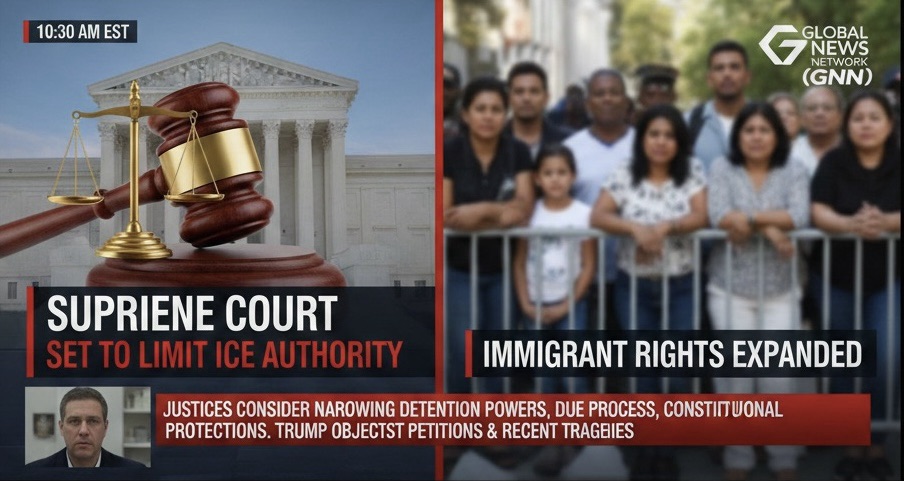
Supreme Court Set to Significantly Limit ICE’s Authority as Justices Consider Narrowing Detention Powers, Expanding Due Process Rights, and Strengthening Constitutional Protections for Immigrants
The U.S. Supreme Court is poised to issue a landmark decision that could drastically reshape the powers of U.S. Immigration and Customs Enforcement (ICE), signaling a potential shift in federal immigration enforcement policy. Legal experts say the case could limit the agency’s authority in several key areas, including detention practices, use of force, and the scope of deportation powers.
ICE, the federal agency responsible for interior immigration enforcement, has long operated under broad authority granted by Congress through laws such as the Immigration and Nationality Act (INA) and related statutes. While these laws provide a legal framework for arrests, deportations, and detentions, the Supreme Court has the power to interpret how far those authorities extend—especially when constitutional protections are implicated.
According to court observers, the case before the high court challenges aspects of ICE enforcement deemed overbroad or unconstitutional. The justices are reportedly considering rulings that could:
Narrow the agency’s detention and deportation authority, requiring more frequent judicial review and limiting prolonged detention without bond hearings. Strengthen constitutional protections for immigrants, particularly under the Fourth Amendment’s safeguards against unreasonable searches and seizures and the Fifth Amendment’s due process rights. Reduce judicial deference to executive immigration enforcement, requiring ICE and the Department of Homeland Security to meet stricter legal standards before taking enforcement actions. Clarify limits on federal immunity, potentially allowing individuals to hold ICE agents accountable for violations of constitutional rights.
Civil rights advocates argue that these changes are overdue, citing recent incidents, including fatal enforcement operations, that have raised public concern about unchecked ICE authority. Legal scholars note that while Congress provides ICE with statutory powers, Supreme Court decisions ultimately define the legal boundaries within which the agency can operate.
“The Supreme Court has the opportunity to reaffirm that constitutional protections cannot be sidelined in the name of immigration enforcement,” said Professor Lila Martinez, an immigration law expert at Georgetown University. “By clarifying the limits of ICE’s authority, the justices could dramatically reshape how the agency conducts raids, detains individuals, and prioritizes deportations.”
While the decision has not yet been released, experts predict it could have far-reaching implications for immigration enforcement nationwide, potentially changing ICE operations, reducing the scope of federal power in interior enforcement, and increasing judicial oversight over the agency’s actions.
For now, the country awaits a ruling that could redefine the balance of power between federal immigration authorities and the constitutional rights of non-citizens, setting a precedent that may shape U.S. immigration policy for decades.

Taylor Swift and Jason Kelce Beam with Pride as They Join Donna Kelce for a Fun-Filled Night at The Traitors Season 4 Premiere, Supporting Her as Travis Kelce Misses Out; Donna Kelce Praises Taylor Swift for being the one who got her involved in the movie

Pressure Mounts on Congressional Leadership as Over 140 Lawmakers Unite Behind a High-Stakes Bid to Impeach Donald Trump, Pushing Aggressively and Set to Launch Impeachment Proceedings

Supreme Court Mobilizes Federal Marshals Across the Nation to Enforce Lawful Court Orders After Donald Trump Repeatedly Rejects Judicial Directives, Signaling Unprecedented Step to Uphold Rule of Law

Supreme Court Set to Significantly Limit ICE’s Authority as Justices Consider Narrowing Detention Powers, Expanding Due Process Rights, and Strengthening Constitutional Protections for Immigrants after Multiple Petitions and Recent Killings Despite Donald Trump’s Objection

Former Federal Prosecutor Jack Smith to Testify Before Congress, Providing Inside Account of Investigations Targeting Trump and Controversial Decisions Made During Probes

Supreme Court Signals Possible Referral to Congress for Impeachment After Donald Trump Defies Multiple Court Orders by Deploying National Guard to Chicago, Continuing to Detain Venezuela’s President, Delaying Court-Ordered East Wing Reconstruction, and working on National Guard Federalization Without State Consent.

Donald Trump Informed by His Attorneys That He Is Barred from Leaving the United States Amid an International War Crimes Warrant, Which Could Lead to His Arrest, He’s Set to Miss the PGA Event in Scotland and the World Economic Forum Annual Meeting in Switzerland

U.S. Congress Officially Launches Impeachment Proceedings Against President Donald Trump, Drafting Detailed Articles Alleging Embezzlement, Fraud, War Crimes, Obstruction of Justice, Abuse of Power, and Mismanagement of Taxpayer Funds by Him and Members of His Cabinet

Donald Trump Finally Breaks Silence on Iran, Issuing Stern Last Warning to the Islamic Regime While Urging the World to Support Citizens Risking Their Lives in a Historic Struggle for Freedom After Nearly 50 Years of Oppression

Supreme Court Orders Ignored as Donald Trump Moves Forward With Executive Action and Attempts to Federalize National Guard Without State Approval Despite Supreme Court order and Rejection

Supreme Court Blocks President Donald Trump from Taking Any Further Military Action in Venezuela Without Explicit Approval from Congress, Ordering an Immediate Freeze on Resource and Oil Exploitation Plans
