
NFL
Trump Orders Immediate U.S. Withdrawal from the United Nations and 66 Other International Organizations Citing Policies “Contrary to the Interests of the United States” After They Criticized America’s Military Action in Venezuela and the Capture of President Maduro

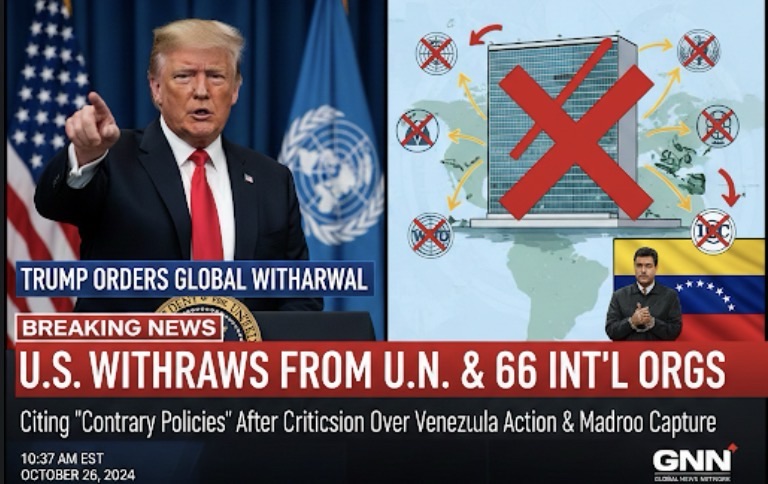
In a dramatic foreign policy shift, President Donald Trump has ordered the immediate withdrawal of the United States from the United Nations and 66 additional international organizations, arguing that these institutions have become “contrary to the interests of the United States.” The announcement comes days after several global bodies issued strong statements condemning Washington’s military operation in Venezuela and the capture of President Nicolás Maduro.
According to White House officials, the decision followed internal reviews that cited concerns about national sovereignty, financial burdens, and what Trump described as “coordinated political attacks on American leadership.” In a televised statement, the President argued that the U.N. and other multilateral institutions had moved away from their original missions and had, in his view, adopted agendas hostile to U.S. interests.
“The United States will no longer participate in organizations that seek to weaken our sovereignty or interfere in our security operations,” Trump said. “These bodies do not serve the American people, and they have chosen to stand with corrupt foreign actors over the safety and stability of our hemisphere.”
The move has triggered intense reactions from international diplomats and policy analysts. Supporters of the withdrawal inside the U.S. argue that it will reduce financial commitments and protect American independence from foreign influence. They also contend that global institutions unfairly criticized the U.S. response to Venezuela while overlooking human rights issues within other member states.
Critics, however, warn that such a broad pullout could isolate the United States from global decision-making, weaken diplomatic alliances, and create power vacuums that rival nations may fill. Several European and South American governments issued statements expressing disappointment and urging Washington to reconsider. Some analysts caution that disengagement from cooperation platforms could complicate long-term efforts on trade, security, and humanitarian coordination.
The United Nations has not formally responded to the withdrawal order, though U.N. spokespersons previously emphasized the importance of diplomatic resolution and adherence to international law in relation to the Venezuela situation.
The Trump administration has not yet released the full list of the 66 organizations targeted, but sources within the State Department indicated that the withdrawals would affect economic, health, and security-focused institutions. Legal experts note that leaving certain bodies requires notice periods or Congressional approval, suggesting that the process could take months or years depending on how it is implemented.
Despite legal and diplomatic hurdles, the White House insists the decision reflects a long-term strategic reset. “This marks the beginning of a new era in American foreign policy,” one senior administration official stated. “We will build partnerships that respect our sovereignty, not institutions that punish us for defending it.”
As global reactions continue to develop, the United States is preparing to outline alternative frameworks for international engagement. For now, the decision stands as one of the most significant breaks from multilateralism in modern American history, raising complex questions about global governance, power balance, and the future of U.S. diplomacy.

Taylor Swift Submits Formal Petition to Congress Calling for the Dissolution of ICE, Citing the Fatal Shooting of Minneapolis Resident Renee Nicole Good and Arguing the Agency Has “Done More Harm Than Good” to American Communities

Taylor Swift Slams Donald Trump Over “Misleading Narrative” Following Fatal Shooting of U.S. Citizen Renee Nicole Good During ICE Operation Involving 2,000 Federal Agents in Minneapolis Minnesota

Trump Orders Immediate U.S. Withdrawal from the United Nations and 66 Other International Organizations Citing Policies “Contrary to the Interests of the United States” After They Criticized America’s Military Action in Venezuela and the Capture of President Maduro

International Criminal Court Set to Open Investigation Into Alleged Crimes of Aggression, War Crimes, and Violations of Sovereignty Following Donald Trump’s Military Attack on Venezuela and the Capture of it’s Sitting President, Nicolás Maduro

U.S. Supreme Court Declares Donald Trump’s Capture and Detention of Venezuela Sitting President Nicolás Maduro a Violation of Head-of-State Immunity and International Law, Mandates His Immediate Extradition

Travis Kelce and Taylor Swift Turn Heads in the Caribbean, Spotted Indulging in Ultimate Luxury as They Cruise Virgin Gorda on a Flying Ray Boat

Donald Trump Admits at House GOP Members’ Retreat That He Fears Impeachment and Possible Prison if Republicans Lose Control of Congress in the 2026 Midterm Elections

IMF Condemns President Donald Trump’s Military Attack on Venezuela and the Abduction of President Nicolás Maduro, Warning That U.S. Actions Are Destabilizing the Global Economy , Threatens to Trigger a Review of America’s Voting Influence and Leadership Role and Limit it if Maduro is not released

Donald Trump Issues a Chilling Dare to China and Russia During House GOP Retreat as Global Tensions Surge After Venezuela Attack and Capture of President Maduro following thier Threats to Take Military Action and Economic Sanctions on United States

China Detains U.S. Special Envoy Jamieson Greer and Ambassador David Perdue, Confines Assets as Tensions Surge Over Venezuela and Beijing Demands President Maduro’s Immediate Release

United States Signals It Will Exercise Its Veto Power at the United Nations After Being Suspended Under Article 5 for Condemning President Donald Trump’s Unilateral Military Action in Venezuela and the Capture of President Nicolás Maduro
