
NEWS
United Nations Strongly Condemns U.S.–Israel Strikes on Iran, threatens sanctions on Donald Trump and Benjamin Netanyahu, Calls for Immediate Ceasefire and Urgent Diplomatic Talks to Prevent Regional War

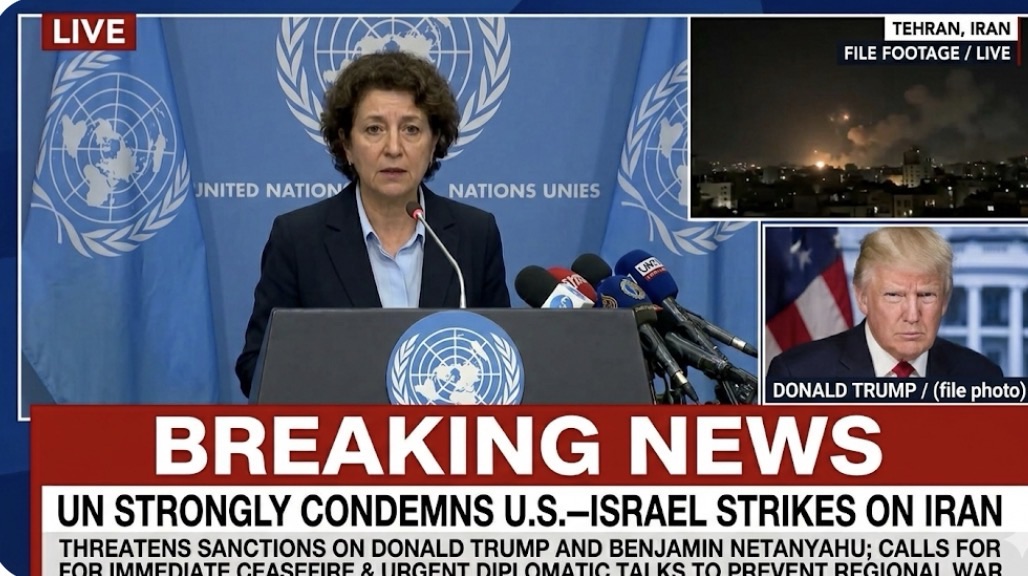
UN Condemns Deadly U.S.–Israel Strike on Iran, Calls for Immediate Ceasefire and Investigation
New York, February 28, 2026 – The UN has issued a strong condemnation of the recent joint U.S.–Israel military strikes on Iran, which reportedly killed dozens of civilians, including at least 40–51 students at a girls’ school in Minab, southern Iran. The UN called the attacks “unacceptable” and urged all parties to exercise maximum restraint to prevent a further escalation in the already tense region.
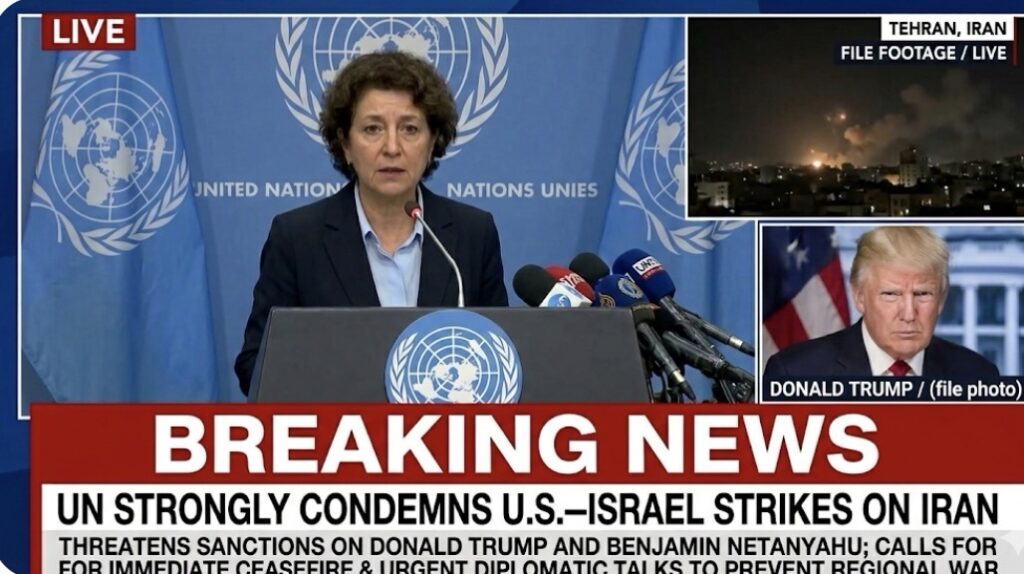
In an emergency statement, UN Secretary-General António Guterres described the strikes as “a serious violation of international humanitarian law” and warned that the continuation of such military actions could trigger a broader regional conflict. The statement emphasized the urgent need for diplomatic dialogue and the protection of civilians.
The UN Security Council is set to convene an emergency session later this week to discuss the escalation and possible measures to de-escalate tensions. Member states have been urged to support an independent international investigation into the circumstances surrounding the deadly airstrikes.
“The loss of civilian life is tragic and unacceptable. We call upon all parties to immediately cease hostilities and pursue peaceful solutions,” the UN statement said, highlighting the potential humanitarian fallout if the conflict expands.
The strikes mark the latest in a series of military actions that have sharply heightened tensions in the Middle East, drawing global attention and criticism. Analysts warn that without swift international intervention, the situation could spiral into a larger regional confrontation with serious humanitarian consequences.
The UN’s condemnation reflects growing international concern over the impact of military operations on civilian populations and underscores the organization’s role in urging restraint, diplomacy, and accountability.

US Lawmakers Seek to Reclaim Authority Over War Decisions, Introducing New Resolution to Require Donald Trump to Obtain Congressional Approval Before Military Action After Strikes Against Iran and recent strike in Venezuela

China Set to Deploy 5,000 Troops to Iran Alongside 200 Advanced Missiles, Drones, Multiple Air Defense Systems, and Anti‑Ship Weapons, Escalating Tensions After U.S. and Israel Strike Led by Donald Trump and Benjamin Netanyahu

United Nations Strongly Condemns U.S.–Israel Strikes on Iran, threatens sanctions on Donald Trump and Benjamin Netanyahu, Calls for Immediate Ceasefire and Urgent Diplomatic Talks to Prevent Regional War

Russia Announces Immediate Deployment of 50 Fighter Jets and 20,000 Troops to Support Iran After U.S.–Israel Strike led by Donald Trump and Benjamin Netanyahu

Russia Strongly Condemns Recent U.S and Israel Strikes on Iran lead by Donald Trump and Benjamin Netanyahu on Iran as an “Unprovoked Act of Armed Aggression,” Declares It Stands Firmly and Solidly With Iran Amid Rising Tensions

Supreme Court Rejects Broad Immunity Claims and Orders Donald Trump to Provide Testimony in Expanding Jeffrey Epstein Proceedings

House Democrats Secure Enough Votes to Compel Donald Trump to Testify Under Oath About His Alleged Relationship With Jeffrey Epstein

U.S. Supreme Court Rules Donald Trump Does Not Have Full Immunity, Faces Subpoena in Epstein Case Following Bill Clinton Testimony

Private Messages Between Donald Trump and Bill Clinton Surface Ahead of Epstein Testimony

Donald Trump Declares SAVE Act Will Be Implemented “With or Without” Senate Approval, Vows Executive Action if Necessary

Taylor Swift and Travis Kelce Enjoy High-Profile Date Night in the Heart of New York City
