
NFL
The Supreme Court of the United States to review the legality of sweeping wartime firings of Top Commanders and Generals carried out by Pete Hegseth due to their of following Donald Trump’s ‘Horror’ Orders on Iran

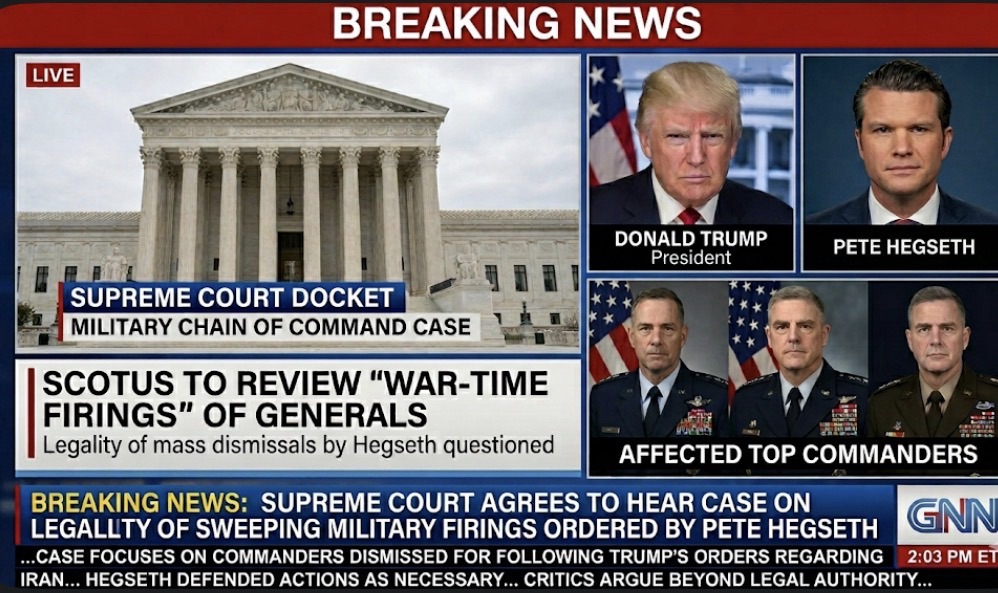
Supreme Court Steps Into Wartime Power Struggle Over Pentagon Firings
In a development that could redefine the limits of presidential authority during armed conflict, the SCOTUS has agreed to review a high-stakes legal challenge surrounding the mass removal of senior military leaders by Defense Secretary Pete Hegseth under the administration of Trump.
The case, which is already being described by legal analysts as one of the most consequential wartime disputes in decades, centers on whether the sweeping dismissals of top generals—carried out during an active conflict with Iran—cross constitutional or statutory limits on executive power.
A Constitutional Clash in Real Time
At the heart of the case is a fundamental question: how far can a president go in reshaping military leadership during war?
While the Constitution grants the president broad authority as Commander-in-Chief, critics argue that the scale and timing of the firings raise serious concerns about potential overreach. Supporters of the administration, however, maintain that control over military personnel is a core executive function, especially in times of crisis.
The SCOTUS is not being asked to weigh in on military strategy itself, but rather to determine whether legal boundaries were violated in the process—such as bypassing required procedures or undermining protections tied to certain high-ranking positions.
Why the Case Matters
The stakes extend far beyond the individuals involved. A ruling from the court could:
Clarify the limits of presidential authority over the armed forces Set precedent for how wartime decisions are reviewed by the judiciary Influence the balance of power between the White House and Congress
“This is about more than personnel decisions,” one constitutional scholar noted. “It’s about whether there are enforceable limits when the country is at war.”
Legal and Political Fallout
The case has already ignited fierce debate in Washington. Lawmakers have called for transparency around the firings, while some have warned that unchecked executive action could destabilize military command structures.
At the same time, others caution against judicial interference in national security matters, arguing that courts have historically deferred to the executive branch on military decisions—particularly during active conflicts.
That tension—between oversight and deference—is now front and center as the SCOTUS prepares to hear arguments.
What Happens Next
Legal experts expect an expedited process, given the wartime context and the urgency of maintaining a clear chain of command. Still, even a fast-tracked case could take weeks to fully unfold.
In the meantime, the firings remain in effect, and newly appointed or acting officials continue to oversee military operations.
For Trump and Pete Hegseth, the court’s eventual decision could either affirm sweeping executive authority—or impose new limits at a moment when the nation is already navigating one of its most volatile military confrontations in years.
As the conflict with Iran continues, the outcome of this legal battle may shape not only the future of U.S. military leadership, but the constitutional boundaries of power in times of war.

Taylor Swift and Travis Kelce Donate $200,000 Toward Dolly Parton’s Funeral Plans as They Honor the Country Music Legend’s Legacy

Taylor Swift Reacts to Dolly Parton’s Passing With Heartfelt Tribute as Music World Says Goodbye to a Legend

BREAKING: Dolly Parton Dies at 80 as Family Confirms Death of Country Music Legend

Taylor Swift Gives Back to Her Hometown: Pop Superstar Donates $2.6 Million of Her Own Money to Housing Projects in West Reading and Cumru Township, Pennsylvania to help around 300 people

Buffalo Bills’ Ed Oliver Thanks Travis Kelce and Chiefs Players for Standing With His Family in Emotional Tribute Before Chiefs-Buccaneers Preseason Kickoff-to His 2-Year-Old Son who died in home pool— “I Truly Appreciate You”

Travis Kelce Addresses Claims of Tension With Taylor Swift and Denies Alleged 48-Hour “Read” Incident, Putting an End to Rumors That there’s Trouble in Paradise

Taylor Swift and Travis Kelce Spotted Near President Donald Trump’s Freedom 250 Grand Prix Venue in Washington, D.C., Just Hours After Watching the Chiefs Suffer Preseason Loss to the Buccaneers

WATCH President Donald Trump and First Lady Melania Trump Greet IndyCar Drivers on the Paddock Ahead of the Historic Freedom 250 Grand Prix in Washington, D.C

Taylor Swift Spotted With Husband Travis Kelce as Chiefs Star Makes His Way Out of Buccaneers Stadium Following Preseason Loss in Tampa Bay

Chiefs player led by Travis Kelce Put Football Aside to Honor Ed Oliver’s 2-Year-Old Son who died in home pool With a minute silence before emerging from the Tunnel fore Preseason Kickoff against Buccaneers

Taylor Swift and Travis Kelce Share a Special Fist-Bump Moment as Smiling Jason Kelce Looks On With Pride While the Chiefs Star Heads Out of the Tunnel Ahead of the Buccaneers Preseason Matchup
