
NFL
U.S. Senate Set to Approve Fifth Attempt to Curb President Donald Trump’s War Powers in Iran as Lawmakers Intensify Efforts to Reassert Congressional Authority amid Strait of Hormuz Blockade

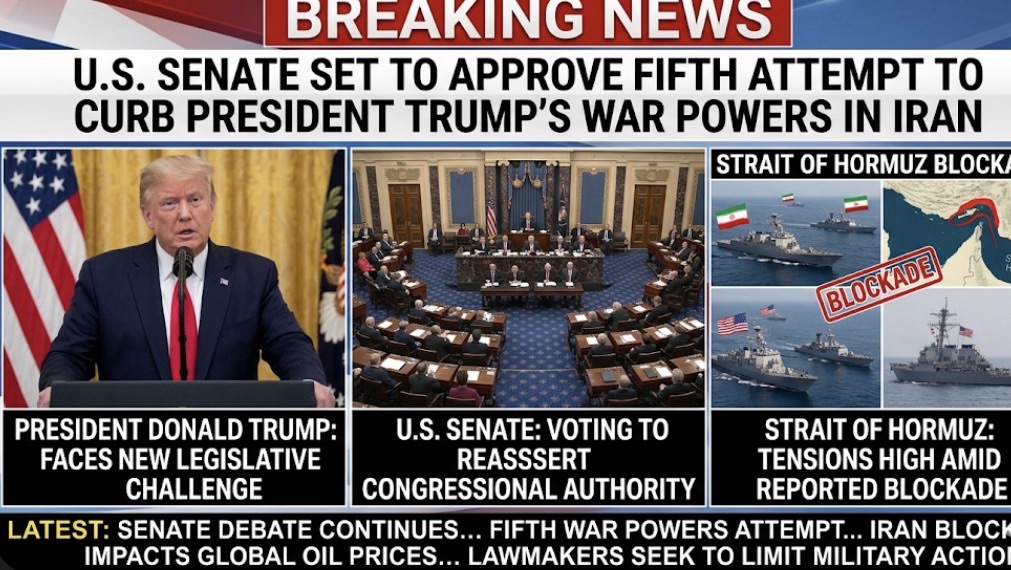
Washington, D.C. — The United States Senate is poised to approve a fifth attempt to curb President Donald Trump’s authority to wage military action against Iran, marking the latest chapter in a prolonged struggle between Congress and the White House over control of war powers.
The measure, expected to gain traction in the coming days, reflects growing bipartisan concern that the president has stretched executive authority too far amid escalating tensions with Tehran. Lawmakers backing the resolution argue that the Constitution grants Congress — not the president — the sole authority to declare war, and that recent military posturing toward Iran risks bypassing that critical check.
This latest effort follows four previous attempts that either failed to pass both chambers or were vetoed. Despite those setbacks, supporters say the stakes have only grown higher, citing increased military activity in the region and fears of a broader conflict that could draw the United States into another prolonged war in the Middle East.
“This is about restoring balance,” one senior senator said during floor debates. “No president, regardless of party, should have the unilateral power to drag this nation into war without the consent of the American people through their representatives.”
The resolution seeks to require explicit congressional authorization before any new military action against Iran can be undertaken, except in cases of direct and imminent threat to the United States. Proponents argue that such language preserves the president’s ability to respond in emergencies while preventing open-ended military engagements.
Opponents, however, contend that the measure could tie the hands of the commander-in-chief at a critical moment. Allies of Trump argue that rapid decision-making is essential in dealing with adversaries like Iran, and that imposing additional restrictions could embolden hostile actors.
The debate has intensified against the backdrop of heightened rhetoric and strategic maneuvering in the Persian Gulf, with analysts warning that miscalculation on either side could quickly spiral into open conflict.
If passed, the resolution will likely face resistance from the White House, raising the possibility of yet another presidential veto. Overriding such a veto would require a two-thirds majority in both the Senate and the House of Representatives — a high bar that previous efforts have failed to meet.
Still, the persistence of lawmakers signals a deepening unease in Washington over the scope of presidential war-making powers. As the Senate prepares for this fifth vote, the outcome may not only shape U.S. policy toward Iran but also redefine the balance of power between Congress and the presidency for years to come.

Fit for a Queen! Travis and Jason Kelce Sweep Mom Donna Off Her Feet in Heartwarming Celebration Snap as the NFL Superstars Put Their Famous Football Careers Aside to Celebrate the Woman Behind Their Success

Donna Kelce Celebrates Her Birthday With Taylor Swift, Travis Kelce, Jason and Kylie Kelce as the Superstar Joins Her NFL Boyfriend’s Family for a Special Day

Taylor Swift Goes All Out for Donna Kelce’s Birthday With an Expensive Luxury Gift as Travis Kelce’s Mom Gets the Royal Treatment From the Pop Superstar

Travis Kelce Confirms ‘Best News’ Yet as After Celebrating His 37th Birthday in Romantic Style With Wife Taylor Swift

Taylor Swift Appears to Keep Her Hand Loose as Travis Kelce Holds On After Witness Claims the Couple Had a Tense Argument Before Leaving—Candid Photos Fuel Fresh Questions About Their Unusual Exchange

Travis Kelce and Taylor Swift Step Out in London With Jason Kelce for a Star-Studded Sightseeing Adventure After Celebrating Travis’ 37th Birthday in New York City

Travis Kelce Turns 37 in Style as Taylor Swift Shares Cozy Birthday Moments and a Stunning Cake From Their Ohio Mansion After Chiefs’ Thrilling Victory Over the Raiders

Taylor Swift Appears to Give Raiders Fan the MIDDLE FINGER After He Trolls Travis Kelce With Brutal “Scores 6s on the Field… 3s Off the Field” Sign During Raiders’ Loss

Taylor Swift and Husband Travis Kelce Share Sweet Hand-in-Hand Moment as They Leave Allegiant Stadium After Chiefs Edge Raiders 30–27 in Thrilling Finish

Taylor Swift Goes Wild and Jubilates Inside Allegiant Stadium as Patrick Mahomes’ Second Touchdown Pass to Tyquan Thornton Sends the Kansas City Chiefs Into a 17–13 Lead Over the Raiders in the Fourth Quarter

Taylor Swift Spotted at Allegiant Stadium To Support Travis Kelce and Chiefs as Patrick Mahomes Leads the Kansas City Chiefs Back to Level With the Las Vegas Raiders at 7–7 in a Tense Battle in Las Vegas With Tyquan Thornton for a Touchdown
