
NFL
Russia and China have declared that they will no longer use the U.S. dollar for any of their trade dealings amid Donald Trump’s actions in Iran and blockade on the Hormuz Strait

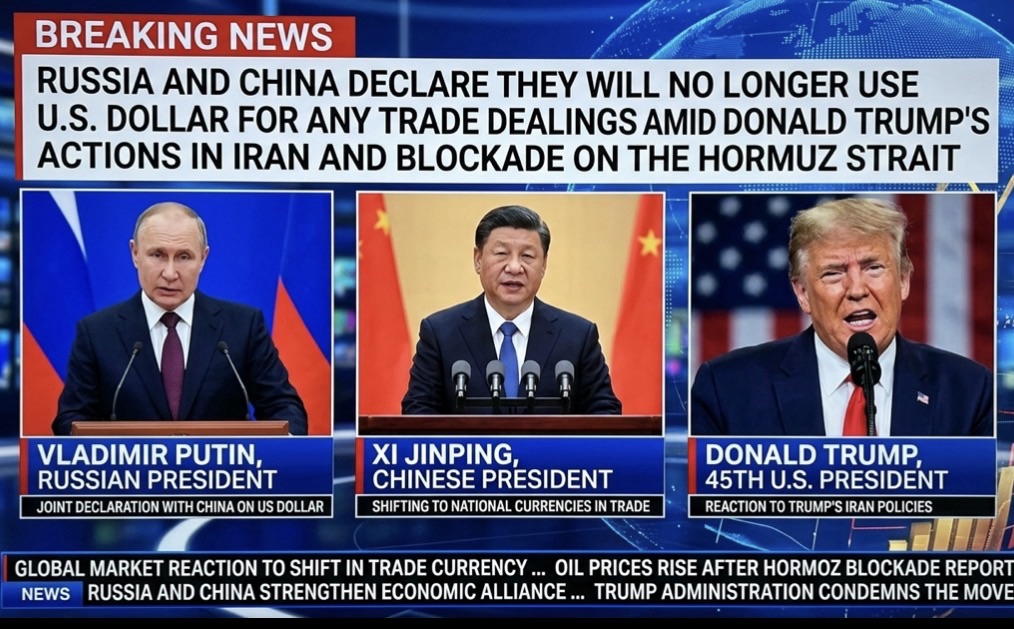
Russia and China Declare End to U.S. Dollar Use in Bilateral Trade
In a significant shift with far-reaching implications for the global economy, Russia and China have announced that they will no longer use the USD in any of their trade dealings with each other. The move marks one of the most decisive steps yet toward reducing reliance on the world’s dominant reserve currency and signals a deepening economic alignment between the two powers.
Officials in both Moscow and Beijing framed the decision as part of a broader strategy to strengthen financial sovereignty and insulate their economies from external pressure, particularly from Western sanctions. In recent years, Russia has faced extensive financial restrictions from the United States and its allies, while China has sought to expand the global role of its own currency, the yuan.
Under the new arrangement, trade between the two countries will be conducted primarily in their national currencies—the Russian ruble and the Chinese yuan. Analysts say this could streamline transactions between the two economies while reducing exposure to currency fluctuations tied to the dollar.
The announcement comes amid a wider global trend often referred to as “de-dollarization,” where countries seek alternatives to the U.S. dollar in trade, reserves, and financial systems. While the dollar remains the dominant global currency, moves by major economies like Russia and China could gradually reshape international trade patterns if adopted more broadly.
Economic experts caution, however, that replacing the dollar is not a simple process. The U.S. dollar continues to underpin much of the global financial system due to its stability, liquidity, and widespread acceptance. For Russia and China, building trust in alternative systems and ensuring smooth cross-border payments will be critical to the success of their initiative.
Global markets reacted cautiously to the news, with investors weighing the long-term implications rather than expecting immediate disruption. Some see the move as largely symbolic in the short term, given that a significant portion of global trade is still denominated in dollars. Others view it as a clear signal of a shifting geopolitical landscape.
The decision also carries political weight. By reducing dependence on the dollar, Russia and China are not only making an economic statement but also reinforcing their strategic partnership in opposition to Western influence.
Whether this marks the beginning of a broader transformation or remains a bilateral arrangement will depend on how other nations respond. For now, the move underscores a growing willingness among major powers to challenge the traditional foundations of the global financial system.

Fit for a Queen! Travis and Jason Kelce Sweep Mom Donna Off Her Feet in Heartwarming Celebration Snap as the NFL Superstars Put Their Famous Football Careers Aside to Celebrate the Woman Behind Their Success

Donna Kelce Celebrates Her Birthday With Taylor Swift, Travis Kelce, Jason and Kylie Kelce as the Superstar Joins Her NFL Boyfriend’s Family for a Special Day

Taylor Swift Goes All Out for Donna Kelce’s Birthday With an Expensive Luxury Gift as Travis Kelce’s Mom Gets the Royal Treatment From the Pop Superstar

Travis Kelce Confirms ‘Best News’ Yet as After Celebrating His 37th Birthday in Romantic Style With Wife Taylor Swift

Taylor Swift Appears to Keep Her Hand Loose as Travis Kelce Holds On After Witness Claims the Couple Had a Tense Argument Before Leaving—Candid Photos Fuel Fresh Questions About Their Unusual Exchange

Travis Kelce and Taylor Swift Step Out in London With Jason Kelce for a Star-Studded Sightseeing Adventure After Celebrating Travis’ 37th Birthday in New York City

Travis Kelce Turns 37 in Style as Taylor Swift Shares Cozy Birthday Moments and a Stunning Cake From Their Ohio Mansion After Chiefs’ Thrilling Victory Over the Raiders

Taylor Swift Appears to Give Raiders Fan the MIDDLE FINGER After He Trolls Travis Kelce With Brutal “Scores 6s on the Field… 3s Off the Field” Sign During Raiders’ Loss

Taylor Swift and Husband Travis Kelce Share Sweet Hand-in-Hand Moment as They Leave Allegiant Stadium After Chiefs Edge Raiders 30–27 in Thrilling Finish

Taylor Swift Goes Wild and Jubilates Inside Allegiant Stadium as Patrick Mahomes’ Second Touchdown Pass to Tyquan Thornton Sends the Kansas City Chiefs Into a 17–13 Lead Over the Raiders in the Fourth Quarter

Taylor Swift Spotted at Allegiant Stadium To Support Travis Kelce and Chiefs as Patrick Mahomes Leads the Kansas City Chiefs Back to Level With the Las Vegas Raiders at 7–7 in a Tense Battle in Las Vegas With Tyquan Thornton for a Touchdown
