
NFL
Benjamin Netanyahu Defies Donald Trump, Declares Israel Will Not Halt Strikes on Iran’s Gas Fields Despite Direct U.S. Pressure to De-escalate Conflict following Iran’s attack on Gulf Energy Site

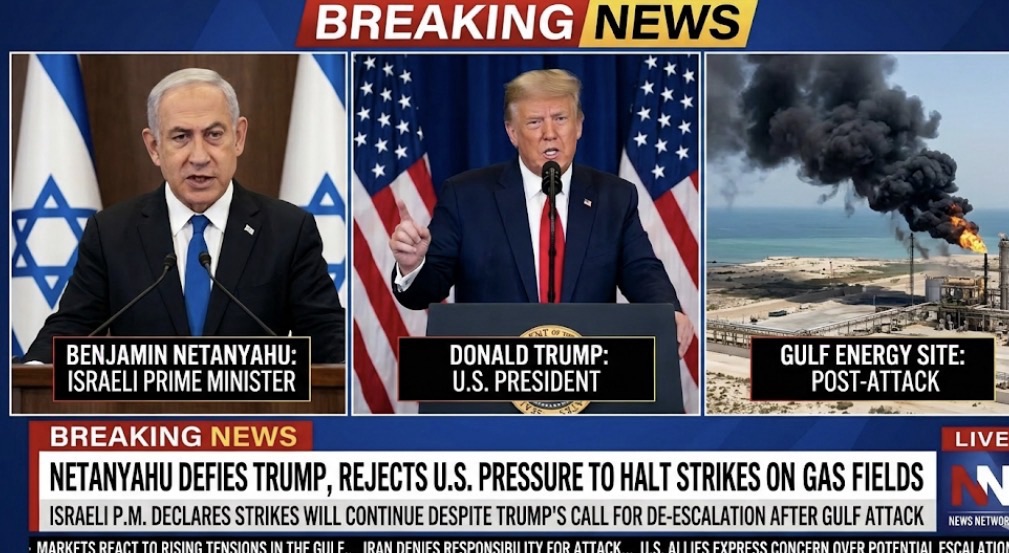
Israel Defies U.S. Pressure as Netanyahu Vows Continued Strikes on Iran’s Gas Fields
Tensions in the Middle East escalated sharply after Benjamin Netanyahu declared that Israel would continue striking Iran’s gas field infrastructure, openly rejecting calls from Donald Trump to halt the attacks following a recent strike on a Gulf energy site.
Speaking amid growing international concern, Netanyahu made it clear that Israel’s military campaign against Iran’s energy sector would not slow down. “We will not stop,” he said, signaling a firm commitment to what Israeli officials describe as a necessary response to Iranian aggression and threats to regional security.
The statement came shortly after an attack on a major Gulf energy installation, which heightened fears of a broader conflict that could disrupt global energy supplies. Trump, reacting to the rising tensions, reportedly urged Israel to de-escalate and avoid further strikes that could inflame the situation and draw in additional regional actors.
Despite the warning, Netanyahu’s stance suggests a widening divide between Washington and Tel Aviv over how to respond to Iran. Israeli officials argue that targeting Iran’s gas fields and energy infrastructure is a strategic move aimed at weakening Tehran’s economic and military capabilities. They maintain that restraint at this stage would only embolden further attacks.
The U.S., however, appears increasingly concerned about the risk of a prolonged and uncontrollable conflict. Trump’s call for restraint reflects fears that continued strikes could trigger retaliatory actions from Iran, potentially targeting key shipping routes or energy facilities across the Gulf—critical arteries for global oil and gas supplies.
Analysts say the disagreement highlights a rare moment of public friction between the two allies, as their strategic priorities begin to diverge under mounting pressure. While Israel appears focused on immediate military objectives, the United States is weighing the broader geopolitical and economic consequences of escalation.
Meanwhile, regional powers are closely watching the situation unfold. Any sustained attack on energy infrastructure risks sending shockwaves through international markets, with oil prices and supply chains already sensitive to instability in the Gulf.
As both sides hold firm to their positions, the possibility of further escalation remains high. With Israel continuing its offensive and Iran yet to fully respond, the coming days could prove decisive in determining whether the conflict intensifies into a wider regional crisis or moves toward a fragile de-escalation.

Benjamin Netanyahu Defies Donald Trump, Declares Israel Will Not Halt Strikes on Iran’s Gas Fields Despite Direct U.S. Pressure to De-escalate Conflict following Iran’s attack on Gulf Energy Site

China President Xi Jinping announced Donald Trump’s Beijing Visit Called Off as China Resists U.S. Push to Secure Strait of Hormuz Over Oil Route Dispute and Escalating Tension with Iran

North Korea Supreme Leader Kim Jong Un Calls Donald Trump “Mentally Unstable,” Describes Him as “An Old American Man With Dementia” Amid Middle East Rising Tensions with Iran and Troubles on the Strait of Hormuz

Congress Intelligence Committee Launches Sweeping Investigation Into Donald Trump Over Alleged War Crimes, Possible Crimes Against Humanity After Intelligence Failures Following Deadly Iran Airstrike That Destroyed Girls’ School in Minab Killing 100

Director of National Intelligence Tulsi Gabbard Set to be Grilled by Senate Intelligence Committee on U.S. Handling of Iran War and Intelligence Failures Behind Deadly Airstrike Ordered by Donald Trump That Destroyed Girls’ School in Minab, Killing Over 100 Children

Donald Trump Administration Weighs Pullback from Israel-Iran War After Escalation, Rising Casualties, Closure of Hormuz Strait and Mounting Global Pressure

China Signals Possible Expulsion of U.S. and Israeli Ambassadors After High-Stakes Talks With Iran on Reopening the Strait of Hormuz Amid Escalating Middle East Conflict as Donald Trump and Benjamin Netanyahu Faces Mounting Pressure

Donald Trump Signals Concern Over Iran’s SHOCKING Strength, Appeals for International Support as Allies Refuse Military Involvement and U.S Troops keeps refusing Orders

NATO Allies Call Emergency Summit to Debate Sanctions and Removal Against the United States and Donald Trump Amid Escalating Tensions on the Strait of Hormuz with Iran, Controversial Remarks, Disrespect Toward Allies and Alleged Violations of Alliance Principles

A Group of U.S. Senators Ignite Crisis as They Call for 25th Amendment to the United States Constitution to Remove Donald Trump, Declaring Him “Unfit” Amid Iran War, Chaos, and National Security Fears

Taylor Swift and Travis Kelce Enjoy a Romantic Sunset Yacht Getaway With Patrick Mahomes and Brittany Mahomes as the Couples Relax With Drinks and Laughter at Sea after attending Beyoncé and Madonna Oscar after party
