
NEWS
California Governor Gavin Newsom Announces Historic Plan for the California to Join the World Health Organization, Directly Challenging the Federal Government and Donald Trump’s Decision to Withdraw the United States

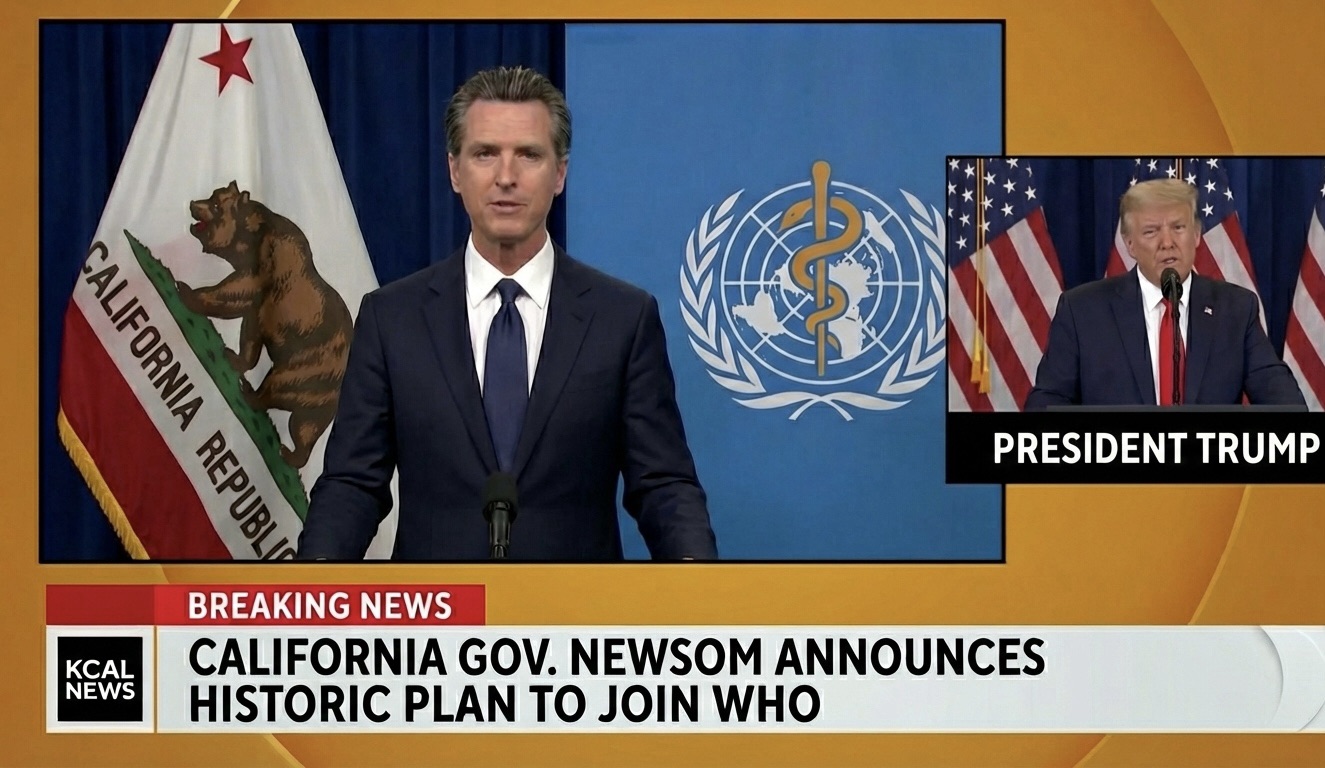
California Governor Gavin Newsom announced on Tuesday that California intends to establish a direct partnership with the World Health Organization (WHO), positioning the state as the first in the country to formally align itself with the global health body following the federal government’s withdrawal.
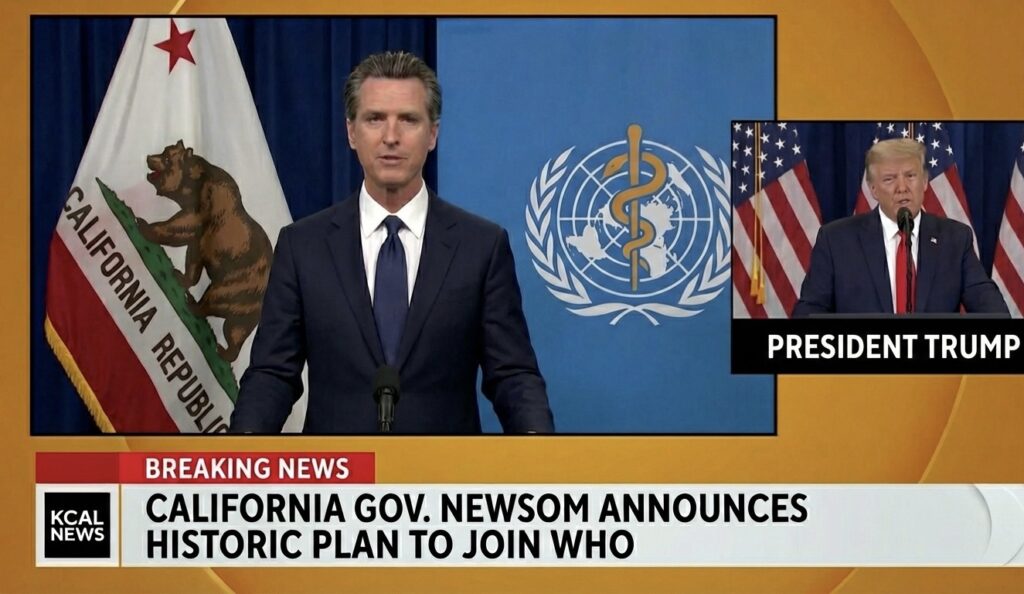
The governor framed the move as a significant step toward strengthening international public health coordination, describing it as both a symbolic and practical counterweight to the recent federal decision to remove the United States from WHO participation.
“Global health challenges don’t stop at state or national borders,” Newsom said during a press briefing in Sacramento. “If the federal government chooses to step away from international cooperation, California will step up. We will work with the World Health Organization to protect the health of our residents and contribute to global solutions.”
A Direct Challenge to Federal Policy
The announcement comes just days after former President Donald Trump confirmed that the United States would officially leave the WHO, citing a need to redirect funding and distance the nation from what he called “ineffective global health bureaucracy.”
Newsom’s decision is widely seen as a direct challenge to the White House, reflecting ongoing tensions between California’s leadership and the Trump administration over public health policy, climate cooperation, environmental regulation, and immigration enforcement.
Legal experts noted that although U.S. states cannot become full WHO member states — since membership is reserved for sovereign nations — nothing prevents subnational governments from forming agreements, research partnerships, data-sharing programs, or public health cooperation frameworks with international organizations.
What California’s Alignment Would Mean
Under the plan outlined Tuesday, California would seek to:
Establish direct communication channels between state health agencies and WHO offices Participate in WHO-backed epidemiological monitoring programs Share public health data and research on infectious diseases Expand cooperation on vaccine distribution, pandemic preparedness, and emergency response Facilitate training and knowledge exchange between California institutions and global health partners
Newsom’s aides emphasized that funding levels and structural details are still being finalized, but early drafts suggest a combination of state health department coordination, university research partnership, and private sector involvement.
Reactions and Political Fallout
The announcement drew immediate reactions across the political spectrum. Supporters praised Newsom for “taking global health seriously” and “refusing to isolate California from the international scientific community,” while critics accused him of “undermining federal policy” and “attempting to conduct foreign affairs,” a power normally reserved for Washington.
A spokesperson for the former president dismissed the move as “pure political theater,” arguing that states should not independently engage in foreign policy.
However, international health officials welcomed the outreach. Though the WHO declined to make an official statement on membership or recognition, several advisers expressed openness to working with California on research collaboration and disease control programs.
A New Front in State-Federal Tension
California has repeatedly taken independent stances on climate change, emissions standards, data privacy, and immigration. Now, public health cooperation may become the newest area where California and Washington diverge.
Whether other U.S. states will follow remains uncertain, but several public health experts say Newsom’s move could inspire similar partnerships at the regional or municipal level.
For now, California’s announcement stands as both a symbolic rebuke of federal isolation and a practical effort to remain connected to the global scientific community—marking yet another chapter in the evolving confrontation between state leadership and national policy.

‘Confirmed’: Taylor Swift Gives Travis Kelce the Ultimate Valentine’s Shoutout, Naming Him Her ‘In-House House Guy’ for Coordinating the Surprise ‘Opalite’ House Remix with DJ Chris Lake

Can They Get to 218? Bipartisan Coalition of Democrats and Moderate Republicans Races Against Time to Impeach Donald Trump Over Shocking Allegations Spanning War Crimes, Epstein Connection, and Embezzlement

Taylor Swift and Travis Kelce Shut Down the Streets of Manhattan as They Arrive Hand-in-Hand for an Ultra-Exclusive Valentine’s Day Dinner
Supreme Court Set to Redefine the Limits of Presidential Immunity, Raising Serious Legal Stakes for President Donald Trump’s Second Term

Taylor Swift Reunites With Travis Kelce Partying together at Late-Night Club Following Super Bowl Spotlight

Supreme Court rules Donald Trump’s White House East Wing demolition illegal, orders immediate rebuild

If We Lose the Midterms and 2028, We’re Going to Prison”: Steve Bannon Warns That Donald Trump, Himself, and Other MAGA Insiders Face Jail if Power Slips Away

Donald Trump Administration Launches Emergency Appeal After Federal Judge Orders ICE Agents to Wear Face Masks and Imposes New Limits on Use of Force During Operations as DOJ File Emergency Motion

Bad Bunny Files Stunning $500 Million Lawsuit Against Donald Trump, Claiming The President’s Super Bowl LX Halftime Remarks Were Made With “Actual Malice” and it’s Causing Severe Reputation Damage

Taylor Swift Takes Aim at Super Bowl Patriots-Seahawks Clash, Says Lack of Chiefs and Travis Kelce Makes Game ‘Unexciting and Boring’ after the popster attended with The NFL Star

Taylor Swift and Travis Kelce Spotted in VIP Suite as Patriots Take On Seahawks at Super Bowl
