
NFL
Donald Trump Claims Significant Progress in Secret Talks with Iran Including Zero Enrichment and Uranium Handover and No Nuclear Weapons Which Iranian Officials Call It a Bluff and Fake Claims

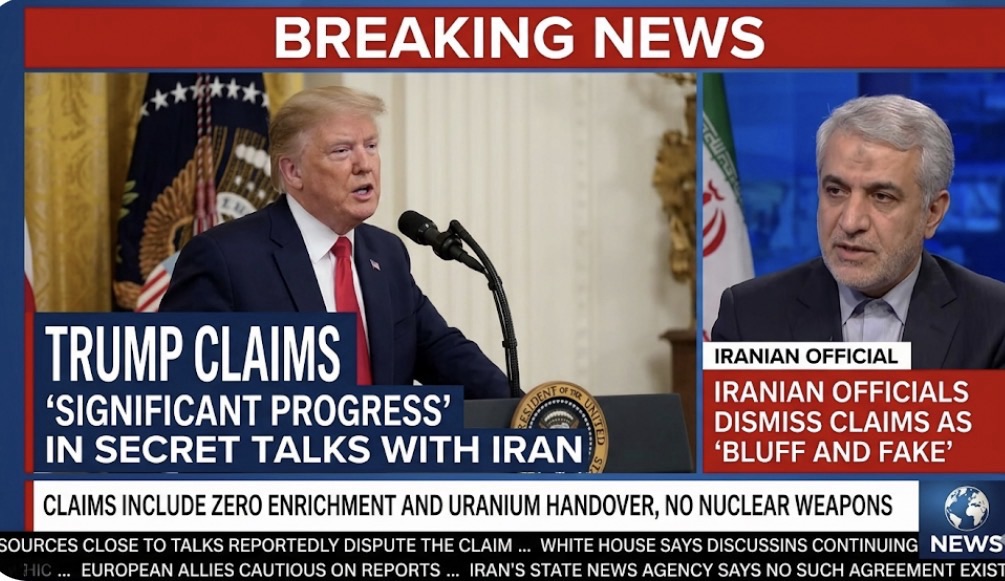
Trump Claims Major Breakthrough with Iran on Nuclear Weapons Ban, but Tehran Firmly Denies Any Talks
West Palm Beach, Florida — March 23, 2026 — President Donald Trump declared on Monday that the United States and Iran have reached “major points of agreement” in high-level discussions, with Tehran committing to never develop or possess a nuclear weapon. Speaking to reporters as he departed from a weekend in Florida, Trump described the conversations as “very strong” and “productive,” suggesting they could lead to a “complete and total resolution” of hostilities in the Middle East.36
“They’ve agreed they will never have a nuclear weapon. That’s number one, two, and three,” Trump stated emphatically. “They will never have a nuclear weapon. They’ve agreed to that.” He added that any final deal would require Iran to hand over its stockpile of enriched uranium, with the U.S. prepared to retrieve it directly if necessary: “If we have a deal with them, we’re going down and we’ll take it ourselves.”35
The comments came hours after the administration extended a deadline on potential U.S. strikes against Iranian power plants and energy infrastructure by five days, citing progress in reopening the Strait of Hormuz and broader de-escalation efforts. Trump indicated there is a “very good chance” an agreement could materialize soon, noting that Iran “wants to make a deal so badly” and is “talking sense.” He named senior envoys — including his son-in-law Jared Kushner, adviser Steve Witkoff, Secretary of State Marco Rubio, and Vice President JD Vance — as involved in the backchannel communications with what he called a “top” and “most respected” Iranian figure.11
Trump framed the developments as a success of his “peace through strength” approach, arguing that recent U.S. and Israeli military actions had significantly set back Iran’s nuclear program, which he claimed had been weeks away from a major advance before the conflict intensified. He referenced a reported 15-point proposal delivered through mediators (possibly including Pakistan) that includes zero uranium enrichment, limits on ballistic missiles, and other concessions in exchange for eased sanctions and regional peace.19
Immediate Iranian Denial
Iranian officials wasted no time rejecting the claims. Parliament Speaker Mohammad Bagher Ghalibaf posted on X that “no negotiations have been held with the US,” dismissing the reports as “fake news” designed to manipulate oil and financial markets and help the U.S. and Israel “escape the quagmire” of the ongoing conflict.25
The Iranian Foreign Ministry and other senior figures echoed the denial, insisting there has been “no direct or indirect contact” with Washington. Iranian state media and spokespersons accused the Trump administration of fabricating talks to buy time, influence global energy prices, and mask military setbacks. Some reports suggested third-party initiatives (such as from Oman or Turkey) aimed at reducing tensions, but Tehran maintained it has not engaged directly with the U.S.26
This sharp contradiction underscores the profound mistrust that has long characterized U.S.-Iran relations. Iran has maintained an official fatwa against nuclear weapons since 2003 under Supreme Leader guidance, while insisting on its right to peaceful nuclear energy and uranium enrichment. The 2015 Joint Comprehensive Plan of Action (JCPOA), from which Trump withdrew during his first term, had previously imposed limits on Iran’s program in exchange for sanctions relief — a deal both sides have accused the other of violating or undermining.
Broader Context of the Conflict
The statements arrive amid active hostilities between Israel and Iran, with the U.S. backing Israel through intelligence, munitions, and limited direct strikes on Iranian targets. Tensions escalated over Iran’s nuclear advancements, ballistic missile arsenal, and support for regional proxies. Trump has repeatedly warned that, without intervention, Iran could have rapidly crossed the nuclear threshold.
By pausing escalated strikes on critical energy sites while keeping the military option on the table, the administration appears to be blending coercion with diplomacy. Oil markets showed some relief, with prices dropping on hopes of de-escalation and resumed shipping through the vital Strait of Hormuz, though analysts warned that conflicting signals could sustain volatility.41
Reactions and Lingering Skepticism
The announcement has drawn sharply divided responses. Supporters hail it as evidence that Trump’s tough stance — including recent strikes that reportedly damaged Iranian nuclear facilities — has forced Tehran into meaningful concessions where prior diplomacy failed. Critics, including some Iranian opposition voices and Western analysts, question the reliability of any verbal assurances without verifiable mechanisms, such as intrusive International Atomic Energy Agency (IAEA) inspections or regime-level changes in Tehran.
Skeptics point to Iran’s history of opacity regarding its nuclear sites and past disputes over compliance. Questions also remain about the exact identity and authority of the alleged Iranian interlocutors, as Trump did not name them publicly and Iranian leaders have disavowed involvement.
As of March 25, 2026, no joint statement, signed framework, or independent confirmation of the talks has emerged. The extended five-day window on potential U.S. action will likely test whether Trump’s optimism translates into concrete progress or if the dueling narratives signal continued strategic maneuvering.
This episode highlights the complex interplay of military pressure, backchannel diplomacy, and information warfare in one of the world’s most volatile regions. With verification challenges, deep-seated distrust, and domestic political pressures on multiple sides, any path to a lasting agreement faces steep hurdles. Developments are expected in the coming days as mediators continue quiet efforts and both capitals weigh their next moves.

Senate Democrats, Led by Elizabeth Warren, Strongly Oppose Republican-Backed Budget Bill That Seeks Taxpayers Billions More to Sustain Donald Trump’s Unauthorized Military Campaign in Iran and Ramp Up ICE Enforcement Operations

U.S. President Donald Trump Calls for America’s Shift Toward a One-Party System, Suggesting a National Convention to Introduce Constitutional Amendments Claiming Current System Is ‘Broken’ and Ruining America

Russia Moves Ahead with $10B Nuclear Investment in Iran as Tehran Rejects Donald Trump’s Deal as Vladimir Putin’s States they have Nuclear Rights

House Democrats Intensify Efforts to Draft Articles of Impeachment Against President Donald Trump, Citing Unauthorized and Unconstitutional Military Strikes Launching the Costly 2026 Iran War Without Congressional Approval and Many Other Atrocities Including Epstein File

Donald Trump Claims Significant Progress in Secret Talks with Iran Including Zero Enrichment and Uranium Handover and No Nuclear Weapons Which Iranian Officials Call It a Bluff and Fake Claims

Donald Trump Condemns Putin and Demands War Crimes Charges Following Large-Scale Russian Air Assault That Left Ukrainian Civilians Dead Overnight amid ongoing war in Iran

Iran Signals It Is Preparing to Lay Naval Mines in the Strait of Hormuz Following a new Messages from Donald Trump

Supreme Court of the United States Orders Immediate Withdrawal of ICE Agents From Airport Security Operations After Donald Trump Deploy ICE to Aid TSA Staffs Amid Ongoing DHS Funding Crisis

Taylor Swift Poses with Travis Kelce alongside Donna Kelce as Chiefs Star Signs On for 14th Season

NATO Forces Seize and Impound U.S. Aircraft Carrier The USS Gerald R. Ford Upon Returning From Iran to Souda Bay in Crete, Securing All Aircraft, Personnel, Ordnance, Fuel, and Defense Systems Following ICC Arrest Warrant For Donald Trump and Escalating Tension with NATO allies

Gavin Newsom Slam Donald Trump, Saying He Is “Making a Fool and Mockery of Himself” After Abruptly Pausing U.S. Military Strikes on Iran Just Hours After Issuing a 48-Hour Ultimatum to Reopen the Strait of Hormuz
