
NFL
Donald Trump Declares Victory as Iran Agrees to Full Passage Through the Strait of Hormuz in Coordination with Israel-Lebanon Ceasefire, Paving Way for Upcoming U.S.-Iran Talks “Thank You!” – President Trump Reacts

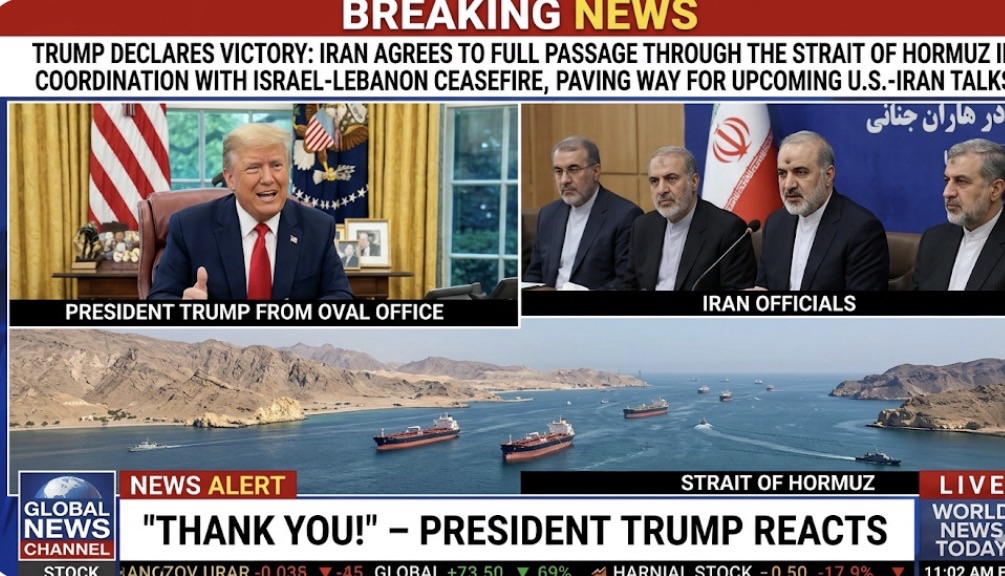
Iran Declares Strait of Hormuz Fully Open for Commercial Shipping, Trump Announces Breakthrough Tied to Israel-Lebanon Ceasefire
Washington, D.C. — In a significant de-escalation move amid ongoing regional tensions, President Donald J. Trump announced on Friday that Iran has declared the Strait of Hormuz — referred to in the announcement as the “Strait of Iran” — fully open and ready for full passage by commercial vessels.10
The White House shared the president’s statement directly: “IRAN HAS JUST ANNOUNCED THAT THE STRAIT OF IRAN IS FULLY OPEN AND READY FOR FULL PASSAGE. THANK YOU!” This development comes shortly after a 10-day ceasefire between Israel and Lebanon took effect, offering a window of reduced hostilities that could pave the way for broader diplomatic progress, including potential U.S.-Iran negotiations scheduled in the coming days.
Background: From Blockade to Breakthrough
The Strait of Hormuz, a narrow chokepoint between the Persian Gulf and the Gulf of Oman, is one of the world’s most critical energy arteries. Roughly one-fifth of global oil trade passes through its waters under normal conditions. In recent weeks, the waterway faced severe restrictions amid heightened U.S.-Iran tensions, including a U.S.-imposed naval blockade on Iranian ports and shipping movements.
President Trump had repeatedly demanded the “complete, immediate, and safe opening” of the strait, warning of strong consequences for non-compliance. Earlier this month, the administration enforced a blockade on vessels attempting to enter or exit the area, contributing to volatility in global energy markets. Oil prices had spiked toward or above $100 per barrel at points due to the disruptions, raising concerns about supply shortages and higher costs for consumers worldwide.
The announcement of the reopening appears linked to the fresh Israel-Lebanon truce, which began on April 16-17, 2026. Trump personally highlighted the ceasefire agreement between Israeli and Lebanese leadership, inviting both sides to the White House for talks — the first direct high-level engagement in decades. Iranian officials have reportedly tied the temporary opening of the strait to the duration of this ceasefire period, which is expected to last approximately 10 days.
Market Reaction and Economic Relief
Global oil markets responded swiftly to the news. Reports indicate an immediate drop of over 8% in crude prices, reflecting investor optimism that the reopening could ease the largest energy supply disruption in recent history. Analysts note that while full restoration of pre-crisis flows may take time — potentially weeks or months for damaged infrastructure and normalized tanker traffic — the move signals a potential turning point.
“This is a win for global commerce and energy security,” one market commentator observed, though caution remains due to the temporary nature of the arrangement and the fragile state of regional ceasefires.
Path Forward: Diplomacy and Lingering Challenges
The White House framed the development as evidence of effective U.S. pressure combined with diplomatic engagement. Trump has positioned the reopening as part of a larger effort to prevent future disruptions, noting in related statements that major powers like China stand to benefit and have reportedly committed to not supplying weapons to Iran in certain contexts.
Upcoming U.S.-Iran talks, possibly as early as this weekend, could build on this momentum. Key issues on the table include Iran’s nuclear program, broader regional stability, and ensuring unrestricted commercial passage through the strait without threats or unauthorized fees.
However, challenges persist. The ceasefire in Lebanon is short-term, and full normalization of shipping through Hormuz will depend on sustained compliance from all parties, including safe transit for international tankers. Humanitarian concerns have also been raised regarding potential prolonged blockades, with warnings of broader economic ripple effects if tensions reignite.
Trump’s Consistent Stance
Throughout the crisis, President Trump emphasized strength and negotiation. From public warnings about power plant strikes if the strait remained closed, to celebrating progress when openings were signaled, the administration has maintained that secure maritime routes are non-negotiable for global stability.
This latest announcement arrives as the region navigates multiple overlapping truces and talks, offering cautious hope that sustained diplomacy could prevent a return to escalation.
As shipping companies monitor the situation and prepare to resume operations, the world watches to see whether this reopening marks the beginning of a more stable chapter in the Persian Gulf or merely a temporary pause in a complex conflict.
This article is based on the White House announcement and contemporaneous reporting on regional developments as of April 17, 2026. Markets and diplomatic situations can evolve rapidly.

Fit for a Queen! Travis and Jason Kelce Sweep Mom Donna Off Her Feet in Heartwarming Celebration Snap as the NFL Superstars Put Their Famous Football Careers Aside to Celebrate the Woman Behind Their Success

Donna Kelce Celebrates Her Birthday With Taylor Swift, Travis Kelce, Jason and Kylie Kelce as the Superstar Joins Her NFL Boyfriend’s Family for a Special Day

Taylor Swift Goes All Out for Donna Kelce’s Birthday With an Expensive Luxury Gift as Travis Kelce’s Mom Gets the Royal Treatment From the Pop Superstar

Travis Kelce Confirms ‘Best News’ Yet as After Celebrating His 37th Birthday in Romantic Style With Wife Taylor Swift

Taylor Swift Appears to Keep Her Hand Loose as Travis Kelce Holds On After Witness Claims the Couple Had a Tense Argument Before Leaving—Candid Photos Fuel Fresh Questions About Their Unusual Exchange

Travis Kelce and Taylor Swift Step Out in London With Jason Kelce for a Star-Studded Sightseeing Adventure After Celebrating Travis’ 37th Birthday in New York City

Travis Kelce Turns 37 in Style as Taylor Swift Shares Cozy Birthday Moments and a Stunning Cake From Their Ohio Mansion After Chiefs’ Thrilling Victory Over the Raiders

Taylor Swift Appears to Give Raiders Fan the MIDDLE FINGER After He Trolls Travis Kelce With Brutal “Scores 6s on the Field… 3s Off the Field” Sign During Raiders’ Loss

Taylor Swift and Husband Travis Kelce Share Sweet Hand-in-Hand Moment as They Leave Allegiant Stadium After Chiefs Edge Raiders 30–27 in Thrilling Finish

Taylor Swift Goes Wild and Jubilates Inside Allegiant Stadium as Patrick Mahomes’ Second Touchdown Pass to Tyquan Thornton Sends the Kansas City Chiefs Into a 17–13 Lead Over the Raiders in the Fourth Quarter

Taylor Swift Spotted at Allegiant Stadium To Support Travis Kelce and Chiefs as Patrick Mahomes Leads the Kansas City Chiefs Back to Level With the Las Vegas Raiders at 7–7 in a Tense Battle in Las Vegas With Tyquan Thornton for a Touchdown
