
NFL
House Democrats Intensify Efforts to Draft Articles of Impeachment Against President Donald Trump, Citing Unauthorized and Unconstitutional Military Strikes Launching the Costly 2026 Iran War Without Congressional Approval and Many Other Atrocities Including Epstein File

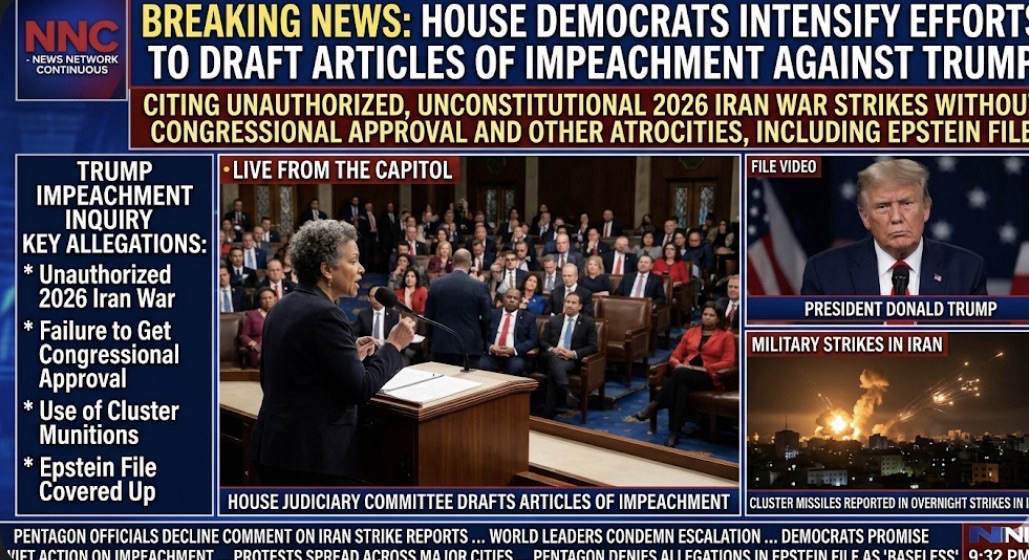
House Democrats Escalate Calls for Impeachment as Trump’s Unauthorized Iran War Enters Its Fourth Week
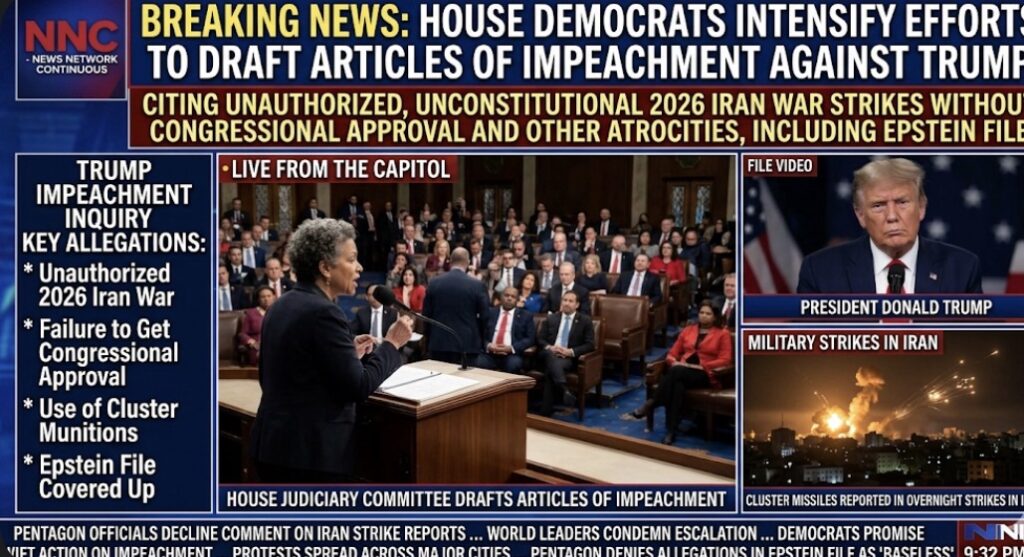
Washington, D.C. — March 25, 2026 — With U.S. military operations against Iran stretching into a costly and volatile fourth week, House Democrats are intensifying their criticism of President Donald Trump, framing his decision to launch strikes without prior congressional approval as a clear violation of the Constitution and potential grounds for impeachment.
House Minority Leader Hakeem Jeffries has emerged as a central voice in the growing Democratic pushback. In recent public statements and press briefings, Jeffries has repeatedly accused the Trump administration of plunging the nation into a “reckless war of choice” without providing a compelling justification or strategy for ending the conflict. He has emphasized that the framers of the Constitution explicitly granted Congress — not the president — the sole authority to declare war, particularly when American service members are placed in harm’s way.28
Jeffries has stopped short of formally introducing articles of impeachment but has signaled that significant Democratic support could materialize if the situation warrants it. When directly asked whether Trump’s actions in Iran rise to the level of an impeachable offense, the Democratic leader highlighted the lack of evidence presented to Congress showing an imminent threat from Iran, calling the strikes “unconstitutional and illegal.” His comments have fueled speculation of a renewed impeachment effort, especially as war costs climb and public approval for the conflict remains low.25
Progressive Voices Demand Stronger Action
The push is strongest among progressive Democrats and groups like the Progressive Democrats of America. Lawmakers and activists argue that Trump’s initiation of major combat operations on February 28, 2026 — including joint U.S.-Israeli strikes that reportedly resulted in the death of Iran’s Supreme Leader Ayatollah Ali Khamenei — constitutes a profound constitutional crisis and a “high crime and misdemeanor.”
Rep. Al Green (D-Texas), who has a history of filing impeachment resolutions against Trump, and other progressives have called for immediate accountability. In op-eds and public statements, they describe the war as not only a humanitarian and moral disaster but also an illegal bypassing of Congress that risks American lives and economic stability.43
Earlier attempts at impeachment over Iran-related actions were tabled with significant Democratic votes joining Republicans, reflecting caution within the party about pursuing a third impeachment when Republicans control both chambers of Congress. However, the escalating scale of the current conflict — now involving sustained operations, Iranian responses in the Strait of Hormuz, and broader regional fallout — has revived calls for oversight and potential removal proceedings.
Focus on War Powers and Costs
While full impeachment articles have not yet been introduced in force, Democrats have repeatedly forced votes on War Powers Resolutions aimed at limiting Trump’s ability to continue or expand military action without explicit congressional authorization. Resolutions sponsored by Reps. Ro Khanna (D-Calif.) and Thomas Massie (R-Ky.) have highlighted the claim that “Donald Trump is not a king” and must seek Congress’s consent for sustained conflict.9
Critics point to the financial toll: estimates suggest costs have already surpassed tens of billions of dollars, with disruptions to global oil supplies driving price spikes and raising recession fears. Seven U.S. service members have reportedly been lost, adding to the human cost that Democrats say demands greater legislative scrutiny.
Trump, for his part, has declared that the war “has been won” and claimed ongoing negotiations with Iranian representatives, including a reported 15-point ceasefire plan delivered via intermediaries. The administration maintains the strikes were necessary to neutralize nuclear threats and respond to regional provocations. Iran has denied active negotiations and warned of further retaliation.16
Political Realities and Outlook
With Republicans holding majorities in both the House and Senate, any Democratic-led impeachment resolution faces steep odds of passing and even steeper odds of resulting in removal via Senate trial. Many mainstream Democrats remain cautious, preferring to focus on war powers votes, oversight hearings, and positioning ahead of the 2026 midterm elections, where regaining the House could open the door to more aggressive accountability measures.1
Still, the rhetoric has sharpened. Jeffries and other Democratic leaders continue to stress that every member of Congress must go on record regarding the conflict, and they vow to keep pressure on the administration to articulate clear objectives and an exit strategy.
As the Iran conflict continues with no immediate resolution in sight, the debate over presidential war powers versus congressional authority has once again thrust impeachment into the national conversation — a familiar flashpoint in the Trump era now playing out against the backdrop of active military engagement.
This story is developing. Democrats are expected to launch additional efforts to curb the war in the coming days, while the White House insists its actions are protecting American interests and deterring future threats.

Senate Democrats, Led by Elizabeth Warren, Strongly Oppose Republican-Backed Budget Bill That Seeks Taxpayers Billions More to Sustain Donald Trump’s Unauthorized Military Campaign in Iran and Ramp Up ICE Enforcement Operations

U.S. President Donald Trump Calls for America’s Shift Toward a One-Party System, Suggesting a National Convention to Introduce Constitutional Amendments Claiming Current System Is ‘Broken’ and Ruining America

Russia Moves Ahead with $10B Nuclear Investment in Iran as Tehran Rejects Donald Trump’s Deal as Vladimir Putin’s States they have Nuclear Rights

House Democrats Intensify Efforts to Draft Articles of Impeachment Against President Donald Trump, Citing Unauthorized and Unconstitutional Military Strikes Launching the Costly 2026 Iran War Without Congressional Approval and Many Other Atrocities Including Epstein File

Donald Trump Claims Significant Progress in Secret Talks with Iran Including Zero Enrichment and Uranium Handover and No Nuclear Weapons Which Iranian Officials Call It a Bluff and Fake Claims

Donald Trump Condemns Putin and Demands War Crimes Charges Following Large-Scale Russian Air Assault That Left Ukrainian Civilians Dead Overnight amid ongoing war in Iran

Iran Signals It Is Preparing to Lay Naval Mines in the Strait of Hormuz Following a new Messages from Donald Trump

Supreme Court of the United States Orders Immediate Withdrawal of ICE Agents From Airport Security Operations After Donald Trump Deploy ICE to Aid TSA Staffs Amid Ongoing DHS Funding Crisis

Taylor Swift Poses with Travis Kelce alongside Donna Kelce as Chiefs Star Signs On for 14th Season

NATO Forces Seize and Impound U.S. Aircraft Carrier The USS Gerald R. Ford Upon Returning From Iran to Souda Bay in Crete, Securing All Aircraft, Personnel, Ordnance, Fuel, and Defense Systems Following ICC Arrest Warrant For Donald Trump and Escalating Tension with NATO allies

Gavin Newsom Slam Donald Trump, Saying He Is “Making a Fool and Mockery of Himself” After Abruptly Pausing U.S. Military Strikes on Iran Just Hours After Issuing a 48-Hour Ultimatum to Reopen the Strait of Hormuz
