
NFL
Iranian Officials Say There Is No Need to Assassinate Donald Trump Because His Presidency Is Already Accelerating U.S. Decline Through Internal Division and Global Isolation

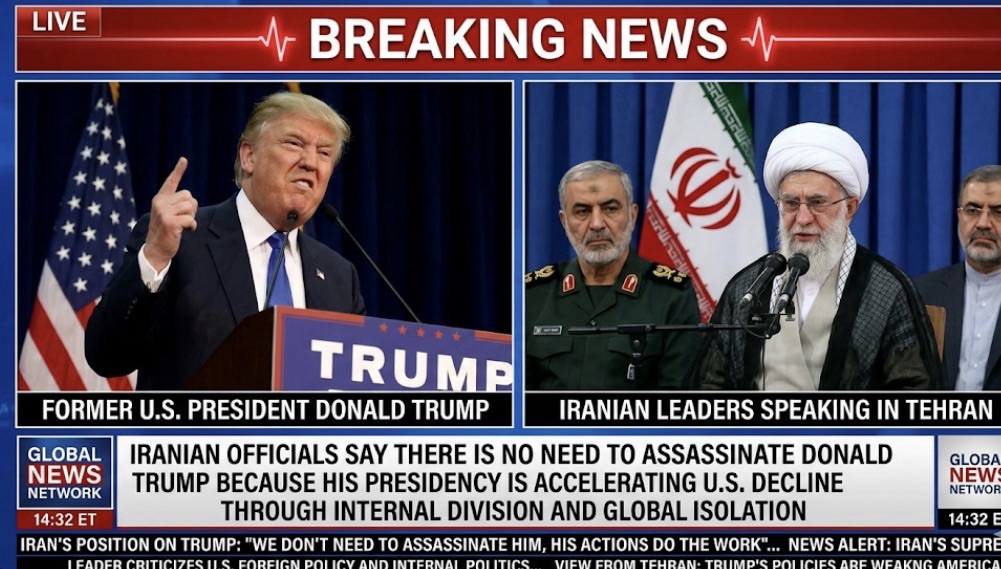
Iran Calls Trump a Strategic “Asset,” Claims His Leadership Weakens U.S. From Within
Iranian officials and state-linked commentators have sparked global controversy after making a striking and deeply provocative claim: they have no interest in targeting Donald Trump —not out of restraint or goodwill, but because they believe his continued leadership is more beneficial to Tehran than any direct action against him.
According to statements attributed to Iranian political and media circles, the reasoning is blunt and strategic. Tehran’s view, as described in recent commentary, is that no external strike could inflict as much damage on the United States as Trump’s own policies, rhetoric, and leadership style are already causing from within the White House.
This framing positions Trump not as a primary adversary to be eliminated, but as what Iranian analysts allegedly describe as a “strategic asset”—a leader whose actions are seen as accelerating internal divisions and weakening America’s global standing.
A Calculated Perspective
Iran’s assessment appears rooted in several key factors. Officials and commentators point to what they describe as deepening political polarization in the United States, strained alliances with traditional partners, and the economic ripple effects tied to escalating conflict in the Middle East.
Particularly highlighted is the ongoing confrontation between Washington and Tehran, which has driven volatility in global oil markets and intensified regional instability. From Iran’s perspective, these developments are viewed as self-inflicted challenges for the United States—problems they argue have been amplified by Trump’s approach to foreign policy and conflict management.
In this context, Iranian strategists reportedly believe that keeping Trump in power serves their long-term objective of diminishing U.S. influence more effectively than any assassination attempt or military strike could achieve.
Information War or Genuine Analysis?
The remarks have fueled intense debate over whether they reflect genuine strategic thinking or a calculated form of psychological warfare.
Some analysts suggest the statements may be intended to provoke political discord within the United States, amplifying existing divisions by framing Trump’s leadership as beneficial to an adversary. Others argue the comments align with a broader pattern of geopolitical messaging, where rival states attempt to shape narratives and perceptions as part of modern conflict.
Strong Reactions in the U.S.
The response in the United States has been swift and polarized. Supporters of Donald Trump have dismissed the claims as “desperate propaganda,” arguing they are designed to undermine confidence in American leadership and rally opposition.
Critics, however, have pointed to the irony of the situation, noting that even adversarial nations appear to view Trump’s presidency as destabilizing. On social media, the comments quickly went viral, triggering waves of debate, satire, and sharply divided interpretations.
A New Layer to an Ongoing Conflict
Whether taken at face value or viewed as strategic messaging, Iran’s stance adds a complex and unsettling dimension to the already tense relationship between the two countries.
By openly suggesting that the U.S. president is more useful to them in power than as a target, Tehran has introduced a narrative that blurs the lines between traditional military conflict and information warfare.
In a geopolitical landscape increasingly shaped by perception as much as force, the message is clear—and controversial: Iran believes the greatest damage to the United States may not come from abroad, but from within.

Taylor Swift Calls Out Donald Trump’s Supreme Court Appearance as Intimidation Tactic

Former United States President Joe Biden Passes Away

Iranian Officials Say There Is No Need to Assassinate Donald Trump Because His Presidency Is Already Accelerating U.S. Decline Through Internal Division and Global Isolation

“Fuck Allies, We Fix It and We Rule It”: Donald Trump Cheer American Unilateral Action as Key Allies Reject his Call for Multinational Naval Coalition to Secure the Strait of Hormuz Amid Surging Global Oil Prices

Federal Judge Issues Permanent Injunction on Donald Trump, Permanently Blocking His Plan to Defund PBS — Here’s What Happened

Donald Trump Set to Sign Executive Order at 5pm Restricting Mail-In and Absentee Ballots to Verified Cases of Illness, Disability, Military Service, or Travel While Mandating DHS and SSA Voter List Verification

Donald Trump Declares ‘No Kings’ Protests “100% BS,” Alleges $3 Billion Funding Network Led by George Soros, Neville Singham, and Taylor Swift Through Hundreds of NGOs and Calling for Their Immediate Arrest

Here is a list of A-list celebrities—including Taylor Swift, Robert De Niro, Beyoncé, Mark Ruffalo, Pedro Pascal, and Olivia Rodrigo—who came out to protest against Donald Trump at the ‘No Kings Day’ march.

Donald Trump criticizes Americans protesting “No Kings Day” nationwide as jobless

ICE Agents Blocked by Protesters During Attempted Mass Arrests at “No Kings Day” Rally in New York after Donald Trump’s Order

Taylor Swift and Travis Kelce Spotted in Kansas as They Join Thousands at ‘No Kings Day’ Parade Protesting Donald Trump
