
NFL
Senate Democrats, Led by Elizabeth Warren, Strongly Oppose Republican-Backed Budget Bill That Seeks Taxpayers Billions More to Sustain Donald Trump’s Unauthorized Military Campaign in Iran and Ramp Up ICE Enforcement Operations

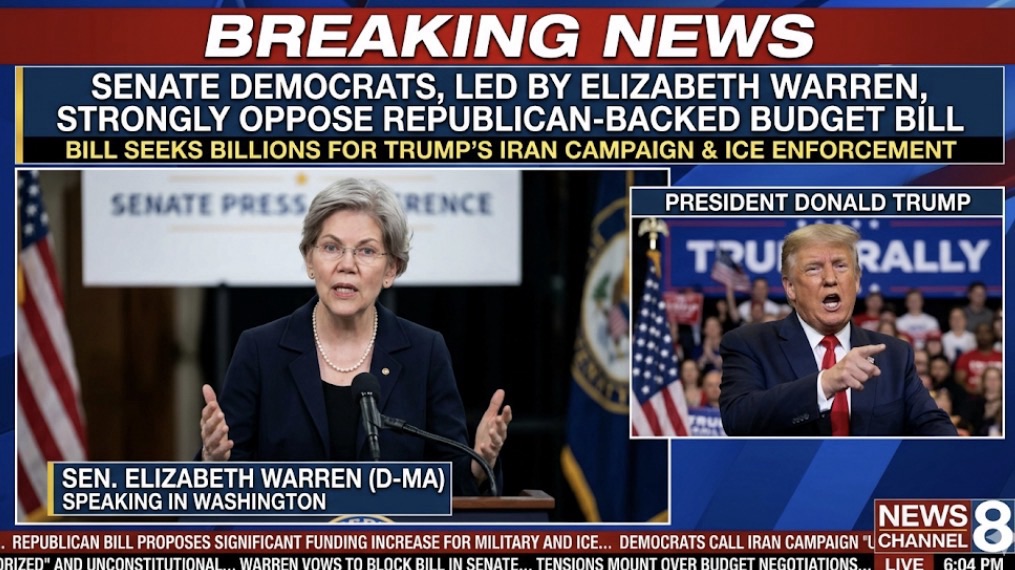
Senate Democrats Led by Elizabeth Warren Oppose GOP Budget Bill Tied to Trump’s Iran Military Campaign and ICE Expansion
Washington, D.C. — Senate Democrats, led by Senator Elizabeth Warren of Massachusetts, are mounting strong opposition to a Republican-backed budget proposal that would funnel billions in taxpayer funds toward what critics describe as former President Donald Trump’s “unauthorized military campaign” in Iran and a major expansion of Immigration and Customs Enforcement (ICE) operations across the United States.
The proposed spending package, currently being pushed by Senate Republicans, seeks to increase federal funding for ongoing military operations in Iran as well as significantly boost domestic immigration enforcement resources. Democrats argue the measure effectively locks in long-term funding for actions they say were initiated without proper congressional authorization.
Speaking after a classified Senate briefing, Senator Warren sharply criticized the administration’s lack of clarity regarding the war’s objectives and duration.
“We are being asked to write blank checks for a conflict where there is still no clear explanation of the mission, the timeline, or the end goal,” Warren said in remarks consistent with her recent public statements on the conflict.
Democrats Call Funding “Irresponsible and Unaccountable”
Democratic lawmakers contend that the Republican-backed budget would escalate U.S. involvement in the Iran conflict—already referred to by officials as “Operation Epic Fury”—without sufficient oversight or congressional authorization.
Senate Minority Leader Chuck Schumer and other Democrats have echoed concerns that the administration has provided inconsistent justifications for military action, ranging from nuclear threats to regional security risks, while failing to outline a clear strategy for de-escalation or withdrawal.
Democrats are also raising alarms over the ICE funding component of the bill, arguing it would expand enforcement operations during a period of heightened political tension over immigration policy and federal agency conduct.
Republicans Defend National Security Spending
Republican supporters of the bill argue that continued funding is necessary to sustain U.S. military readiness abroad and strengthen domestic security operations.
GOP leaders have framed the Iran campaign as essential to countering regional threats and protecting American interests, while defending ICE expansion as critical for border enforcement and immigration control.
Senate Republicans insist the budget reflects urgent national security needs and accuse Democrats of attempting to weaken U.S. military posture and immigration enforcement at a critical time.
Deepening Partisan Divide Over War Powers and Spending
The dispute comes amid broader congressional tensions over presidential war powers and federal spending priorities. Recent Senate votes have repeatedly failed to curb military operations in Iran, with most falling along party lines, highlighting the entrenched divide over executive authority in wartime decisions.
At the same time, lawmakers are under pressure to resolve ongoing budget disputes affecting federal agencies, including the Department of Homeland Security, where funding disagreements have already contributed to operational disruptions.
Outlook
With neither party showing signs of compromise, the budget proposal faces a difficult path forward in the Senate. Democrats have vowed to continue blocking measures they view as expanding unauthorized military action and unchecked domestic enforcement powers, while Republicans are pushing to advance the bill as part of a broader national security agenda.
The result is a widening standoff in Congress over war funding, immigration enforcement, and the limits of executive military authority—one that is expected to dominate upcoming budget negotiations.

Senate Democrats, Led by Elizabeth Warren, Strongly Oppose Republican-Backed Budget Bill That Seeks Taxpayers Billions More to Sustain Donald Trump’s Unauthorized Military Campaign in Iran and Ramp Up ICE Enforcement Operations

U.S. President Donald Trump Calls for America’s Shift Toward a One-Party System, Suggesting a National Convention to Introduce Constitutional Amendments Claiming Current System Is ‘Broken’ and Ruining America

Russia Moves Ahead with $10B Nuclear Investment in Iran as Tehran Rejects Donald Trump’s Deal as Vladimir Putin’s States they have Nuclear Rights

House Democrats Intensify Efforts to Draft Articles of Impeachment Against President Donald Trump, Citing Unauthorized and Unconstitutional Military Strikes Launching the Costly 2026 Iran War Without Congressional Approval and Many Other Atrocities Including Epstein File

Donald Trump Claims Significant Progress in Secret Talks with Iran Including Zero Enrichment and Uranium Handover and No Nuclear Weapons Which Iranian Officials Call It a Bluff and Fake Claims

Donald Trump Condemns Putin and Demands War Crimes Charges Following Large-Scale Russian Air Assault That Left Ukrainian Civilians Dead Overnight amid ongoing war in Iran

Iran Signals It Is Preparing to Lay Naval Mines in the Strait of Hormuz Following a new Messages from Donald Trump

Supreme Court of the United States Orders Immediate Withdrawal of ICE Agents From Airport Security Operations After Donald Trump Deploy ICE to Aid TSA Staffs Amid Ongoing DHS Funding Crisis

Taylor Swift Poses with Travis Kelce alongside Donna Kelce as Chiefs Star Signs On for 14th Season

NATO Forces Seize and Impound U.S. Aircraft Carrier The USS Gerald R. Ford Upon Returning From Iran to Souda Bay in Crete, Securing All Aircraft, Personnel, Ordnance, Fuel, and Defense Systems Following ICC Arrest Warrant For Donald Trump and Escalating Tension with NATO allies

Gavin Newsom Slam Donald Trump, Saying He Is “Making a Fool and Mockery of Himself” After Abruptly Pausing U.S. Military Strikes on Iran Just Hours After Issuing a 48-Hour Ultimatum to Reopen the Strait of Hormuz
