
NFL
“Your Threats Are Beneath Our Feet”: Iran’s Foreign Minister Abbas Araghchi Delivers Defiant Message to Donald Trump, Declaring Death an Honor After Downing U.S. F-15E Strike Eagle and Multiple Rescue Aircraft in Escalating Iran War

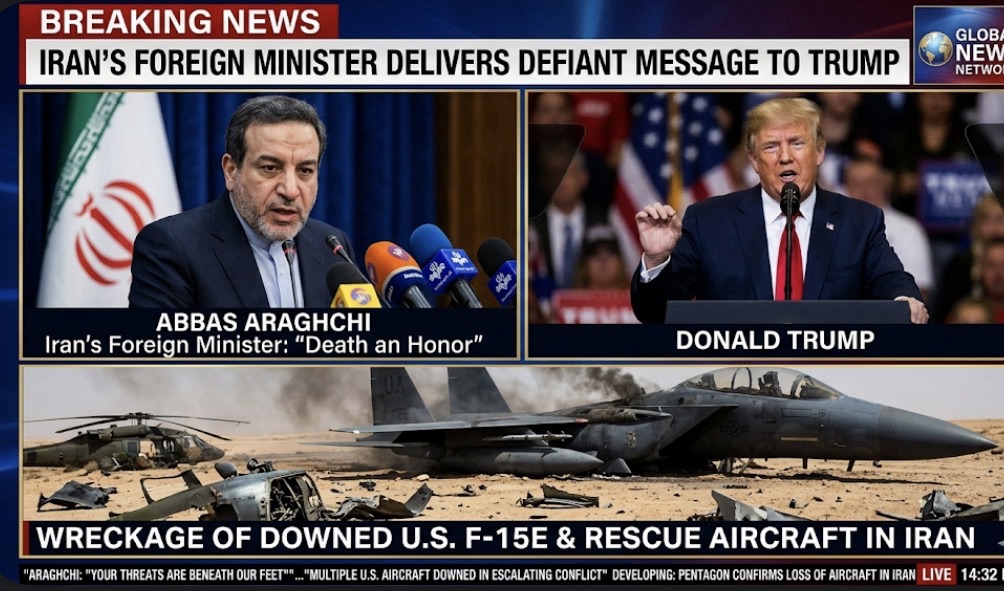
Iran Delivers Defiant Message to President Trump: “Your Threats Are Beneath Our Feet” as Tehran Claims Responsibility for Downing U.S. F-15E Strike Eagle and Disrupting Rescue Operations
In a sharp escalation of rhetoric amid the ongoing U.S.-led military campaign against Iran, Iranian Foreign Minister Abbas Araghchi has issued a bold and unyielding response to perceived threats from the Trump administration. Speaking in the wake of reports that Iranian forces shot down a U.S. Air Force F-15E Strike Eagle fighter jet over Iranian territory, Araghchi declared that Iran fears neither death nor subjugation, framing the conflict as a defense of national sovereignty where martyrdom is viewed as an honor.
“Your threats are beneath our feet,” Araghchi stated, according to accounts circulating on social media and reported widely. “If we feared death, we would not have entered this war, nor would we have offered our finest men as martyrs. Death is an honor for us as we defend our homeland… better than dying subjugated to you, with our homeland under your guardianship and rule.”
The statement comes as U.S. officials confirmed the loss of an F-15E Strike Eagle on April 3, 2026 — the first known instance of a manned American combat aircraft being brought down by enemy fire during Operation Epic Fury, the Pentagon’s designation for the military operations against Iran.0
One of the jet’s two crew members was successfully rescued by U.S. special forces, while search efforts continue for the second airman, whose status remains unknown. Iranian state media initially claimed the downing of an F-35 stealth fighter, but debris imagery and U.S. confirmations point to the aircraft being an F-15E.5
Rescue operations themselves came under fire. Reports indicate that additional U.S. assets, including an A-10 Warthog attack aircraft and at least one UH-60 Black Hawk helicopter involved in the search-and-rescue mission, were targeted or hit by Iranian forces. The A-10 pilot reportedly ejected over the Persian Gulf and was rescued, while the helicopter sustained damage but managed to return safely.33
Context of Escalating Tensions
The incident marks a significant development in the month-long conflict, challenging earlier U.S. assertions of air superiority over Iranian skies. President Donald Trump has previously employed strong language, including threats to take Iran “back to the Stone Ages” if it does not comply with U.S. demands regarding its nuclear program, regional proxies, and oil exports.
Araghchi’s remarks directly counter such rhetoric, emphasizing Iran’s willingness to endure heavy costs rather than submit. Iranian officials have repeatedly stated they are reviewing U.S. proposals but refuse to negotiate under duress or while under active military pressure. No formal talks have taken place, according to Tehran.
The downing of the F-15E has been celebrated in Iranian state media as evidence of improved air defense capabilities, with the Islamic Revolutionary Guard Corps (IRGC) credited for the engagement. Videos and images of wreckage have circulated, though independent verification remains limited amid the fog of war.
Broader Implications
This exchange highlights the deep ideological divide fueling the conflict. For Iran, the narrative of resistance and martyrdom serves both to rally domestic support and project strength internationally. For the Trump administration, the loss of an advanced fighter jet and the complications in rescue efforts represent a public setback at a time when the U.S. seeks to degrade Iran’s military infrastructure and nuclear capabilities.
Military analysts note that while the F-15E loss is tactically notable, it does not fundamentally alter the balance of power given U.S. technological and numerical advantages. However, it risks prolonging the conflict and increasing the potential for further escalation, including threats to critical shipping lanes like the Strait of Hormuz.
As search operations for the missing American airman continue, both sides appear locked in a cycle of military action and defiant messaging. Araghchi’s statement underscores Tehran’s position: Iran views itself as fighting for survival and freedom, unwilling to yield to external pressure regardless of the personal or national costs.
The situation remains fluid, with potential for rapid developments on both the battlefield and diplomatic fronts. U.S. forces have vowed to continue operations until strategic objectives are met, while Iran has signaled it will respond proportionally to any further strikes.
This article is based on confirmed reports from multiple U.S. and international sources as of April 4, 2026. Details surrounding the exact circumstances of the shootdown and rescue efforts are still emerging.

“Your Threats Are Beneath Our Feet”: Iran’s Foreign Minister Abbas Araghchi Delivers Defiant Message to Donald Trump, Declaring Death an Honor After Downing U.S. F-15E Strike Eagle and Multiple Rescue Aircraft in Escalating Iran War

Donald Trump and National Security Team Weigh Possible Peace Talks during Emergency Meeting at the White House After Multiple U.S. F-15E Jets Are Attacked and Rescue Aircraft Shot Down in Escalating Iran Conflict

NFL Star Travis Kelce and Taylor Swift Spotted on Romantic Easter Dinner Date at 1587 Prime

A Group of senior U.S. general files a $50m federal administrative lawsuit challenging Their wartime removal by Pete Hegseth on Donald Trump’s Order amid Iran’s war, alleging the Pentagon violated required procedures under the Administrative Procedure Act

U.S. Congress Convenes Emergency Session After Second Rescue Jet Downed in Iran, Lawmakers Demand Urgent Briefing from Donald Trump

Donald Trump Orders Hegseth to Prepare for Immediate Nuclear Action Against Iran After Shocking Ambush in Iranian Badlands Leaves US Rescue Helicopter Destroyed by Deadly Projectile While Racing to Save Downed F-15E Heroes

Second US Rescue Jet Shot Down Over Iranian Badlands – 3 American Heroes Confirmed Killed, 2 Injured as search for attacked F-15E continues with Donald trump being briefed

Tragedy After Heroic Rescue: Second Downed F-15E Pilot Identified as Newlywed Captain Ethan Walker, Killed Just Weeks After Wedding as Donald Trump Briefed on Loss after Iran Shot down two F-15E

Heartbreaking Update from the Frontlines: U.S. Special Operations Forces Successfully Extract One Downed F-15E Pilot in Daring Rescue Mission Near Kharg Island, But Pentagon Confirms the Second Aviator Has Been Declared Dead Amid Intense Search Efforts in Southwestern Iran as Donald Trump was briefed

Supreme Court Issues Emergency Immediate Injunctions to Halt Pentagon Restructuring Efforts Following Actions by Pete Hegseth firing Top Generals Who Allegedly Defied Orders Tied to Donald Trump’s Iran Strategy Amid Ongoing Operations

Donald Trump Raises Global Alarm With Nuclear Threat Warning Toward Iran as Intelligence Reports Confirm Tehran Maintains Significant Operational Missile Capabilities Despite U.S-Israel Sustained Bombardment
