
NFL
Global Oil Markets Face Potential Shake-Up as Iran Reportedly Considers Trading Strait of Hormuz Oil Shipments in Chinese Yuan Instead of U.S. Dollar amid Escalating Tensions in Middle East Lead by Donald Trump and Benjamin Netanyahu

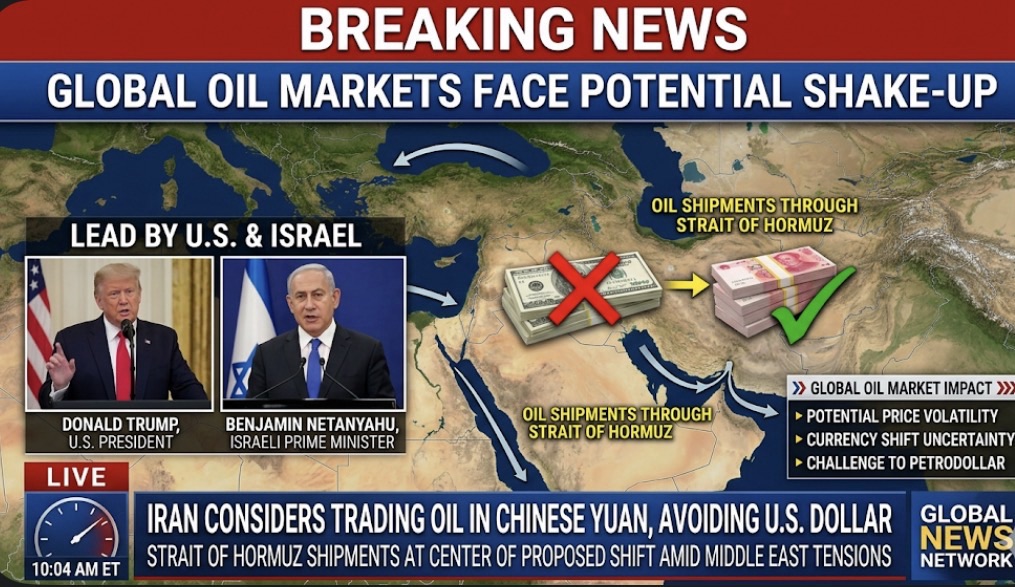
Debate Grows Over Potential Use of Chinese Yuan in Global Oil Trade
Discussions are intensifying in international economic and political circles after reports suggested that the Chinese yuan could emerge as a potential alternative to the U.S. dollar in certain global oil transactions. The development has drawn attention from analysts who say it could have far-reaching implications for global financial markets if it were to materialize.
For decades, the U.S. dollar has dominated the global energy trade, forming the backbone of what many economists refer to as the “petrodollar” system. Under this arrangement, most oil around the world is priced and traded in dollars, reinforcing the currency’s global influence and strengthening the United States’ position in international finance.
However, recent discussions reportedly originating from Tehran have raised the possibility of a different approach. Iranian officials are said to be considering conditions tied to oil tanker movement through the strategically important Strait of Hormuz — one of the most vital maritime routes for global energy supplies.
The Strait of Hormuz is a narrow waterway connecting the Persian Gulf to global shipping lanes, and it plays a critical role in international oil distribution. Nearly 20 percent of the world’s oil supply moves through the passage each day, making it one of the most sensitive points in global energy logistics.
According to circulating reports, Tehran may be exploring a policy that would allow limited oil tanker passage through the strait under a specific condition: oil shipments passing through the route could be required to be traded in Chinese yuan rather than U.S. dollars.
If implemented, such a move would represent a notable challenge to the decades-long dominance of the dollar in global energy markets. Energy economists say even a partial shift toward yuan-denominated oil transactions could influence currency markets and potentially strengthen China’s financial presence on the global stage.
China, already the world’s largest oil importer, has been steadily promoting the international use of its currency in trade and financial agreements. Expanding the yuan’s role in energy transactions would align with Beijing’s long-term strategy to increase the currency’s global relevance.
Analysts also note that the implications of such a policy would extend beyond currency markets. Changes to how oil is priced or traded could affect global shipping routes, energy pricing mechanisms, and economic alliances among major oil producers and consumers.
At the same time, many experts caution that replacing the dollar in global oil trade would be an extremely complex and gradual process. The U.S. currency remains deeply embedded in international finance, global reserves, and commodity markets, making any rapid transition unlikely.
Still, the discussions themselves reflect a shifting geopolitical and economic landscape. As competition grows among major global powers, debates about alternative financial systems and currencies are becoming increasingly common.
Whether Iran ultimately moves forward with such a proposal remains uncertain. However, the possibility has already sparked widespread debate among economists and policymakers about the future of the global financial order and whether the long-standing dominance of the U.S. dollar in energy markets could face new challenges in the years ahead.

Taylor Swift Spotted at Allegiant Stadium To Support Travis Kelce and Chiefs as Patrick Mahomes Leads the Kansas City Chiefs Back to Level With the Las Vegas Raiders at 7–7 in a Tense Battle in Las Vegas With Tyquan Thornton for a Touchdown

Taylor Swift and Travis Kelce Share Sweet Fist Bump as Chiefs Star Arrives at Stadium With Team Ahead of Raiders Showdown

Taylor Swift Poses Alongside Husband Travis Kelce Inside Raiders’ Athletic Training and Recovery Facility Ahead of Chiefs-Raiders Showdown in Las Vegas

Taylor Swift Links Up With Travis Kelce and Dakota Johnson After the 2026 VMAs as the Trio Pose Together Inside Taylor’s Private Jet Following Her Big Night

Travis Kelce Confirms VMAs Appearance to Support Wife Taylor Swift After Scoring Touchdown in Chiefs’ Miami Victory Over the Dolphins

The Swift-Kelce Family Is in Miami! Donna Kelce, Taylor Swift’s Mom Andrea and Brother Austin Arrive Ahead of Travis Kelce’s Chiefs Showdown Against the Dolphins

“Mr. Cleveland” Travis Kelce Touches Down in Miami With Patrick Mahomes and Chiefs Teammates Ahead of Sunday’s Dolphins Showdown

“Uncle Cleveland!” Jason and Kylie Kelce’s Daughters Wyatt and Elliotte React to Taylor Swift’s New Travis Kelce-Inspired Track as the Family Plays “Cleveland” Together

Taylor Swift and Travis Kelce’s Moms Andrea Swift and Donna Kelce Pose Alongside Caitlin Clark’s Grandfather, Father and Mother at Indiana Fever Game Against Minnesota Lynx.

Taylor Swift and Travis Kelce’s Moms Andrea Swift and Donna Kelce Make a Joint Appearance at Indiana Fever-Lynx Game as Caitlin Clark Greets Them Before the Match Begins

Taylor Swift Poses With Brittany Mahomes and Fellow Chiefs WAGs in Arrowhead Suite During Dramatic Game as Travis Kelce and Patrick Mahomes Help Kansas City Beat Colts 33-30
