
NFL
Kremlin Claims Donald Trump Administration Contacted Vladimir Putin Offering Russia a 20% Oil Deal in Exchange for Support in U.S.-Israel War Against Iran and Help Reopening the Strait of Hormuz

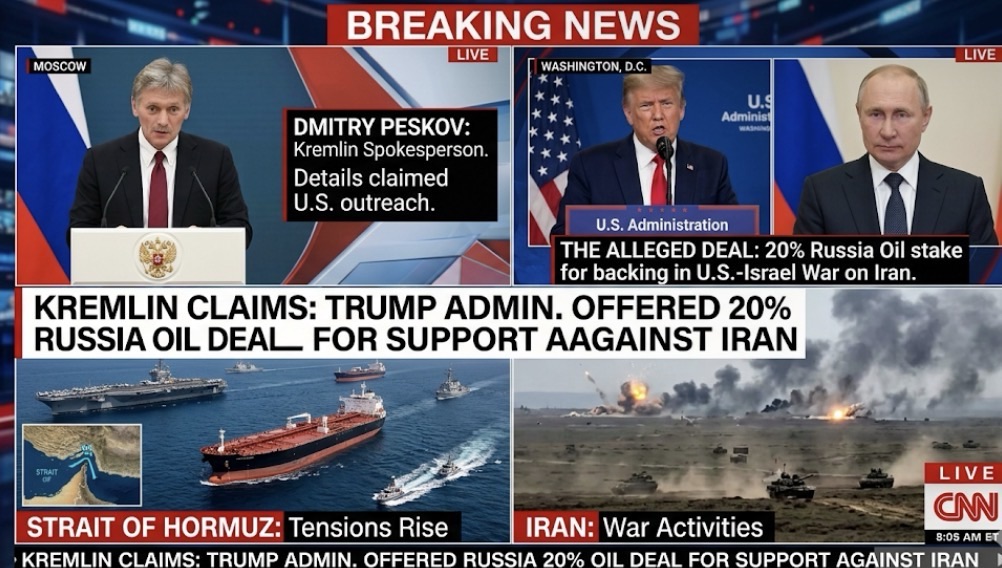
Kremlin Alleges Trump Administration Sought Oil-for-Alliance Deal With Russia Amid Iran War
The Kremlin has issued a striking claim alleging that the administration of Donald Trump secretly reached out to Vladimir Putin with a proposal tying energy incentives to military cooperation in the escalating conflict involving Iran.
According to the statement released in Moscow, U.S. officials allegedly floated the idea of granting Russia a 20 percent stake in a future oil arrangement if it agreed to assist Washington and its allies, including Israel, in confronting Iran and restoring stability in the region. A key part of the reported proposal centered on reopening the strategically vital Strait of Hormuz , a narrow maritime corridor through which a significant portion of the world’s oil supply flows.
The Kremlin did not provide detailed evidence to support the claim, but described the alleged outreach as part of broader “backchannel discussions” aimed at reshaping the balance of power in the Middle East. Russian officials suggested that the offer reflected growing urgency in Washington as tensions with Iran continue to disrupt global energy markets and threaten international shipping routes.
If true, such a proposal would mark a dramatic shift in geopolitical strategy, effectively linking military cooperation with economic incentives on a global scale. Analysts note that the Strait of Hormuz has long been one of the world’s most sensitive chokepoints, and any disruption there has immediate consequences for oil prices and global trade.
There has been no official confirmation from U.S. authorities regarding the Kremlin’s claims. Officials in Washington have not publicly acknowledged any negotiations offering Russia a share in oil revenues or assets. Some observers have urged caution, noting that statements from the Kremlin often serve strategic messaging purposes, particularly during periods of heightened international tension.
Meanwhile, Iran has continued to signal defiance amid the ongoing crisis, with regional instability deepening and fears growing of a broader conflict. The possibility of major powers aligning in new and unexpected ways has added another layer of uncertainty to an already volatile situation.
Global reactions have been swift, with policymakers and analysts debating the implications of such an alleged deal. Critics argue that offering economic incentives tied to wartime cooperation could undermine international norms, while others view it as a reflection of the high stakes surrounding energy security and control of critical waterways.
As the situation unfolds, attention remains fixed on whether any evidence will emerge to substantiate the Kremlin’s claims—and how Washington, Moscow, and Tehran will respond in a rapidly evolving geopolitical landscape.

Taylor Swift Poses with Travis Kelce alongside Donna Kelce as Chiefs Star Signs On for 14th Season

NATO Forces Seize and Impound U.S. Aircraft Carrier The USS Gerald R. Ford Upon Returning From Iran to Souda Bay in Crete, Securing All Aircraft, Personnel, Ordnance, Fuel, and Defense Systems Following ICC Arrest Warrant For Donald Trump and Escalating Tension with NATO allies

Gavin Newsom Slam Donald Trump, Saying He Is “Making a Fool and Mockery of Himself” After Abruptly Pausing U.S. Military Strikes on Iran Just Hours After Issuing a 48-Hour Ultimatum to Reopen the Strait of Hormuz

Kremlin Claims Donald Trump Administration Contacted Vladimir Putin Offering Russia a 20% Oil Deal in Exchange for Support in U.S.-Israel War Against Iran and Help Reopening the Strait of Hormuz

Iran Denies Holding Any Talks With Donald Trump or his Administration, Rejects Proposed Ceasefire, States Attack will keep going Despite Trump Ordering Five-Day Pause on U.S. Military Strikes against Iran’s Power Plant and Energy infrastructure Following Claimed ‘Productive’ Discussions

President Donald Trump Orders Five-Day Pause on All U.S. Military Strikes Against Iranian Power Plants and Energy Infrastructure Following ‘Very Good and Productive’ Bilateral Conversations Aimed at Resolving Middle East Hostilities

Supreme Court of the United States Blocks Donald Trump Plan to Replace TSA Officers with ICE Agents at Airports

Taylor Swift and Travis Kelce Spotted Enjoying Romantic Weekend at 1587 Prime, Co-Owned by Travis and Patrick Mahomes ahead of their upcoming wedding

Iran’s Islamic Revolutionary Guard Corps Issues Warning to the Donald Trump as Massive Marine Deployment Heads Toward the Middle East, Declaring “We Are Waiting for Them and a Lot of U.S. Marines Are Going to Die” Amid Rapidly Escalating Regional Tensions

Iran Calls Bluff on Donald Trump’s 48-Hour Deadline to Reopen the Strait of Hormuz, Warns Any Further Strike on Energy Infrastructure Will Trigger Severe Retaliation on America Soil

Benjamin Netanyahu Receives Approval to Use Nuclear Weapons from Donald Trump Against Iran to Completely Neutralize Threat and Restore Global Oil Flow Through Strait of Hormuz
