
NFL
New York Officially Bans Masked ICE Agents and Severely Restricts Local Cooperation With Federal Immigration Enforcement in Major Policy Overhaul

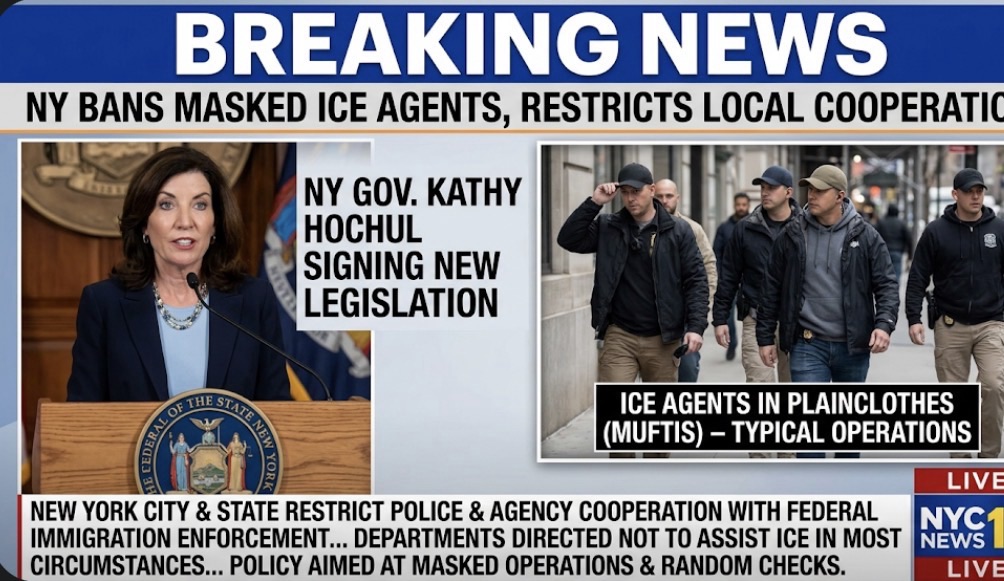
New York Officially Bans Masked ICE Agents and Restricts Local Cooperation With Federal Immigration Enforcement
New York has ignited a fierce national debate after state officials announced sweeping new restrictions targeting federal immigration enforcement operations, including a controversial ban on masked ICE agents conducting public raids and arrests.
Under the newly introduced policy measures, immigration agents operating within New York will no longer be permitted to conceal their identities with masks or face coverings during enforcement actions, except under limited security-related circumstances. State leaders say the move is designed to increase transparency, restore public trust, and prevent fear-driven encounters within immigrant communities.
In addition to the mask ban, New York officials also unveiled stricter limits on how local law enforcement agencies can cooperate with federal immigration authorities. The new guidelines reportedly prohibit local agencies from voluntarily assisting ICE operations unless legally required under federal or state law.
Supporters of the policy argue that masked enforcement operations have created widespread panic in neighborhoods across the state, with critics accusing some agents of operating in ways that intimidate residents and blur accountability.
“Law enforcement officers should never hide their identities while interacting with the public,” one state official said during the announcement. “Transparency and accountability are essential in a democratic society.”
Immigration advocacy groups quickly praised the decision, calling it a major victory for civil rights and immigrant protections. Several organizations claimed the policy could reduce fear among undocumented families who have become increasingly hesitant to report crimes or cooperate with authorities.
However, the announcement immediately triggered backlash from federal immigration supporters and conservative lawmakers, who accused New York of obstructing federal law enforcement efforts. Critics warned that limiting cooperation with ICE could create dangerous obstacles for national immigration enforcement operations.
Some federal officials argued that face coverings are sometimes necessary to protect agents and their families from harassment or threats, especially in high-profile operations that attract public attention online.
The policy shift comes amid growing tensions nationwide over immigration enforcement practices, sanctuary city laws, and the balance of power between state governments and federal authorities.
Political analysts say the move could intensify clashes between New York leaders and federal immigration agencies in the months ahead, especially as immigration remains one of the most divisive issues in American politics.
As reactions continue pouring in from across the country, New York’s latest actions are already being described as one of the boldest state-level challenges to federal immigration enforcement tactics in recent years.

Travis Kelce and Taylor Swift Steal the Spotlight Alongside Selena Gomez in Glamorous Star-Studded Appearance Ahead of Her Fourth Annual Rare Impact Fund Benefit Supporting Youth Mental Health

Three-Time Super Bowl Champion Emmitt Smith Defends Taylor Swift Amid NFL Game Criticism, Insists Travis Kelce’s Wife Is Simply There to Support Her Husband and Enjoy Life

Travis Kelce’s Wife Taylor Swift Donates $1 Million to Kansas City Chiefs’ Crucial Catch Luncheon as the Popster Steps Up to Support Cancer Awareness, Early Screening and Efforts to Help More Families Detect the Disease Sooner

Taylor Swift and Travis Kelce Turn Heads After a New York Dinner Date as the Chiefs TE Meets With Publicis Sports Clients and NFL Pass Rusher Kayvon Thibodeaux to Explore the Future of NIL and Athlete Branding

Taylor Swift and Travis Kelce Turn Heads as They Step Out of a New York Restaurant After Enjoying a Cozy Dinner With Friends, Bringing Their Latest Night Out Together Into the Spotlight

Taylor Swift and Travis Kelce Join Hollywood’s Elite as Jennifer Meyer and Geoff Ogunlesi Tie the Knot in Lavish Hawaii Wedding

Taylor Swift and Mr Cleveland Travis Kelce Leave Cleveland Guardians and Chicago White Sox Game Hand in Hand After Sharing Romantic Kiss in the Stands as Donna Kelce Joins Their Family Night Out

Travis Kelce Enjoys Guardians’ Playoff Triumph Alongside Wife Taylor Swift and Mom Donna Kelce as Cleveland Defeats White Sox 2–0 to Advance to ALCS

Fit for a Queen! Travis and Jason Kelce Sweep Mom Donna Off Her Feet in Heartwarming Celebration Snap as the NFL Superstars Put Their Famous Football Careers Aside to Celebrate the Woman Behind Their Success

Donna Kelce Celebrates Her Birthday With Taylor Swift, Travis Kelce, Jason and Kylie Kelce as the Superstar Joins Her NFL Boyfriend’s Family for a Special Day

Taylor Swift Goes All Out for Donna Kelce’s Birthday With an Expensive Luxury Gift as Travis Kelce’s Mom Gets the Royal Treatment From the Pop Superstar
