
NFL
President Donald Trump Orders Five-Day Pause on All U.S. Military Strikes Against Iranian Power Plants and Energy Infrastructure Following ‘Very Good and Productive’ Bilateral Conversations Aimed at Resolving Middle East Hostilities

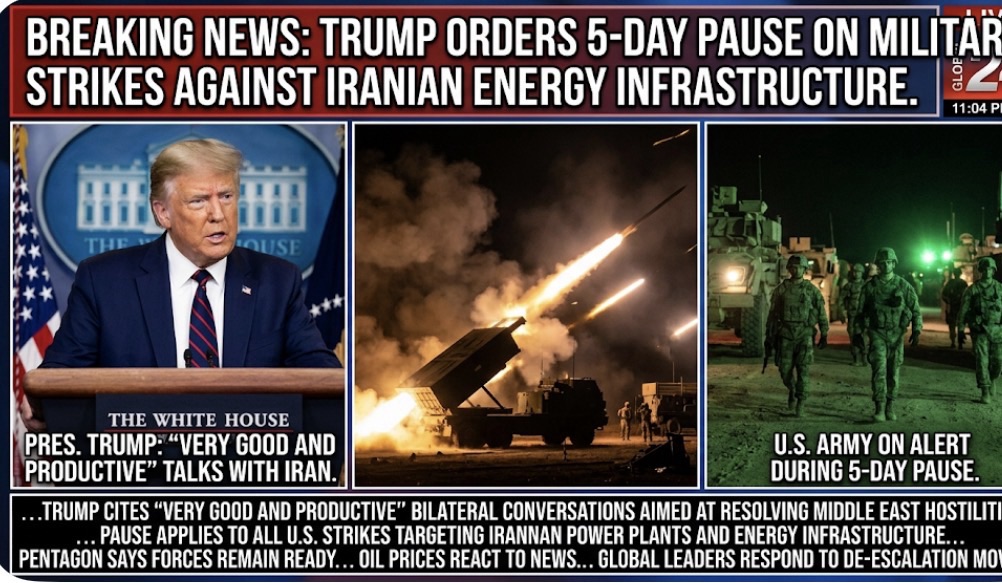
Trump Orders Five-Day Pause on Strikes Against Iranian Power Plants Amid Conflicting Claims of ‘Productive Talks’
In a sudden shift from aggressive rhetoric to temporary restraint, President Donald J. Trump announced on Monday that the United States would halt all military strikes on Iranian power plants and energy infrastructure for a five-day period. The move, posted directly from the official White House X account, comes just one day after Trump issued a stark 48-hour ultimatum threatening to “obliterate” Iran’s largest power facilities unless Tehran fully reopened the Strait of Hormuz without threats.
“President Donald J. Trump calls for a pause on all military strikes against Iranian power plants and energy infrastructure for a five-day period, subject to the success of the ongoing meetings and discussions,” the White House statement read, accompanied by an image of the president. Trump described recent bilateral conversations as “very good and productive,” suggesting they were “in-depth, detailed,” and potentially paving the way toward a “complete and total resolution” of the escalating U.S.-Iran-Israel conflict now in its fourth week.
The announcement triggered an immediate market reaction. Brent crude futures, which had spiked above $112 per barrel amid fears of prolonged disruption to global oil flows through the Strait of Hormuz, fell sharply to around $96 in afternoon trading. Analysts attributed the dip to hopes of de-escalation, though physical oil delivery costs remain elevated due to insurance premiums, rerouting, and ongoing regional tensions.
Yet the White House claim of active diplomacy quickly ran into direct contradiction from Tehran. Iranian state media and the Foreign Ministry categorically denied any negotiations, direct or indirect, with the United States. Senior officials labeled Trump’s assertion “completely false” and framed the five-day pause as evidence that Washington had “backed down” after Iranian warnings that any attack on domestic power infrastructure would trigger immediate retaliation against U.S. and allied energy assets across the Persian Gulf, including desalination plants, natural gas facilities, and critical export terminals in Saudi Arabia, the UAE, and Qatar.
The Iranian embassy in Kabul went further, issuing a statement that the pause followed Tehran’s “stern warning” and military posturing, not productive dialogue. Pro-government accounts on X echoed the line, with some users declaring “Iran won” and praising Supreme Leader Ali Khamenei’s resolve.
The backdrop remains volatile. Since late February 2026, the U.S. and Israel have conducted repeated airstrikes inside Iran, targeting military sites, missile production facilities, and—in recent days—fuel depots and energy-related infrastructure near key population centers. Iran has responded with barrages of ballistic missiles and drones, hitting Israeli military targets and, in at least one high-profile incident, a major natural gas complex in Qatar. Tehran has also maintained partial restrictions on commercial shipping through the Strait of Hormuz, allowing passage only to vessels not linked to “Iran’s enemies,” a policy that has already driven up global shipping costs and insurance rates dramatically.
Trump’s Saturday ultimatum had explicitly tied the fate of Iran’s power grid to unrestricted navigation in the strait: “If Iran doesn’t FULLY OPEN, WITHOUT THREAT, the Strait of Hormuz, within 48 HOURS from this exact point in time, the United States of America will hit and obliterate their various POWER PLANTS, STARTING WITH THE BIGGEST ONE FIRST.” That deadline would have expired late Monday, making the announced pause an extension rather than a full retreat.
Public reaction on X was sharply divided. Supporters of the administration hailed the move as “peace through strength” and proof of effective pressure. Critics, including prominent voices from both progressive and hardline conservative circles, accused the president of manufacturing talks for domestic optics or market manipulation. Several replies pointed out apparent typos in related messaging and questioned whether the pause reflected genuine back-channel progress or simply hesitation after Iranian threats to expand the conflict regionally.
Energy analysts caution that five days may not be enough to restore confidence. Even if the strait were fully reopened tomorrow, the combination of damaged infrastructure, heightened naval risks, and lingering mine threats could keep tanker traffic subdued for weeks. Wood Mackenzie and other consultancies have warned that a prolonged closure—or escalation to attacks on either side’s energy assets—could easily push Brent past $100–120 per barrel, with cascading effects on inflation, shipping, and global growth.
For now, the five-day window offers breathing room but little clarity. Whether it leads to real negotiations, a renewed offensive, or simply another cycle of threats and counter-threats remains uncertain. As one Tehran-based commentator posted shortly after the announcement: “No contact, no talks—just theater.” In Washington, the Department of War has been instructed to hold fire on energy targets, at least until the end of the grace period.
The coming days will reveal whether this is a genuine diplomatic opening or merely a tactical timeout in an already unpredictable war.

Taylor Swift Poses with Travis Kelce alongside Donna Kelce as Chiefs Star Signs On for 14th Season

NATO Forces Seize and Impound U.S. Aircraft Carrier The USS Gerald R. Ford Upon Returning From Iran to Souda Bay in Crete, Securing All Aircraft, Personnel, Ordnance, Fuel, and Defense Systems Following ICC Arrest Warrant For Donald Trump and Escalating Tension with NATO allies

Gavin Newsom Slam Donald Trump, Saying He Is “Making a Fool and Mockery of Himself” After Abruptly Pausing U.S. Military Strikes on Iran Just Hours After Issuing a 48-Hour Ultimatum to Reopen the Strait of Hormuz

Kremlin Claims Donald Trump Administration Contacted Vladimir Putin Offering Russia a 20% Oil Deal in Exchange for Support in U.S.-Israel War Against Iran and Help Reopening the Strait of Hormuz

Iran Denies Holding Any Talks With Donald Trump or his Administration, Rejects Proposed Ceasefire, States Attack will keep going Despite Trump Ordering Five-Day Pause on U.S. Military Strikes against Iran’s Power Plant and Energy infrastructure Following Claimed ‘Productive’ Discussions

President Donald Trump Orders Five-Day Pause on All U.S. Military Strikes Against Iranian Power Plants and Energy Infrastructure Following ‘Very Good and Productive’ Bilateral Conversations Aimed at Resolving Middle East Hostilities

Supreme Court of the United States Blocks Donald Trump Plan to Replace TSA Officers with ICE Agents at Airports

Taylor Swift and Travis Kelce Spotted Enjoying Romantic Weekend at 1587 Prime, Co-Owned by Travis and Patrick Mahomes ahead of their upcoming wedding

Iran’s Islamic Revolutionary Guard Corps Issues Warning to the Donald Trump as Massive Marine Deployment Heads Toward the Middle East, Declaring “We Are Waiting for Them and a Lot of U.S. Marines Are Going to Die” Amid Rapidly Escalating Regional Tensions

Iran Calls Bluff on Donald Trump’s 48-Hour Deadline to Reopen the Strait of Hormuz, Warns Any Further Strike on Energy Infrastructure Will Trigger Severe Retaliation on America Soil

Benjamin Netanyahu Receives Approval to Use Nuclear Weapons from Donald Trump Against Iran to Completely Neutralize Threat and Restore Global Oil Flow Through Strait of Hormuz
