
NFL
“51st State”: Pete Hegseth Confirms Donald Trump Is “Seriously Considering” Making Venezuela the 51st State After Capture of Venezuelan President

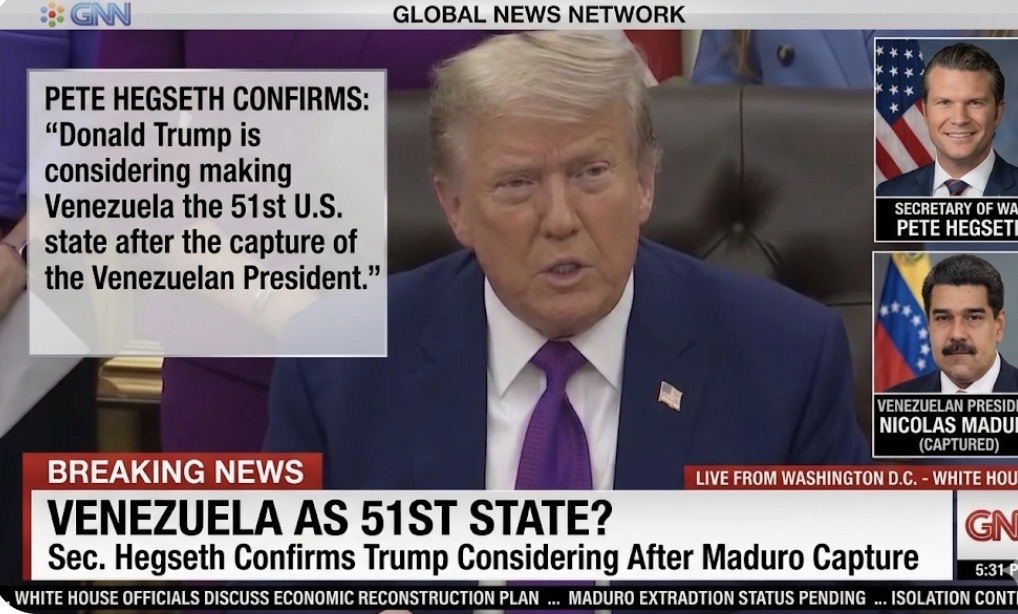
Pete Hegseth Confirms Donald Trump Is “Seriously Considering” Making Venezuela the 51st State After Military Capture of President
WASHINGTON, D.C. — Defense Secretary Pete Hegseth has confirmed that President Donald Trump is “seriously considering” the possibility of making Venezuela the 51st state of the United States following a dramatic U.S. military operation that reportedly led to the capture of the Venezuelan president.
Speaking during a tense press briefing at the Pentagon on Sunday evening, Hegseth described the idea as “an option being evaluated at the highest levels of government,” adding that the Trump administration believes “long-term stability, security, and economic recovery in Venezuela may require an unprecedented partnership with the United States.”
The remarks immediately triggered global outrage and sent shockwaves through Latin America, with several regional governments condemning the suggestion as a violation of international sovereignty.
“This administration is looking at every possible pathway to ensure that Venezuela never again becomes a threat to regional stability,” Hegseth said. “The president has asked advisers to examine what a formal territorial and political relationship with the United States could look like.”
The comments came just hours after U.S. officials confirmed that American forces had successfully detained the Venezuelan leader during what was described as a “precision operation” targeting senior members of the government amid escalating unrest inside the country.
The White House has not officially announced any annexation plan, but insiders reportedly say several senior Trump allies have privately discussed the political and economic implications of bringing Venezuela under direct U.S. governance or eventual statehood.
Critics across the political spectrum reacted with disbelief.
Leaders from across South America accused Washington of reviving “imperialist ambitions,” while protests erupted outside U.S. embassies in several countries overnight. International observers warned that any attempt to annex Venezuela could trigger a major diplomatic crisis at the United Nations.
Russia and China also issued statements condemning the idea, calling it “illegal under international law” and warning against what they described as “colonial-era tactics.”
Inside the United States, reactions were sharply divided. Some Trump supporters praised the proposal as a bold geopolitical move that could expand American influence and secure vast oil reserves, while opponents labeled the idea dangerous and unconstitutional.
Political analysts noted that no modern precedent exists for the United States absorbing a sovereign nation of Venezuela’s size and population under military circumstances.
The administration has not clarified whether any referendum, congressional approval, or international negotiations would be required before such a move could proceed.
As tensions continue to rise, governments across the Western Hemisphere are closely watching for the next move from the Trump administration, amid fears that the crisis could reshape regional politics for years to come.

Travis Kelce Turns 37 in Style as Taylor Swift Shares Cozy Birthday Moments and a Stunning Cake From Their Ohio Mansion After Chiefs’ Thrilling Victory Over the Raiders

Taylor Swift Appears to Give Raiders Fan the MIDDLE FINGER After He Trolls Travis Kelce With Brutal “Scores 6s on the Field… 3s Off the Field” Sign During Raiders’ Loss

Taylor Swift and Husband Travis Kelce Share Sweet Hand-in-Hand Moment as They Leave Allegiant Stadium After Chiefs Edge Raiders 30–27 in Thrilling Finish

Taylor Swift Goes Wild and Jubilates Inside Allegiant Stadium as Patrick Mahomes’ Second Touchdown Pass to Tyquan Thornton Sends the Kansas City Chiefs Into a 17–13 Lead Over the Raiders in the Fourth Quarter

Taylor Swift Spotted at Allegiant Stadium To Support Travis Kelce and Chiefs as Patrick Mahomes Leads the Kansas City Chiefs Back to Level With the Las Vegas Raiders at 7–7 in a Tense Battle in Las Vegas With Tyquan Thornton for a Touchdown

Taylor Swift and Travis Kelce Share Sweet Fist Bump as Chiefs Star Arrives at Stadium With Team Ahead of Raiders Showdown

Taylor Swift Poses Alongside Husband Travis Kelce Inside Raiders’ Athletic Training and Recovery Facility Ahead of Chiefs-Raiders Showdown in Las Vegas

Taylor Swift Links Up With Travis Kelce and Dakota Johnson After the 2026 VMAs as the Trio Pose Together Inside Taylor’s Private Jet Following Her Big Night

Travis Kelce Confirms VMAs Appearance to Support Wife Taylor Swift After Scoring Touchdown in Chiefs’ Miami Victory Over the Dolphins

The Swift-Kelce Family Is in Miami! Donna Kelce, Taylor Swift’s Mom Andrea and Brother Austin Arrive Ahead of Travis Kelce’s Chiefs Showdown Against the Dolphins

“Mr. Cleveland” Travis Kelce Touches Down in Miami With Patrick Mahomes and Chiefs Teammates Ahead of Sunday’s Dolphins Showdown
