
NFL
Supreme Court of the United States Blocks Donald Trump Plan to Replace TSA Officers with ICE Agents at Airports

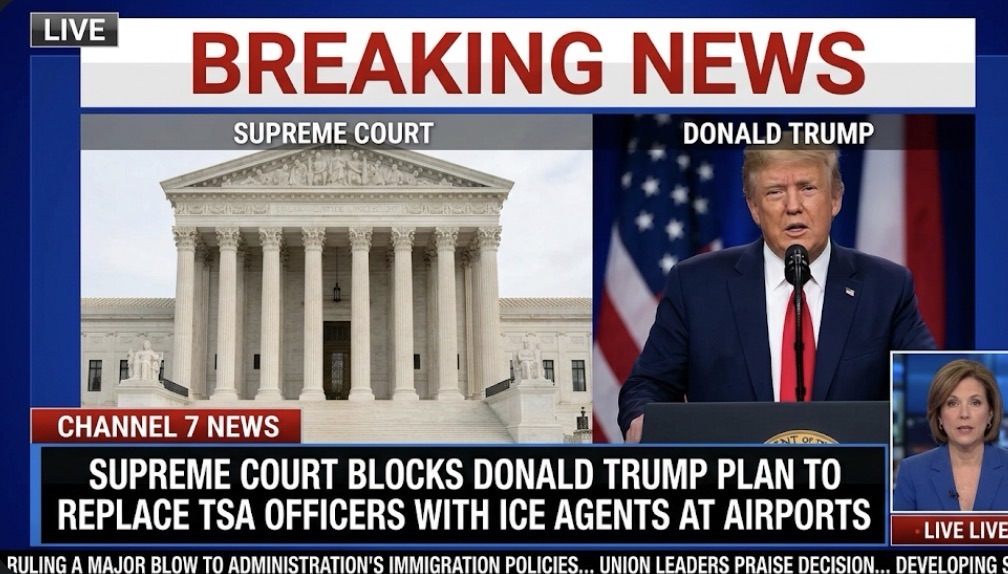
Supreme Court Blocks Trump Plan to Replace TSA with ICE Agents Amid Funding Dispute
In a major legal setback, the SCOTUS has blocked a controversial move by Donald Trump to replace airport security officers from the TSA with agents from ICE.
The ruling comes amid escalating tensions in Washington over a stalled TSA funding bill, which has raised concerns about staffing shortages and operational disruptions at airports across the country. The Trump administration had argued that deploying ICE agents to airports was a temporary emergency measure to maintain security operations if TSA funding gaps worsened.
However, in its decision, the Supreme Court issued an emergency injunction preventing the policy from taking effect, citing serious constitutional and statutory concerns. Legal experts pointed to questions over executive authority, the scope of federal agencies’ mandates, and whether ICE agents could legally assume TSA’s specialized aviation security roles without congressional approval.
Critics of the plan had warned that replacing TSA personnel with ICE agents could blur the lines between immigration enforcement and routine travel security, potentially leading to civil liberties concerns and racial profiling. Several civil rights organizations had quickly filed lawsuits, arguing that the move would fundamentally alter how airport security operates in the United States.
Supporters of the proposal, however, defended it as a pragmatic solution to a growing crisis. They argued that ICE agents are trained federal officers capable of assisting in security operations during emergencies, especially if TSA staffing levels were to fall due to funding constraints.
The court’s intervention now puts the administration’s plan on hold, leaving uncertainty over how the government will address potential gaps in airport security if the funding impasse continues. Lawmakers remain divided, with some calling for immediate bipartisan action to secure TSA funding, while others continue to debate broader immigration enforcement policies tied to the dispute.
This development marks the latest flashpoint in an ongoing power struggle between the executive branch and the judiciary, highlighting the limits of presidential authority in times of domestic policy crises. For now, airport security operations remain under the control of the TSA, as the legal battle over the proposed changes is expected to continue in lower courts.
As the situation unfolds, travelers and airport authorities alike are watching closely, with concerns growing over possible delays, longer screening times, and broader disruptions if a long-term funding solution is not reached.

Drake Turns Heads at the Airport Alongside His Goth Baddie Pinkchyu, Wrapping Himself in a Red Chanel Scarf After His Lavish 40th Birthday Celebration in NYC

No Smiles, No Hand-Holding, No Time for Fans! Travis Kelce Looks Dejected Leaving Lumen Field With Taylor Swift After Chiefs’ Heartbreaking Defeat to the Seahawks

Travis Kelce and Taylor Swift Steal the Spotlight Alongside Selena Gomez in Glamorous Star-Studded Appearance Ahead of Her Fourth Annual Rare Impact Fund Benefit Supporting Youth Mental Health

Three-Time Super Bowl Champion Emmitt Smith Defends Taylor Swift Amid NFL Game Criticism, Insists Travis Kelce’s Wife Is Simply There to Support Her Husband and Enjoy Life

Travis Kelce’s Wife Taylor Swift Donates $1 Million to Kansas City Chiefs’ Crucial Catch Luncheon as the Popster Steps Up to Support Cancer Awareness, Early Screening and Efforts to Help More Families Detect the Disease Sooner

Taylor Swift and Travis Kelce Turn Heads After a New York Dinner Date as the Chiefs TE Meets With Publicis Sports Clients and NFL Pass Rusher Kayvon Thibodeaux to Explore the Future of NIL and Athlete Branding

Taylor Swift and Travis Kelce Turn Heads as They Step Out of a New York Restaurant After Enjoying a Cozy Dinner With Friends, Bringing Their Latest Night Out Together Into the Spotlight

Taylor Swift and Travis Kelce Join Hollywood’s Elite as Jennifer Meyer and Geoff Ogunlesi Tie the Knot in Lavish Hawaii Wedding

Taylor Swift and Mr Cleveland Travis Kelce Leave Cleveland Guardians and Chicago White Sox Game Hand in Hand After Sharing Romantic Kiss in the Stands as Donna Kelce Joins Their Family Night Out

Travis Kelce Enjoys Guardians’ Playoff Triumph Alongside Wife Taylor Swift and Mom Donna Kelce as Cleveland Defeats White Sox 2–0 to Advance to ALCS

Fit for a Queen! Travis and Jason Kelce Sweep Mom Donna Off Her Feet in Heartwarming Celebration Snap as the NFL Superstars Put Their Famous Football Careers Aside to Celebrate the Woman Behind Their Success
