
NFL
Donald Trump-IRS settlement permanently blocks IRS from auditing tax claims for President Trump and his family

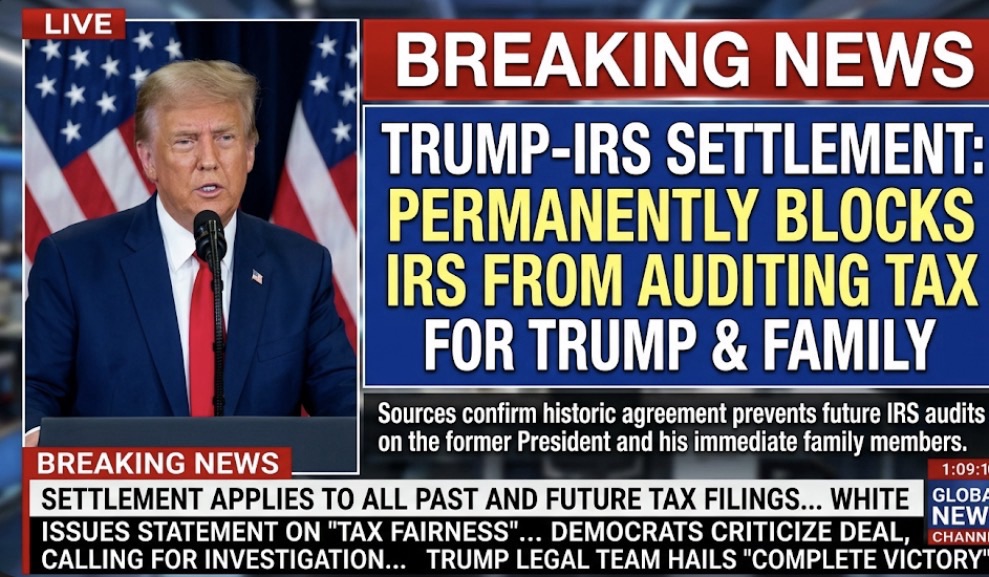
A newly disclosed settlement between the administration of Donald Trump and the Internal Revenue Service has sparked sharp political and legal debate after reports claimed the agreement would permanently shield President Trump and members of his family from future IRS audits tied to certain tax claims.
M
According to reports circulating among legal and political observers, the settlement allegedly restricts the IRS from reopening or initiating audits involving previously disputed tax positions connected to Trump family businesses and filings. Critics argue the move could create an unprecedented level of protection for a sitting president and his relatives, while supporters describe it as the conclusion of what they call years of politically motivated investigations.
The reported agreement comes after a lengthy history of scrutiny surrounding Trump’s taxes, including investigations into business losses, deductions, and financial reporting practices tied to the Trump Organization. During his presidency and subsequent political comeback, Trump repeatedly accused federal agencies of being weaponized against him and his allies.
Legal analysts say the most controversial aspect of the settlement is the claim that it “permanently blocks” future audits on specific tax matters. Former federal prosecutors and tax experts argue that such limitations could raise constitutional and ethical concerns if they prevent standard enforcement procedures from applying equally under federal law.
Democratic lawmakers and government watchdog groups have already begun demanding transparency regarding the terms of the agreement. Several critics warned that any arrangement appearing to grant special protections to a president or presidential family could undermine public confidence in the independence of the tax system.
Republican allies of Trump defended the settlement, arguing that the former president endured years of investigations without definitive criminal tax convictions. They maintain the agreement simply prevents what they view as repetitive or politically driven audits.
The IRS has not publicly released full details of the settlement, and it remains unclear whether the agreement applies broadly to all future tax examinations or only to narrowly defined disputes already litigated or negotiated.
The controversy is likely to intensify in Washington as congressional committees, legal experts, and advocacy organizations push for further disclosures about how the settlement was negotiated and whether it establishes protections unavailable to ordinary taxpayers.
The development adds another layer to the ongoing political battles surrounding Trump as he continues to dominate national headlines ahead of the next phase of the U.S. political cycle.

Travis Kelce Turns 37 in Style as Taylor Swift Shares Cozy Birthday Moments and a Stunning Cake From Their Ohio Mansion After Chiefs’ Thrilling Victory Over the Raiders

Taylor Swift Appears to Give Raiders Fan the MIDDLE FINGER After He Trolls Travis Kelce With Brutal “Scores 6s on the Field… 3s Off the Field” Sign During Raiders’ Loss

Taylor Swift and Husband Travis Kelce Share Sweet Hand-in-Hand Moment as They Leave Allegiant Stadium After Chiefs Edge Raiders 30–27 in Thrilling Finish

Taylor Swift Goes Wild and Jubilates Inside Allegiant Stadium as Patrick Mahomes’ Second Touchdown Pass to Tyquan Thornton Sends the Kansas City Chiefs Into a 17–13 Lead Over the Raiders in the Fourth Quarter

Taylor Swift Spotted at Allegiant Stadium To Support Travis Kelce and Chiefs as Patrick Mahomes Leads the Kansas City Chiefs Back to Level With the Las Vegas Raiders at 7–7 in a Tense Battle in Las Vegas With Tyquan Thornton for a Touchdown

Taylor Swift and Travis Kelce Share Sweet Fist Bump as Chiefs Star Arrives at Stadium With Team Ahead of Raiders Showdown

Taylor Swift Poses Alongside Husband Travis Kelce Inside Raiders’ Athletic Training and Recovery Facility Ahead of Chiefs-Raiders Showdown in Las Vegas

Taylor Swift Links Up With Travis Kelce and Dakota Johnson After the 2026 VMAs as the Trio Pose Together Inside Taylor’s Private Jet Following Her Big Night

Travis Kelce Confirms VMAs Appearance to Support Wife Taylor Swift After Scoring Touchdown in Chiefs’ Miami Victory Over the Dolphins

The Swift-Kelce Family Is in Miami! Donna Kelce, Taylor Swift’s Mom Andrea and Brother Austin Arrive Ahead of Travis Kelce’s Chiefs Showdown Against the Dolphins

“Mr. Cleveland” Travis Kelce Touches Down in Miami With Patrick Mahomes and Chiefs Teammates Ahead of Sunday’s Dolphins Showdown
